
Africa
Tinubu: Hope Renewed?, by Abiodun Komolafe

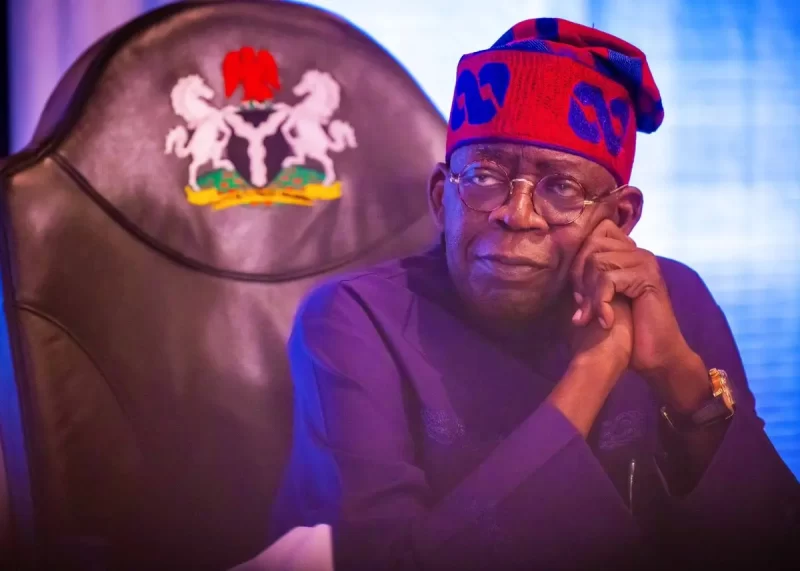
Last Sunday, President Bola Tinubu addressed the nation amid #EndBadGovernanceinNigeria protests, expressing sorrow over lost lives and urging peace. He defended his economic reforms, highlighted progress and unveiled initiatives for youth empowerment, housing and food security. Nevertheless, his address sparked a range of responses, and indeed, it received mixed reactions, with critics saying he didn’t address root causes and others commending his efforts to tackle challenges.
The government’s subsidy removal and allied policies have had a mixed impact. They’ve increased government revenue, attracted private investment, and reduced fiscal burden. However, these policies have also led to higher fuel prices, increased cost of living, and hardship for ordinary Nigerians, especially the vulnerable. The effects of these policies have been felt across the country, with many struggling to make ends meet. As the economy remains precarious, Nigerians await a comprehensive plan to address the negative consequences and ensure a more equitable distribution of resources.
Tinubu, as the nation’s rallying point, has a significant responsibility. Given his track record and what he represents, his address was expected to be a de Gaulle-type expose – decisive and unifying. Charles de Gaulle as president of the 5th Republic of France (1959-1969) always positioned himself as “The Rally of the Republic”. Known for his leadership style, every public speech in a time of crisis was craftily delivered as a way of dousing tensions and rallying the Republic around the patriotic banner. Similarly, just as de Gaulle’s leadership style united France, Tinubu’s can unite Nigeria.
In intellectual honesty, Tinubu’s speech actually soothed nerves. A lot of people who supported the protest have either called for a pause or a total end to it. For this, the president deserves our highest praise! Unfortunately, the issues remain; and the major issue is how to rally the Republic in a season of discontent. The rallying source of the crisis is an excruciating cost of living crisis in a country without social benefits to act as a modulating buffer. The current state of the economy is the critical issue. To address it, the government must adopt measures to alleviate the negative consequences while continuing to pursue its laudable economic progress.
As Tinubu’s administration navigates the choppy waters of governance, there is a need for a new critical thinking and the avoidance of the use of clichés, shibboleths and buzzwords. For instance, look at the EU’s Common Agricultural Policy (CAP), which provides a $1billion-a-day food subsidy. If you condemn subsidies, how can you justify the policy? For a fact, no politician in countries like France, Italy or Germany can win an election by promising the abolition of CAP. It just won’t happen! And these are developed countries! Of course, this highlights the importance of carefully considering subsidy policies.
Summed up briefly, the main thrust should be how to redirect money, or capital, from areas of waste and duplication into the real and social sectors. In doing this, there must be no sacred cows! Take it or leave it, Nigerians are not a problematic people; and they appreciate the efforts of the government. For example, food price inflation in Kenya at the beginning of the upheaval in that country was around 6.9%, according to figures from the World Bank. Today, food price inflation in Nigeria hovers above 40% in the methodology used by the National Bureau of Statistics (NBS). If one may therefore ask, which other country in the world can absolve double digit food price inflation? As things currently stand in Nigeria, the poor are being told to ‘pull themselves up by their bootstraps’, which is funny, because most of them can’t afford boots.
Philosophers say that recognizing progress is the first step towards achieving more. Yes, the government deserves commendation for its efforts. But Nigerians are urging the Tinubu-led administration to do even more. The next step for him is to unite the Republic, building on his good start last Sunday. The president must address the nation’s festering wounds before they become a poison arrow in the quiver of his adversaries. Since every journey starts with the spark of an idea, Tinubu must position himself as the titular head of the country, putting the nation’s interests above party affiliations, as exemplified by Keir Starmer, in his Acceptance Speech.
For those who care to know, this is not the time for divisive rhetoric and saber-rattling that distract from real issues. It shouldn’t be an opportunity for spewing toxic narratives that will only end in endangering the nation’s fragile social fabric, thereby paving the way for further polarization and conflict. In other words, the solution to our present predicament lies not in blaming others but in collective introspection. Most importantly, this is not the time to fan the flames of ethnic and religious tensions. Nor is it the time to peddle conspiracy theories. In this critical moment, what matters most are unity, constructive dialogue and decisive action to solve Nigeria’s problems. This moment offers a chance to unite against shared enemies of corruption, inequality and injustice.
Without doubt, Tinubu’s Address to the nation showed decisive leadership and technical depth; and Nigerians should expect this resolve to continue. It’s time to unleash Nigeria’s full potential, and work together to create a society where the rain of prosperity falls on all, not just a few. Nigerians demand action, not just words. They want tangible solutions, concrete policies and measurable progress on the burning issues affecting their lives, not hollow vows. So, let the ‘Jagaban of Borgu’ lead in building a nation where prosperity is a right, not a privilege.
In the current global reality, Ethiopia’s triumph over food price inflation holds valuable lessons for Nigeria. By combining targeted subsidies, social protection programs and market reforms, Ethiopia successfully stabilized food prices and curbed inflation. The Ethiopian Commodity Exchange (ECX), founded by Eleni Gabre-Madhin, played a pivotal role in enhancing market efficiency, transparency and the removal of the confusions and inconsistencies associated with access to finance. Nigeria can draw inspirations from this model, leveraging innovative market solutions and targeted interventions to tackle its own food security challenges and shield vulnerable populations from the harsh effects of inflation.
Lastly, #EndBadGovernanceinNigeria has again highlighted the urgent need for sweeping police reforms in Nigeria. For instance, precious lives were reportedly lost to the protests in Nigeria. In contrast, the UK has, in what has become the worst crisis in more than a decade, seen violent protests in over twenty cities without a single reported death as at the time of putting this piece together. This stark difference highlights our failure to prioritize accountability and become competitive against the rest of the world. Loose threads of violence should not be allowed to unravel our social fabric while those who pull the strings of chaos must be woven into the tapestry of accountability. In Nigeria’s best interest, sincere efforts must be made to address this shameful trend before it becomes a permanent scar on the nation’s conscience.
May the Lamb of God, who takes away the sin of the world, grant us peace in Nigeria!
*KOMOLAFE writes in from Ijebu-Jesa, Osun State, Nigeria (ijebujesa@yahoo.co.uk).


























You must be logged in to post a comment Login