
Africa
Trump Tariffs And The Irony Of Governance -By Abiodun Komolafe
When President Bola Tinubu announced that the era of borrowing to finance the nation’s budget is over, he implicitly underscored the critical role of the FIRS chair, an office vital to the government’s functioning. For the president to have decided on Zacch Adedeji to head such a sensitive office must have taken him a lot of reasonable time to make the choice. Thankfully, the Oyo State-born technocrat has been delivering fantastically on his core mandate. But, more still needs to be done, as his credibility and ability will be judged on the nation’s Internally Generated Revenue (IGR) taking centre stage in achieving the government’s transformational goals.

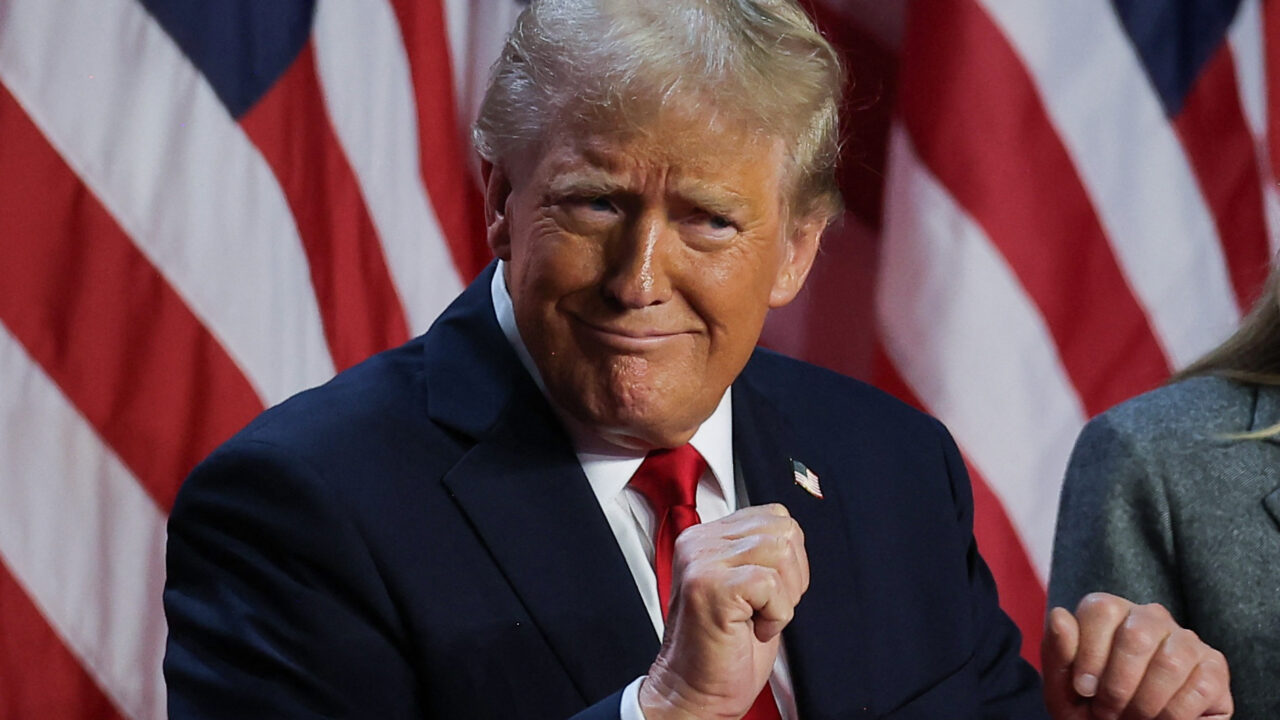
Basically, Trump tariffs and ‘Liberation Day’ declaration have again exposed Nigeria’s lack of preparedness and institutional memory. In 1967, the same Nigeria demonstrated remarkable foresight and brilliance in responding to the British Pound Sterling devaluation, leaving the British government bewildered. Some British cabinet members weren’t even aware of the devaluation until after it happened, privately wondering if Nigeria had an insider within their ranks.
Nigeria’s lack of preparedness for Donald Trump’s presidency is especially noteworthy, given the publication of ‘Project 2025’, a manifesto by the American Right that forms a significant base of the Trump Movement, months before Trump secured the Republican presidential nomination. It’s puzzling that Nigeria didn’t assemble a team of experts, including econometricians, international trade specialists, accountants, lawyers and foreign policy analysts to anticipate and develop potential responses to a Trump victory.
Talking seriously, Nigeria’s problem since suspending the 1963 Republican Constitution has been its reliance on a rentier state driven by consumption rather than production. In the past, notable projects like the Cocoa House, Liberty Stadium, Trans Amadi Industrial Layout and Ahmadu Bello University were built using proceeds from production and exports. In contrast, today’s so-called projects are largely funded by non-value-added oil exports. This shift has contributed to international trade and export-oriented economic development taking a backseat. Only a few leaders, such as Oyo State Governor Seyi Makinde and Minister of Industry, Trade and Investment, Jumoke Oduwole, have raised concerns about the impending dangers of this approach.
Nigeria’s response to the shifting global trade landscape remains, to be polite, incoherent despite establishing an advisory group or task force. To rectify this, Nigeria should consider appointing an international trade czar, similar to South Africa’s approach, and empower him to negotiate on its behalf. This move would help lay the groundwork for navigating the new world of international trade, given the Washington Consensus’s death and burial after dominating global economic policies for over four decades.
Nigeria’s next step, beyond appointing an international trade czar, should be establishing a board of trade and tariffs with technical expertise. This board would proactively oversee tariffs, customs and operational efficiency, balancing local industry protection with revenue generation and competitive economy development. Collaboration between the board, international trade czar, and Minister of Trade and Industry would facilitate negotiating new trade deals and refining existing ones. Ultimately, Nigeria needs a national consensus to transition from a rent-seeking economy to a more competitive and productive one.
The proposed new board and the Ministry of Foreign Affairs should spearhead efforts to ensure the Africa Continental Free Trade Area (AfCFTA) agreements benefit Nigeria. To achieve this, Nigeria’s economy needs a strategic shift towards competitiveness in Africa and globally. In order to foster economic growth and development, redirecting capital from consumption to production should be a priority.
Protectionism is bad! Of course, that has been demonstrated over the past 100 years! Protectionism led to the Great Depression of the 1930s. It also led to the rise of Adolf Hitler. It doesn’t bear good fruits! Its effects include declining living standards and stifled innovation. Trumps tariffs aim to shield American industries, yet their long-term impact on these sectors remains uncertain, more so as retaliatory tariffs from other countries could harm US exports and economic growth.
Furthermore, tariffs may undermine the competitiveness of US industries, especially if other nations don’t impose similar tariffs, leading to higher prices and inflationary pressures that’d dampen consumer spending and economic growth. Conversely, open competitive international trade can foster economic growth and development. Regrettably, Nigeria’s current economic landscape suggests it’s not yet poised to fully capitalize on this approach. To overcome these challenges, Nigeria must gird its loin, become proactive and drive its economy towards export-oriented growth. Failure to do so may end up dragging the country into stagnation.
Jawaharlal Nehru’s famous dictum, ‘export or perish’ resonates with renewed urgency today! Now, Nigeria has to bite the bullet! Dear country now faces a critical juncture, necessitating bold action. The implementation of the Oronsaye Report, which former President Goodluck Jonathan failed to undertake, seems to be a step Trump is taking in the USA, and the heavens have not fallen.
Nigeria’s government structure is bloated, with numerous Ministries, Departments and Agencies – an evident contrast to the United States, which has only 16 departments, and even these are being streamlined by the day. One therefore wonders if Nigeria needs visionary leaders like Obafemi Awolowo, Nnamdi Azikiwe or Ahmadu Bello to return and guide the country once more. These leaders chose production over consumption, leaving lasting legacies like the then University of Ife, now christened Obafemi Awolowo University.
The impact of the Trump Tariff will vary across countries, with Lesotho facing a significant 40% tariff and Nigeria a relatively lower 10%. To mitigate these effects, Nigeria must leverage the African Union to advocate for the bloc’s interests. A step in this direction is Nigeria’s recent gazetting of ECOWAS tariffs. However, the real test lies in how this policy translates to tangible benefits for ordinary citizens, particularly in terms of food affordability and availability.
I have argued elsewhere that, in 1961, Nigerians protested against the abolition of the tax regime because, to them, it might hinder their access to better health and education facilities. Can that happen now? The military’s incursion into Nigeria’s governance system has had long-lasting negative consequences, including the destruction of the police force and tax system to curry favour with the masses and maintain power. The fact that some former military personnel have become ‘emergency democrats’ only adds to the irony.
Given the relatively low volume of trade with the United States, the impact on imports may not be significant. In the current circumstances therefore, Nigeria may have no choice but to adapt to the new international framework, and Tinubu should take proactive measures to steer the country towards stability. Frankly, Nigeria has no alternative! For example, since crude oil exports to the US are substantial, the country may have to adjust its budget to accommodate a price of $65 per barrel, especially considering the global decline in oil prices.
It is interesting to note that Nigeria’s current tax mechanism does not befit a modern state. To address this, the Federal Inland Revenue Service (FIRS) should focus on broadening the tax base rather than increasing the tax burden, a strategy employed by other countries to boost revenue. Burkina Faso’s inclusive approach to taxation, where artisans and small businesses contribute to the tax base, offers a potential model for Nigeria. This approach could be particularly relevant in the current economic climate, where Trump tariffs and global trade shifts require Nigeria to be more proactive in managing its economy. Unfortunately, the country’s tax system is plagued by evasion, with those who are captured often seeking ways to circumvent the system. This is where we are as a country, and it’s sad!
When President Bola Tinubu announced that the era of borrowing to finance the nation’s budget is over, he implicitly underscored the critical role of the FIRS chair, an office vital to the government’s functioning. For the president to have decided on Zacch Adedeji to head such a sensitive office must have taken him a lot of reasonable time to make the choice. Thankfully, the Oyo State-born technocrat has been delivering fantastically on his core mandate. But, more still needs to be done, as his credibility and ability will be judged on the nation’s Internally Generated Revenue (IGR) taking centre stage in achieving the government’s transformational goals.
Considering everything, the Trump tariffs could potentially catalyze a new era with new ideas, a new chapter and a new start for Nigeria. Who knows?
May the Lamb of God, who takes away the sin of the world, grant us peace in Nigeria!
*KOMOLAFE wrote in from Ijebu-Jesa, Osun State, Nigeria (ijebujesa@yahoo.co.uk; 08033614419 – SMS only)




















You must be logged in to post a comment Login