
Africa
Trump Threats And Diplomatic Solutions -By Ibrahim Mustapha Pambegua
Nigeria’s security architecture should be restructured and properly equipped to effectively combat insecurity. Such efforts will help build trust and confidence between Nigeria and the United States.

Ted Cruz, Republican Senator from Texas, has stirred the hornet’s nest with a post on his X account alleging systematic persecution of Christians in Nigeria. Senator Cruz has also moved a motion seeking to designate Nigeria as a Country of Particular Concern (CPC).
The U.S. President, Donald Trump, has granted Cruz’s and other senators’ wishes by officially designating Nigeria as a Country of Particular Concern. With this development, Nigeria now risks sanctions, visa restrictions, cuts in foreign aid, and even the possibility of U.S. military intervention.
When Ted Cruz first advanced his “genocide against Nigerian Christians” narrative, several Christian leaders, including the revered Bishop Hassan Mathew Kukah, faulted it. They maintained that the ungodly killings by rapacious terrorists cut across different faiths.
This assertion was further reinforced by the Federal Government through the Minister of Information and Communication, Muhammad Idris. However, with Trump’s reported directive to the Department of Defense to prepare for action if Christians “are not stopped from being killed” in the country, the diplomatic brawl between both nations has taken a dangerous turn.
Nigeria has been battling insecurity for the past two decades. In 2014, at the peak of insurgency, the country missed a golden opportunity to nip in the bud the dangerous activities of Boko Haram insurgents. The Barack Obama administration placed an embargo on the sale of arms and ammunition to the Goodluck Jonathan government. As a result, President Jonathan had to rely on the black market to procure weapons for military use. The U.S. action dealt a major blow to Nigeria’s fight against insurgents and other violent crimes.
Since then, insurgents and bandits have grown more emboldened—killing with impunity and holding the country to ransom. For more than a decade, the Nigerian government has spent trillions of naira combating these ragtag groups, who continue to kill indiscriminately. These murderers maim and kill without considering their victims’ religion or ethnicity.
That is why, when Ted Cruz claimed that there was a genocide against Nigeria’s Christian population, many Nigerians quickly faulted the narrative. For Muslim communities that have continued to suffer rampant attacks and killings in Katsina, Zamfara, Kaduna, Niger, Sokoto, and Kebbi States, Cruz’s narrative of Christian “genocide” did not reflect reality—it appeared one-sided and selectively sympathetic.
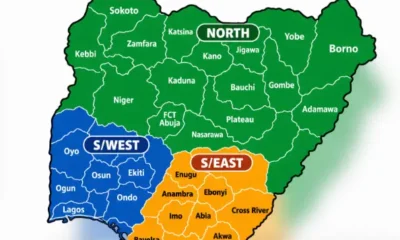
There is indeed insecurity across the country: Boko Haram insurgency in the North-East, banditry in the North-West, herder–farmer crises in the North-Central, militancy in the South-South, and IPOB agitation in the South-East. Instead of threatening fire and brimstone against a nation grappling with insecurity on multiple fronts, the U.S. should assist Nigeria with intelligence sharing to help tackle the persistent crises afflicting the country.
It can be recalled that Congressman Scott Perry revealed that the U.S. aid agency, the United States Agency for International Development (USAID), funded terrorist organisations, including Boko Haram. Perry, a Republican representing Pennsylvania, made the claim during the inaugural hearing of the Subcommittee on Delivering on Government Efficiency. The session, titled “The War on Waste: Stamping Out the Scourge of Improper Payments and Fraud,” focused on alleged misappropriations of taxpayer funds.
“Who gets some of that money? Does that name ring a bell to anybody in the room? Because your money—$697 million annually—plus shipments of cash funds in madrasas, ISIS, Al-Qaeda, Boko Haram, ISIS-Khorasan, terrorist training camps. That’s what it’s funding,” Perry emphasized.
Does Nigeria need more information than what Scott Perry disclosed to understand the complicity of the U.S. in insecurity across the globe? Certainly not! Even before Perry’s bombshell, the U.S. had been accused of aiding or abetting terrorism.
This allegation comes amid reports of several countries the U.S. invaded under trumped-up charges of terrorism—only to leave them in ruins. The U.S. has often entered terrorism-infested countries under the pretext of helping them root out extremists and restore stability. But the million-naira question remains: Are those countries better off today?
One remembers with nostalgia how once-civilised nations such as Iraq, Syria, Libya, and Somalia became shadows of their former selves. The U.S. invasion of these countries left them worse than before. Unsurprisingly, the U.S. plan to deploy military personnel on Nigerian soil has been received with mixed reactions.
The reason for Nigerians’ objection to U.S. military presence is not far-fetched—U.S. interventions in other countries have often ended in tragedy, aggravating rather than resolving conflicts.
Some diplomatic experts have shared their thoughts on why the U.S. is showing special interest in Nigeria’s insecurity using the Christian “genocide” narrative as a smokescreen. They believe Nigeria’s support for a two-state solution to the intractable Israel–Palestine crisis at the recently concluded UNGA may have provoked Washington.
Israel remains one of America’s strongest allies. In addition, Nigeria’s refusal to accept U.S. deportees and its growing diplomatic ties with China—an archrival of the U.S.—as well as its decision to align with BRICS, the emerging bloc of global powers, are seen as major irritants.
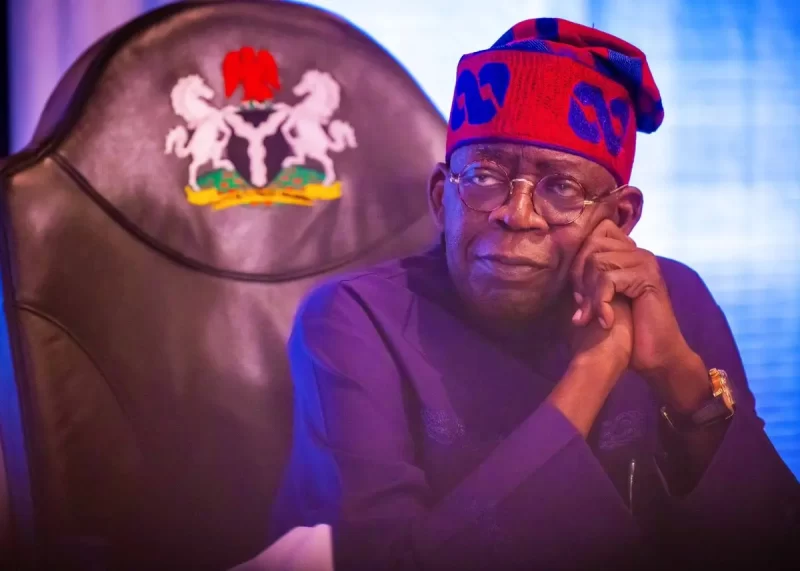
Whatever the reasons, President Bola Ahmed Tinubu should explore diplomatic means to resolve the impasse. The President should constitute and dispatch a powerful delegation to meet with U.S. senators over the false allegation of Christian “genocide” in Nigeria.
The government’s failure to appoint ambassadors has created a significant vacuum, which negatively affects Nigeria’s diplomatic image. President Tinubu should, without delay, appoint qualified and competent hands to head the country’s embassies and project a positive image abroad.
Finally, Nigeria’s security architecture should be restructured and properly equipped to effectively combat insecurity. Such efforts will help build trust and confidence between Nigeria and the United States.
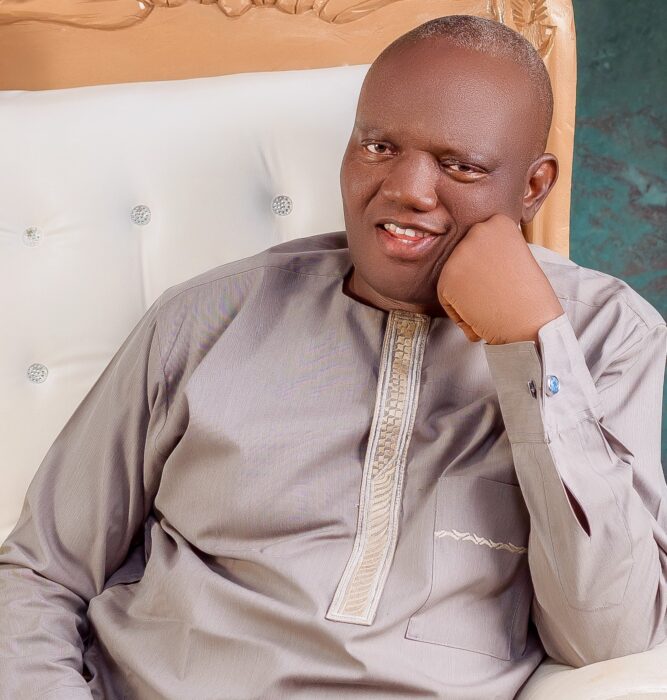
— Ibrahim Mustapha, Pambegua, Kaduna State.
📞 08169056963


















You must be logged in to post a comment Login