
Africa
Was Uju-Kennedy Ohaneye Dropped As A Minister For Being A Non-Conformist Or Non-Performer?, by Isaac Asabor


The Nigerian political landscape is often fraught with controversy, intrigue, and speculation, especially when significant changes occur in government positions. The recent removal of Hon. Uju-Kennedy Ohaneye as the Minister of Women Affairs has sparked considerable debate across the nation. Some argue that she was dropped because of her non-conformist stance on various national issues, while others believe it was due to her perceived non-performance in office. The question on everyone’s lips is: Was Ohaneye dropped for being a non-conformist or a non-performer?
Ohaneye, a vibrant politician and lawyer, was among the few women nominated for ministerial positions by President Bola Ahmed Tinubu earlier this year. Her nomination was seen as a symbol of progress, representing the effort to include more women in Nigeria’s decision-making corridors. With her impressive background in law and public service, many Nigerians were optimistic about what she would bring to the table. However, her time in office was abruptly cut short, leaving the public puzzled about the reasons behind her dismissal.
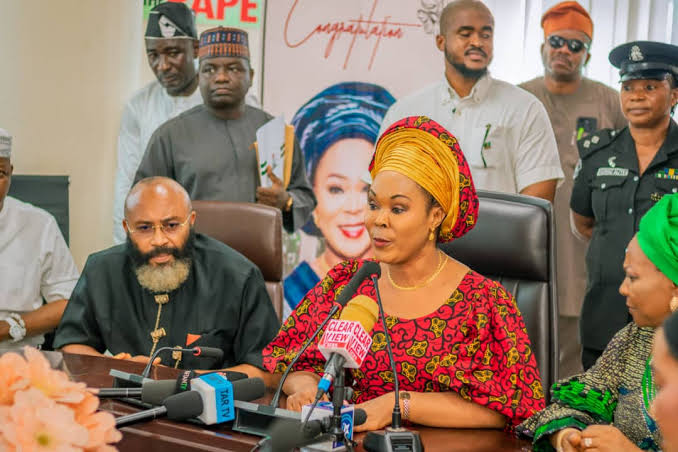
From the onset of her appointment, Ohaneye was seen as a bold and assertive figure, unafraid to challenge the status quo. Her outspoken nature and willingness to speak truth to power earned her both admiration and criticism. In a political climate where conformity is often rewarded and dissent suppressed, Ohaneye’s refusal to play along with traditional political norms likely rubbed many of her colleagues the wrong way.
One of the key instances where Ohaneye displayed her non-conformist attitude was her stance on the subsidy removal policy. As many politicians within the ruling party rallied around the government’s decision to remove fuel subsidies, Ohaneye publicly questioned the timing and implementation of the policy. She argued that while subsidy removal might be a necessary step, the government had not put in place adequate measures to cushion the impact on the poor and vulnerable. This position placed her at odds with the pro-subsidy removal camp within the administration, which may have contributed to her being sidelined.
Ohaneye also took a firm stand on the need for comprehensive electoral reforms. She was one of the few ministers who openly advocated for the implementation of recommendations made by civil society groups for free and fair elections. While some saw this as a principled stance, others within her party felt that she was too critical of a system that had put them in power. In a country where political loyalty is often prioritized over principles, her unwillingness to toe the party line could have led to her removal.
While Ohaneye’s non-conformist nature might have raised some eyebrows, it is essential to consider whether her performance as a minister also played a role in her dismissal. Government critics have pointed out that during her time in office, there were several areas where she failed to make a significant impact.
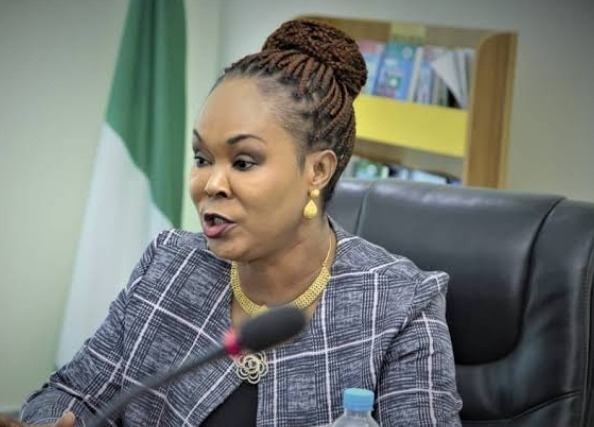
The ministry under her supervision, Ministry of Women Affairs, is no doubt a portfolio that is crucial for addressing the needs and rights of women in Nigeria. Critics argue that during her tenure, there was little to no progress in advancing policies that directly impacted the lives of Nigerian women. Issues like gender-based violence, access to education for the girl-child, and economic empowerment for women were reportedly not given the attention they deserved under her leadership.
Ohaneye also faced criticism for her handling of budgetary allocations. Some reports suggest that there were delays in disbursing funds meant for key programs under her ministry. These delays, according to insiders, hampered the execution of projects that could have had a tangible impact on women’s lives, further cementing the perception that she was not delivering results.
Moreover, there were allegations of poor coordination within her ministry. Staff members reportedly complained about a lack of clear direction, with many initiatives stalling due to indecision at the top. This inefficiency, critics argue, reflected poorly on her managerial capabilities and ultimately contributed to her removal.
Adding fuel to the ongoing debate about Ohaneye’s removal were reports of an unusual reaction within her former ministry. Not long after the news of her dismissal broke, media outlets reported that staff members within the Ministry of Women Affairs were seen celebrating her departure. According to these reports, some staff even described her removal as a relief, hinting that working under her leadership had been challenging.
This reaction raises questions about her relationship with the ministry’s staff. While it is not uncommon for tensions to exist between leadership and subordinates, the fact that her removal was met with open jubilation suggests that her management style may have contributed to discontent within the ministry. The staff’s response has fueled speculation that her leadership approach may have led to inefficiencies and internal friction, potentially justifying her removal on grounds of non-performance.
In Nigerian politics, the performance of a public official is not always the sole determinant of their fate. Power dynamics and political maneuvering often play a significant role. Ohaneye’s fall from grace may also have been the result of political calculations within the ruling party.
It is worth noting that Ohaneye’s appointment was seen by some as an attempt to appease certain interest groups within the political landscape. As a member of the southeast, a region that has historically been marginalized in Nigeria’s power distribution, her inclusion in the cabinet was expected to balance regional representation. However, her removal has led to renewed accusations of marginalization by southeastern leaders, who see this as yet another instance of the region being shortchanged in national appointments.
There is also the possibility that Ohaneye became a victim of factional infighting within the ruling party. Nigeria’s political parties are often divided along various interest groups, with different factions vying for influence and control. It is possible that Ohaneye’s removal was the result of her alignment with a particular faction that found itself on the losing side of an internal power struggle.
Without a doubt, Public opinion on Ohaneye’s removal is divided. Her supporters argue that she was a victim of her non-conformist approach, which did not sit well with the political elite. They view her as a principled leader who was unwilling to compromise her values for political gain. Many Nigerians, especially women’s rights activists, have expressed disappointment over her removal, arguing that she was one of the few female voices in a male-dominated cabinet.
On the other hand, her critics believe that her removal was justified, pointing to her perceived lack of performance in office. They argue that while she may have been vocal on certain issues, her inability to deliver tangible results was ultimately her downfall. The jubilation within the ministry following her removal only adds weight to these claims.
It is likely that Ohaneye’s removal was the result of a combination of factors, including her non-conformist attitude, perceived non-performance, and political maneuvering within the ruling party. In a political system as complex as Nigeria’s, it is rarely one factor that determines the fate of public officials. Instead, it is often a delicate balance of performance, loyalty, and political survival.
In Ohaneye’s case, her boldness and refusal to conform may have alienated her from key figures within the government. At the same time, her critics could point to her lack of results in office as justification for her removal. Ultimately, her dismissal serves as a reminder of the delicate tightrope that public officials in Nigeria must walk, balancing their principles, performance, and political alliances.
Chinyere Ohaneye’s removal as a minister raises important questions about the criteria used to evaluate public officials in Nigeria. Was she dropped because she dared to challenge the status quo, or was it because she failed to deliver on her promises? While the exact reasons may never be fully known, her case highlights the complex interplay of performance, principles, and politics in the Nigerian government.
The jubilation within her former ministry after her removal adds an additional layer to the discussion, suggesting that her leadership style may not have been well-received by those she worked with. Whether her downfall was due to being a non-conformist, a non-performer, or a mix of both, Ohaneye’s case serves as a reflection of the broader issues facing governance and accountability in Nigeria. As the country continues to grapple with political challenges, the case of Ohaneye will likely remain a point of reference in discussions about governance, leadership, and representation.



























You must be logged in to post a comment Login