
Africa
What African Leaders Must Learn from Biden’s Cancer Disclosure: Transparency Is Not Weakness—It Is Leadership -By Psychologist John Egbeazien Oshodi
This is not about one person. It is about an entire governance culture that must be uprooted and rebuilt. From Abuja to Accra, from Kigali to Kinshasa, the message must be heard: transparency is not a Western ideal. It is a universal democratic value. The lesson from Biden is simple—but powerful: Humanize leadership. Institutionalize truth. End the era of staged silence. Let leaders rise, not only with strength—but with honesty.

In democratic societies, health is not just a private matter when the individual in question is a sitting or former president. Former U.S. President Joe Biden’s recent diagnosis of advanced prostate cancer, with a confirmed Gleason score of 9 and metastasis to the bone, was announced with striking clarity. The news did not leak through whispers or backdoor sources—it came directly from his office, with medical specificity. Compare that to what we see in Africa, especially in Nigeria, where the physical and cognitive state of national leaders often becomes a matter of national speculation, secretive cabals, staged photographs, and deafening silence. It is a form of institutional dishonesty. This moment offers a rare and urgent lesson in democratic accountability—not about cancer alone, but about how trust and power are managed in the hands of those chosen to lead.
Joe Biden’s team did not hide behind ambiguous phrases like “routine check-up” or “well-deserved rest.” They came forward with directness and courage, informing the world not only of the cancer diagnosis, but of the specific type, its advanced Gleason score of 9, and the sobering fact that it had spread to his bones. This was not just a clinical statement—it was a moment of dignified vulnerability. They did not shroud the truth in euphemisms. They respected the public enough to tell them the full reality. And remarkably, the response was not political exploitation. Even some of Biden’s fiercest opponents paused to offer empathy. The media did not turn it into a circus. There was no flood of conspiracy theories. The people did not panic. They stood still, they listened, and they sympathized. Because when a leader speaks plainly—when he treats his citizens as adults, not as a crowd to be managed—what returns is trust, not ridicule.
In contrast, when African leaders fall ill or disappear from public view, the nation is left in a fog. Weeks pass. Months pass. No clear update is given. Instead, the public is fed deflections—“he is resting,” “he is attending to urgent matters abroad,” or the ever-opaque “he is working from overseas.” And in that silence, anxiety grows. Rumors thrive. Power struggles begin to simmer behind closed doors. What makes it worse is that many African leaders refuse to delegate authority to their vice presidents, even temporarily, fearing that the deputy may begin to “build his own power,” or gain momentum as a possible successor. This fear-driven leadership leaves not just the public in the dark—but also the vice president himself, who is often sidelined, uninformed, and treated like a symbolic accessory rather than a constitutional partner. Thus, while the nation waits in uncertainty, both the governed and those expected to govern in the interim are excluded from the truth.
This is not governance—it is hoarding of power wrapped in fear. And it reflects a deep distrust not only of institutions, but of the very people these leaders claim to serve.
In Nigeria and much of Africa, we often hear vague public statements like, “The president is abroad for a conference,” or “He is resting after a long week,” or “He is working remotely.” But soon, credible sources quietly leak that the president is receiving cancer treatment in a UK hospital, undergoing dialysis in Germany, or has slipped into a semi-conscious state in a Saudi facility. When questioned, government spokespeople respond defensively, accusing the press or citizens of spreading rumors. What is this if not institutional gaslighting? This pattern, deeply rooted in authoritarian psychology, reveals a damaging belief: that disclosure weakens control, and that power must always appear invincible, even when the body is failing. This mindset is a colonial relic, fused with traditional fear-based leadership, where rulers are never to be seen as vulnerable. But today’s citizens demand better.
Secrecy surrounding a leader’s health is not just political—it has psychological consequences. It creates anxiety and confusion in the populace. It undermines institutional confidence in governance. It breeds conspiracy theories, often along ethnic or regional lines. It damages the public’s sense of national continuity and preparedness. In Nigeria, for instance, many still remember how President Umaru Musa Yar’Adua’s illness was hidden until it was too late—resulting in a dangerous power vacuum. The same applies to recurrent fears about the health of President Tinubu, where “medical tourism” is publicly denied but privately arranged. When a nation is left guessing about the health of its leader, the people start to feel abandoned, manipulated, and unsafe.
African leaders, like many of their citizens, are psychologically shaped by a worldview in which illness is tied to spiritual weakness, fear of being “jazzed” or hexed, fear of coups or political collapse, and the stigma of aging or cognitive decline. But in the modern world, real power comes from authenticity, not illusions of perfection. Leaders are human. They fall ill. And when they communicate that clearly, they grow in legitimacy—not shrink. Let us not forget: In many Western democracies, leaders regularly publish medical records. U.S. presidents undergo annual physicals and release summaries to the public. Yet in Africa, the people are expected to accept shadows in place of substance. This is not tradition. This is control.
The people do not expect perfection. They expect honesty. Even when citizens learn that their leader is sick, they do not automatically call for resignation. What they ask for is a plan for continuity, clear medical briefings, and proof that governance will not collapse. When these are provided, the nation breathes. When they are withheld, the nation suffocates in silence. This is not a plea for morbid curiosity. It is a demand for constitutional clarity, democratic integrity, and public reassurance.
African democracies must now institutionalize medical disclosure. Presidents, governors, and top officials must submit regular health reports to a nonpartisan public health oversight body. If a leader is incapacitated, a temporary delegation of power must be activated without secrecy. State House medical facilities must be modernized so that our leaders stop fleeing to foreign hospitals, while local citizens are left to die in dilapidated clinics. If citizens cannot access proper healthcare, and their leaders secretly receive elite care abroad, what kind of democracy is that?
Joe Biden, at 82, facing bone metastases, had the courage to face his diagnosis publicly. He knew the political risks. He did it anyway. And in that moment, he modeled a principle that all African leaders must understand: the strength of leadership is not in hiding illness. It is in showing up, telling the truth, and allowing the people to walk with you—not behind a veil, but in shared humanity. Even in illness, he continues to lead. Can we say the same of our African presidents?
Let us be clear: This is not about one person. It is about an entire governance culture that must be uprooted and rebuilt. From Abuja to Accra, from Kigali to Kinshasa, the message must be heard: transparency is not a Western ideal. It is a universal democratic value. The lesson from Biden is simple—but powerful: Humanize leadership. Institutionalize truth. End the era of staged silence. Let leaders rise, not only with strength—but with honesty.
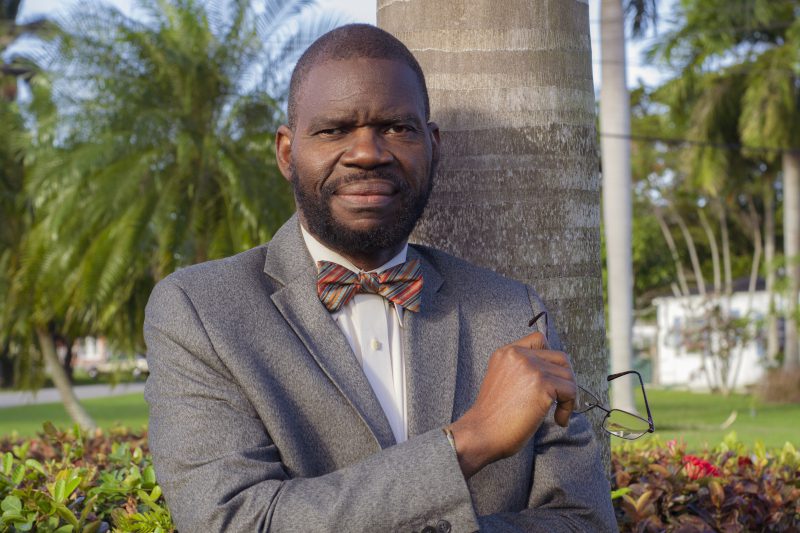
Professor John Egbeazien Oshodi is an American psychologist, educator, and author specializing in forensic, legal, and clinical psychology, cross-cultural psychology, police and prison sciences, and community justice. Born in Uromi, Edo State, Nigeria, he is the son of a 37-year veteran of the Nigeria Police Force—an experience that shaped his enduring commitment to justice, security, and psychological reform.
A pioneer in the field, he introduced state-of-the-art forensic psychology to Nigeria in 2011 through the National Universities Commission and Nasarawa State University, where he served as Associate Professor in the Department of Psychology. His contributions extend beyond academia through the Oshodi Foundation and the Center for Psychological and Forensic Services, advancing mental health, behavioral reform, and institutional transformation.
Professor Oshodi has held faculty positions at Florida Memorial University, Florida International University, Broward College, where he also served as Assistant Professor and Interim Associate Dean, Nova Southeastern University, and Lynn University. He is currently a contributing faculty member at Walden University and a virtual professor with Weldios University and ISCOM University.
In the United States, he serves as a government consultant in forensic-clinical psychology, offering expertise in mental health, behavioral analysis, and institutional evaluation. He is also the founder of Psychoafricalysis, a theoretical framework that integrates African sociocultural dynamics into modern psychology.
A proud Black Republican, Professor Oshodi advocates for individual empowerment, ethical leadership, and institutional integrity. His work focuses on promoting functional governance and sustainable development across Africa.


















You must be logged in to post a comment Login