
Africa
Why Journalists Pick Sides With Their Pen -By Isaac Asabor
Just as journalists must interrogate their motives, readers must also learn to read critically. Not every glowing editorial is gospel. Not every scathing article is truth. Readers must look out for signs of bias, verify facts independently, and consume news from multiple credible sources.

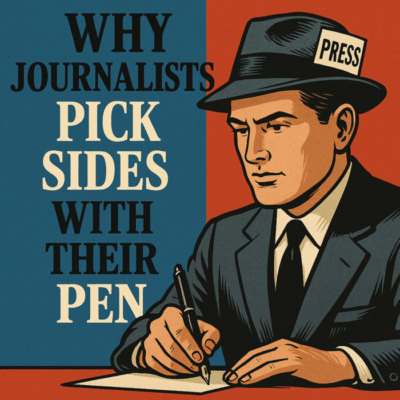
Each time I write glowingly about a public figure, be he or she a celebrity in politics or entertainment, some people start whispering about obsession or sycophancy. The moment I wield the pen to criticize another, they say I am out for revenge or trying to settle scores. But let us set the record straight: neither is true. What I do, and what responsible journalists everywhere do, is guided by professional judgment, public interest, and the moral obligation of the press. We are not here to massage egos or lash out. When we praise, it is for merit; when we criticize, it is for accountability. That is the essence of journalism, not sentiment, not vendetta, and certainly not patronage.
In the theater of news and public commentary, one question that constantly lingers is: why do journalists praise some public personalities, especially political leaders, while relentlessly criticizing others? Why does the media celebrate one governor as a reformer and another as a dictator, or hail one president’s policies as visionary while dismissing another’s as catastrophic?
At first glance, it may seem like bias, partisanship, or the influence of brown envelope journalism. In some cases, it is. But the full answer goes deeper, rooted in communication theory, media roles, social responsibility, and the evolving dynamics between power and the press.
This piece examines the reasons, both idealistic and problematic, why journalists lean toward eulogizing certain leaders and condemning others, and the lessons such editorial choices impart to the society.
To start with, journalism has always been more than the art of reporting facts. It plays the role of a watchdog, a public educator, and a moral barometer. Journalists are often tasked with holding the powerful accountable, giving voice to the voiceless, and setting standards for public conduct.
So, when a celebrity; whether in politics or in entertainment, is praised in the media, it is not just flattery. It often reflects the perceived alignment of that leader’s actions with societal progress or values. For instance, a journalist may praise a state governor who builds roads, pays salaries promptly, or invests in education, because those actions tangibly benefit the public.
Conversely, condemnation arises when a leader’s decisions result in public suffering, ike hoarding palliatives, mismanaging state funds, suppressing press freedom, or being indifferent to rising poverty. In such cases, condemnation becomes a journalistic duty, not a personal vendetta.
From a communication theory perspective, two critical concepts explain the praise-or-condemn dilemma: Agenda-Setting and Framing Theory.
Agenda-setting theory posits that the media does not tell people what to think, but it tells them what to think about. When journalists consistently spotlight a leader’s progressive policies, they are shaping national conversations in that direction. If they continually expose a leader’s incompetence, corruption, or arrogance, they are setting the public’s agenda around accountability.
Framing, on the other hand, is about how a story is told. A journalist’s choice of words, tone, headlines, and structure shapes public perception. A report titled “Governor “A” Launches N10 Billion Industrial Project to Empower Youths” frames the leader as forward-thinking. But a headline like “Governor “B” Splurges N1 Billion on Convoys Amid Hunger Crisis” paints another as wasteful. The facts may both be true, but framing defines perception.
Thus, praise or condemnation is often a function of how journalists frame the leader’s actions and why they choose to highlight them.
Ideally, journalists are guided by public interest. When they praise a political leader or an entertainer, it should be to showcase a model worth replicating. When they criticize, it should be to call attention to leadership failures that need urgent correction. In this role, the journalist is not just a reporter, but a societal referee, promoting excellence and calling out incompetence.
However, we must also acknowledge the ugly truth: not all praise is sincere, and not all condemnation is fair. The Nigerian media space, like many others globally, is not immune to influence-peddling, favoritism, or partisanship.
Against the forgoing backdrop, it is not out of place to opine in this context that some journalists praise leaders or celebrities because they are on their payroll. Some condemn out of spite, political affiliation, or personal grudge. Others write glowing tributes because they were promised contracts, appointments, or envelopes of cash. In such instances, journalism becomes a tool for propaganda or character assassination, not a platform for truth-telling.
This explains why two newspapers can carry two conflicting headlines on the same event. One might scream, “President Launches Historic Economic Reform,” while another claims, “Tinubu’s Policy Pushes More Nigerians into Poverty.” Both stories reflect the slant and agenda of the editors and reporters behind them.
A less discussed psychological factor that also drives this pattern is the “halo and horns effect.” The halo effect is the tendency to overpraise someone based on one positive trait or success. For example, a journalist who admires a leader for free education may overlook that same leader’s penchant for nepotism or media repression.
The horns effect, on the other hand, is the opposite, judging someone harshly based on one negative trait. A governor who mishandled a protest might continue to be written off by the press, even if he later initiates a sound healthcare reform.
These effects show how difficult it is, even for journalists, to remain neutral once a narrative about a leader is already cemented.
At its core, journalism is about shaping values. When journalists praise a governor for developing rural infrastructure, they are encouraging other leaders to emulate him. When they write damning articles about a senator caught in a bribery scandal, they are deterring others from following the same path.
In other words, journalism praises and condemns not merely to inform, but to influence. It sets moral boundaries. It says: “This is the kind of leadership we want” and “This behavior is unacceptable.”
That is why even critical writing should be constructive, not vengeful. And praise should be based on truth, not political loyalty.
Given all of the above, journalists must ask themselves critical questions before writing praise or condemnation: Am I informing the public or flattering power? Is this criticism backed by verified facts or driven by my political bias? Am I praising this leader to inspire better governance or to curry favor? A journalist who fails to answer these honestly is not doing journalism, rather he or she is doing damage.
Just as journalists must interrogate their motives, readers must also learn to read critically. Not every glowing editorial is gospel. Not every scathing article is truth. Readers must look out for signs of bias, verify facts independently, and consume news from multiple credible sources.
In this age of sponsored content and media polarization, blind trust in journalism can be dangerous.
In the final analysis, journalism is not about being a cheerleader or a hater. It is about being a truth-teller. A journalist’s job is not to always be on the side of power, or always against it, but always on the side of the people.
When journalists praise, it must be because the public has benefited. When they condemn, it must be because the people have suffered. Anything short of this is not journalism, it is manipulation.
So, when next you see a journalist hailing one leader and tearing down another, ask: Is this piece upholding truth and public good, or just doing someone’s bidding? The foregoing question is necessary because in a democracy, the pen must remain mightier than the pocket.

























You must be logged in to post a comment Login