
Africa
Why Nigerians Must Trust Peter Obi for 2027: A Vision for Prosperity and Good Governance -By Jeff Okoroafor
Nigerians must trust him because he walks the talk—his lifestyle reflects his advocacy for prudence. He is accessible and accountable, unlike leaders who isolate themselves from the people. Moreover, he has no godfathers to repay—his loyalty is to Nigeria, not political benefactors.

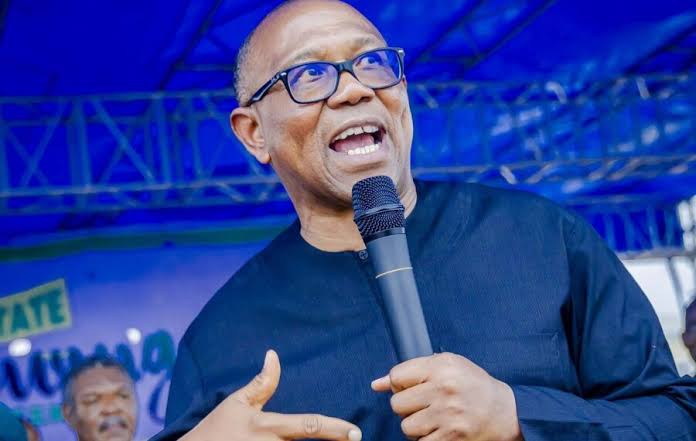
As Nigeria stands at a critical crossroads in 2027, the need for visionary, competent, and selfless leadership has never been more urgent. The country grapples with economic instability, insecurity, corruption, and a declining standard of living. Amid these challenges, Peter Obi emerges as the most credible and prepared leader to steer Nigeria toward recovery and sustainable development. His track record, policy-driven approach, and unwavering commitment to transparency make him the best choice for president in 2027. Nigerians must trust him not out of mere sentiment but because of his demonstrable capacity to deliver good governance.
A Proven Track Record of Prudent Leadership
Peter Obi’s tenure as governor of Anambra State (2006–2014) remains a benchmark for effective governance in Nigeria. Under his leadership, Anambra transformed from a debt-ridden state to one of the most economically stable in the country. He left office with over $50 million in savings and significantly improved infrastructure, education, and healthcare without borrowing. His financial discipline starkly contrasts with the reckless spending seen in many states today.
Obi’s approach was simple: prioritize the people’s welfare over political extravagance. He demonstrated that governance is not about personal enrichment but about measurable progress. If he could achieve this at the state level, imagine what he could do for Nigeria with the same principles.
Economic Reforms and Wealth Creation
Nigeria’s economy is in dire straits—rising debt, inflation, unemployment, and a weakening naira demand urgent intervention. Peter Obi’s economic philosophy is anchored on production, not consumption. He advocates shifting Nigeria from an import-dependent economy to one driven by local manufacturing, agriculture, and technology.
His plan includes revitalizing the agricultural sector through mechanization and agro-processing to reduce food imports and create jobs. He also emphasizes supporting SMEs by providing access to credit and reducing multiple taxation, which stifles growth. Additionally, he proposes cutting wasteful government spending and redirecting funds to critical sectors like education and healthcare. Furthermore, he aims to encourage foreign investment through policy stability and ease of doing business.
Unlike leaders who make empty promises, Obi’s proposals are data-driven and grounded in realism. His background in business and economics equips him with the expertise to navigate Nigeria out of its current fiscal crisis.
A Corruption-Free Leadership
Corruption remains Nigeria’s greatest enemy, draining public resources and eroding trust in government. Peter Obi’s frugality and accountability in Anambra prove that he is not in politics for personal gain. He is one of the few Nigerian politicians who can openly declare their assets without fear of scrutiny.
His administration will enforce strict anti-corruption measures, including transparent public procurement processes to curb contract inflation. He also plans to digitize government operations to reduce human interference and leakages. Moreover, he will strengthen oversight institutions with real independence to hold officials accountable.
Nigerians can trust Obi because he leads by example—a rare trait in a political landscape dominated by self-serving elites.
Security and National Unity
The worsening insecurity—terrorism, banditry, kidnappings—requires a leader with both the will and strategy to restore peace. Obi’s security blueprint emphasizes community policing to decentralize security operations and improve intelligence gathering. He also plans to modernize the military and police with better training, equipment, and welfare. Beyond these measures, he aims to address the root causes of unrest, such as poverty, unemployment, and marginalization.
Beyond security, Obi is a unifier. Unlike divisive politicians who exploit ethnic and religious fault lines, he preaches national cohesion. His appeal across regions proves that Nigerians yearn for a leader who prioritizes merit and inclusivity over divisive politics.
Education and Human Capital Development
A nation’s greatness lies in the quality of its education system. Nigeria’s public schools and universities are in decay, with frequent strikes and poor funding. Peter Obi’s investment in education as governor saw Anambra consistently rank among the top in WAEC performances. His national plan includes increasing education funding to meet UNESCO’s recommended 26% of the budget. He also prioritizes teacher training and better remuneration to restore dignity to the profession. Additionally, he will promote technical and vocational education to equip youths with employable skills.
An Obi presidency will ensure that Nigeria’s greatest asset—its youth—are empowered to compete globally.
Healthcare for All
The COVID-19 pandemic exposed Nigeria’s weak healthcare system. Many hospitals lack basic equipment, and medical professionals flee abroad due to poor working conditions. Obi’s health agenda includes increased funding for primary healthcare to reduce maternal and infant mortality. He also plans to revitalize tertiary hospitals to curb medical tourism. Furthermore, he will introduce incentives for healthcare workers to retain talent.
A healthy nation is a productive nation, and Obi understands this better than most.
The Power of Trust and Integrity
In a country where politicians routinely betray public trust, Peter Obi stands out as a man of integrity. He does not engage in political theatrics or empty rhetoric. His campaign in 2023 was issue-based, focusing on solutions rather than divisive rhetoric.
Nigerians must trust him because he walks the talk—his lifestyle reflects his advocacy for prudence. He is accessible and accountable, unlike leaders who isolate themselves from the people. Moreover, he has no godfathers to repay—his loyalty is to Nigeria, not political benefactors.
Conclusion: Nigeria’s Best Hope for 2027
The 2027 election is not just another political contest; it is a referendum on Nigeria’s survival. Peter Obi represents the break from the failed leadership of the past. His competence, vision, and integrity make him the leader Nigeria needs to reclaim its lost glory.
Nigerians must look beyond tribal or religious sentiments and vote for a leader who can deliver real progress. Trusting Peter Obi is not just an option—it is a necessity for a better Nigeria. The time to act is now.
The future is possible. The future is Peter Obi.

Jeff Okoroafor
Jeff Okoroafor is a social accountability advocate and a political commentator focused on governance, accountability, and social justice in West Africa.























You must be logged in to post a comment Login