
Africa
A Cry for Justice—Madam Chief Justice, The Judiciary Must Not Be Used to Destroy Rivers State -By John Egbeazien Oshodi
The actions of these five justices violate the principles outlined in the International Judicial Accountability Principles (IJAP) and the Association of Legislative Drafting and Advocacy Practitioners (ALDRAP) guidelines. These frameworks emphasize judicial restraint, especially when a matter is actively before another court.

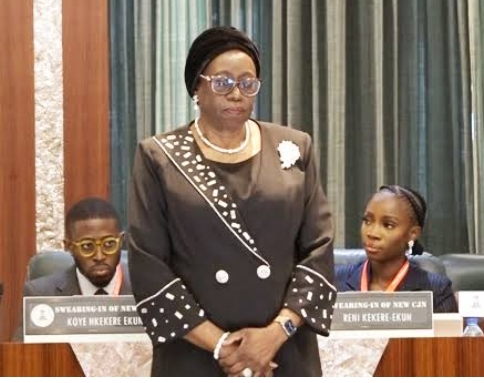
Your Ladyship,
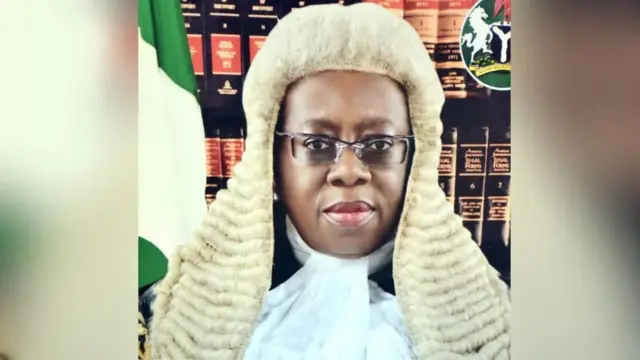
I write this letter with profound sadness, my heart weighed down by the state of our judiciary. My hands shake—not from fear, but from the deep sorrow of witnessing what should be the last refuge of justice being turned into a tool for political manipulation. Madam Chief Justice, you are the steward of our judiciary, a symbol of integrity, and a model for legal excellence—yet under your watch, justice appears to be slipping away, leaving confusion, hardship, and despair in its wake.
This is not just a matter of legal technicalities—it is about real people, real lives, and the survival of an entire state. Children will go to bed hungry, not because their parents are lazy, but because their state has been deliberately strangled. The sick will be left without medicine, lying in pain on hospital beds, because political power plays have cut off critical funding. Workers, who have spent years serving the people, will soon cry out in anguish as their salaries are left unpaid, their families staring at an uncertain future.
I think of the market woman, who rises before dawn to ensure her children do not starve, only to find that the government she relies on is being torn apart. I think of the young graduates, full of dreams, only to realize that their future is being traded away for political interests. I think of the elderly, who have given their lives to this nation, now watching it descend into disorder, as lawlessness and political interference overshadow fairness and the rule of law.
Madam Chief Justice, we all know that judicial rulings are not always free from political influence. You have been part of this system for decades—you have seen how the judiciary is sometimes used for purposes beyond justice. But even if what happened under these five justices cannot be undone, I ask you to reflect in private, away from the pressures of politics, and ask yourself: Was this truly fair? Was this truly just? Is this the mark you want to leave on history?
And most critically, what happens now to the Federal High Court in Port Harcourt, which is still actively handling this case? The matter has not been dismissed. The court is still in session. But now, the judges there sit in utter confusion, caught between fulfilling their legal duty and the overwhelming shadow of a Supreme Court ruling that came too soon.
Madam Chief Justice, what direction are they to take? Do they abandon their role? Do they ignore the case before them? Do they yield to pressure? Or do they uphold the Constitution as they swore to do?
You hold the power to guide this situation toward justice. You hold the power to preserve the integrity of the courts
Madam Chief Justice, I cry for Rivers State. I cry for Nigeria.
A Judiciary in Disarray—Confusion in the Lower Courts
Madam Chief Justice, if you remain silent, history will remember.
The Federal High Court in Port Harcourt had set April 16, 2025, to rule on the defection case. The law was clear, the judicial process was in motion, and due process was being followed. Yet, before the court could speak, before justice could take its rightful course, five Supreme Court justices—Justice Uwani Musa Abba-Aji (Presiding), Justice Emmanuel Akomaye Agim, Justice Ibrahim Mohammed Musa Saulawa, Justice Chioma Egondu Nwosu-Iheme, and Justice Jamilu Yammama Tukur—ignored judicial boundaries, disregarded the ongoing legal process, and rushed in to deliver a ruling that has now left the Federal High Court in complete confusion.
My Lord, what was the rush? Who was pursuing them? Why did they not allow the Rivers court to reach its decision? Now, the Federal High Court is left in disarray, uncertain whether to proceed, abandon its own ruling, or bow to an already delivered judgment.
Justice is meant to be orderly, structured, and impartial—so why create chaos where there should have been clarity? Why throw the judiciary into turmoil instead of letting the law take its natural course?
What happens now? What do the judges in Port Harcourt tell the people? Do they bow in shame, knowing that their authority has been stolen? Do they throw away their own ruling because the Supreme Court has spoken before them? How does the judiciary justify this?
Madam Chief Justice, I beg you, with everything that is left of the rule of law, do not let this stand. The Constitution is clear—once lawmakers defect, they lose their seats automatically. This is not politics. This is not opinion. This is law. So why, then, has the Supreme Court chosen to ignore it?
Why has it chosen to breathe life into political lawlessness?
The Judiciary’s Role in Rivers State’s Collapse
And now, look at the results of this judicial blunder.
Governor Fubara—a man elected by the people—is suddenly being dragged into a battle for his survival. The same lawmakers who should be working for their state have abandoned their duty. They are not in the Assembly. They have gone on indefinite leave. They refuse to work. But the Supreme Court ordered Fubara to present a budget. How? To whom?
And now, because they refuse to sit, because they refuse to listen, because they refuse to fulfill their constitutional duty, the Central Bank of Nigeria (CBN) has been ordered not to release state allocations.
Madam Chief Justice, do you see what this means?
It means that children will no longer receive free education because schools will shut down. It means that state workers will not be paid. It means that hospitals will run out of medicine. It means that pensioners who have already been struggling will have nothing left to survive on.
It means that Rivers State is now in a slow, painful process of economic strangulation.
Political Desperation—The Darkest Path
And what happens when people can no longer eat?
What happens when mothers watch their babies cry in hunger?
What happens when fathers who have worked all their lives realize their salaries will no longer come?
What happens when the sick lie helpless in hospitals with no medicine, no doctors, and no way to survive?
I will tell you what happens.
Chaos. Protest. Desperation. And, God forbid, bloodshed.
And when that day comes, when the streets of Rivers State erupt, when innocent people start dying, when angry youths pick up stones and march against oppression, who will history hold responsible?
Madam Chief Justice, the time to act is now.
The Supreme Court’s Name in the Mud
The actions of these five justices violate the principles outlined in the International Judicial Accountability Principles (IJAP) and the Association of Legislative Drafting and Advocacy Practitioners (ALDRAP) guidelines. These frameworks emphasize judicial restraint, especially when a matter is actively before another court.
By bypassing the ongoing proceedings, the Supreme Court has undermined the integrity of the judicial process and public trust in legal institutions (THISDAYLIVE).
A Call for a Review—The Law Must Speak Again
The Association of Legislative Drafting and Advocacy Practitioners (ALDRAP) has called for a review of the Supreme Court’s judgment, highlighting concerns about its lack of alignment with previous judicial decisions and constitutional provisions (THISDAYLIVE).
Madam Chief Justice, you can stop this.
You can stand for truth, not politics.
You can correct this injustice, before Rivers State is plunged into irreversible chaos.
I do not ask you to interfere in the pending case in Port Harcourt.
I do not ask you to take sides in politics.
I ask you to do what is right.
I ask you to let the law prevail.
I ask you to not let history remember your name for this miscarriage of justice.
I ask you to be the voice of the voiceless, the protector of the people, the defender of democracy.
Save Rivers State. Save the Judiciary. Save Nigeria.
Madam Chief Justice, you have the power to change this.
If you choose to remain silent,
If you watch Rivers State collapse,
If you turn away while the people suffer,
Then history will not be kind.
Madam Chief Justice, save your name. Save the judiciary. Save the people. Save Nigeria.
If the courts cannot stand for justice, who will?
I write this in tears. I write this in grief. I write this as a citizen who still believes in the power of truth.
Do not let the law die. Do not let the people suffer. Do not let Nigeria bleed.

John Egbeazien Oshodi
Oshodi Open Door Public Training (OOPDT), also known as Oshodi Open Door, is a public awareness initiative dedicated to promoting transparency, accountability, and integrity in Africa. Through educational articles and resources, OOPDT fosters informed discourse on governance, institutional reform, and psychological well-being. It also provides specialized Timely Response Solutions (TRS) training at minimal or no cost, ensuring swift and effective interventions for critical institutional and societal challenges. For more information, contact: jos5930458@aol.com.
Professor John Egbeazien Oshodi is an American psychologist, educator, and author specializing in forensic and clinical psychology, cross-cultural psychology, police and prison sciences, and community justice. Born in Uromi, Edo State, Nigeria, he is the son of a 37-year veteran of the Nigeria Police Force, a background that shaped his lifelong commitment to justice, security, and psychological research.
As a pioneer in forensic psychology, he introduced state-of-the-art forensic psychology to Nigeria in 2011 through the National Universities Commission (NUC) and Nasarawa State University, where he served as an Associate Professor in the Department of Psychology. His contributions extend beyond academia into mental health, institutional reform, and behavioral change initiatives through the Oshodi Foundation and the Center for Psychological and Forensic Services.
Professor Oshodi has held faculty positions at Florida Memorial University, Florida International University, Broward College—where he also served as Interim Associate Dean and Assistant Professor—Nova Southeastern University, and Lynn University. He is a contributing faculty member at Walden University and a virtual professor with Weldios University and Iscom University.
Beyond academia, he is a government consultant for forensic-clinical psychological services in the USA, providing expertise in mental health, behavioral assessment, and institutional analysis. A prolific writer, he has published extensively on mental health, forensic psychology, justice, and institutional reform. He is the founder of the Psychoafricalysis theory, integrating African sociocultural perspectives into psychology.
A proud Black Republican, Professor Oshodi is guided by principles of individual empowerment, responsibility, and ethical leadership. His psychological approach emphasizes self-determination, cognitive resilience, and structured institutions in fostering societal well-being. He believes strong communities thrive when individuals are given the tools to build their own success, with policies that encourage self-sufficiency rather than dependency. With a perspective shaped by both African and global experiences, he is committed to promoting clean, ethical, and functional institutions as well as strong, democratic governance in Africa. His work remains focused on psychology, governance, and institutional reform, aligning with values of discipline, opportunity, and personal agency in building just and sustainable societies.

























You must be logged in to post a comment Login