
Africa
African Art Exhibitions: An Opportunity to Explore Dialogue with Russians -By Kestér Kenn Klomegâh
It’s very interesting to inform that I represent not only a gallery of contemporary African art but also the Her Voice Foundation, which has been working for over five years in partnership with a Zambian charitable organization. I believe that, in addition to educational initiatives and the development of creative industries, it is essential to expand cooperation between Russian and African non-profit organizations

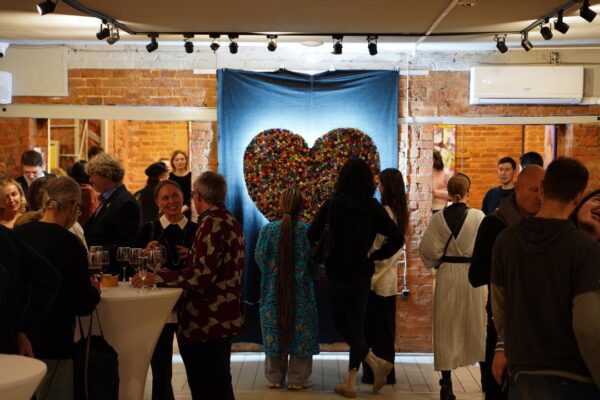
In this exclusive interview conversation, Yanina Dubeikovskaya, CEO and Founder of the “I–A” Gallery of contemporary African art and also the NGO – Her Voice Foundation, describes her latest executive exhibition of contemporary African art in Russia as reflecting unique spectrum of relations between Russia and African nations—partnership, mutual respect, and an ongoing cultural dialogue.
Dubeikovskaya further explains, at length, with Kestér Kenn Klomegâh, that while these joint creative initiatives require mutual understanding, and long-term partnership between Russian and the African artists, it unwaveringly offers potential opportunities to create a full circle of sustainable market—from artistic presentation to commercial realization—contributing to the growth of cultural exchange and the creative economy as a whole. Here are the interview excerpts:
How would you describe the art exhibition in the context of Russia’s geopolitical relations with Africa?
Yanina Dubeikovskaya: Art has always been the language of humanism, peace, and shared values. Hosting an exhibition of contemporary African art in Russia reflects this spectrum of relations between Russia and African nations — partnership, mutual respect, and an ongoing cultural dialogue.
“Re: Africa” is the largest exhibition of contemporary African art in Moscow in the past decade. The project explores the idea of dialogue with a continent that has inspired artists for centuries. Here, Africa is perceived not as an exotic motive but as a universal image, a source of inner movement, inspiration, and creative energy that connects humanity with its origins.
The exhibition features artists and designers from Zambia, Zimbabwe, Kenya, Tanzania, Ethiopia, Sudan, Cameroon, and other African countries — all residents of the “I–A” Gallery. In their works, Africa becomes a co-author: each piece is a conversation where the continent reveals itself through material, color, light, and the breath of form.
Do you consider it as a unique factor that can change perceptions on Africa?
Dubeikovskaya: Thank you for the question! Indeed, there is still limited awareness in Russia about the diversity of African culture and the development of key social and economic regions of the continent. That is why the “Re: Africa” exhibition is such an important step. It allows the Russian audience to experience the vitality and depth of contemporary African art.
We know that art always moves ahead of experts, politicians, and economists. For this reason, we believe that presenting contemporary African artists from different countries in Russia can, even on an intuitive level, foster a deeper understanding of the immense potential within African culture and Africa itself.
Furthermore, the level of contemporary African art showcased in Moscow demonstrates that the perception of Africa as a continent in need of assistance for its development is inaccurate. Africa is both the cradle of humanity and its future. Contemporary African artists not only display exceptional professionalism by classical art standards but also bring a new perspective, fresh energy, and visual languages that can become signposts for the future.
Can you evaluate its significant economic impact besides raising ‘soft power’ influence?
Dubeikovskaya: Around the world, artists create, but it is galleries, exhibitions, and art fairs that build the infrastructure giving art its economic dimension. Today, the potential of the creative industries is a major topic of discussion globally. As the “I–A” Gallery of contemporary African art, we aim to be a meaningful link in this ecosystem, supporting both artists and audiences.
Our mission is not only to showcase art but also to create a sustainable market for it: to sell works, ensure fair compensation for artists, and help them continue creating while maintaining a stable livelihood. In this way, we establish a full cycle — from artistic presentation to commercial realization — contributing to the growth of cultural exchange and the creative economy as a whole.
How is ‘soft power’ developing currently between Russia and Africa? Has Russia’s ‘soft power’ become stronger than it was during Soviet times?
Dubeikovskaya: It is difficult to directly compare the influence of “soft power” during the Soviet era with that of today; the historical contexts and mechanisms are fundamentally different. However, it is clear that the scope and intensity of humanitarian cooperation between Russia and African countries have been steadily increasing.
Over the past three to five years, this process has become especially visible, and it represents a positive development. Alongside the enduring legacy of Russian education, which continues to train students from Africa, cultural exchange is also growing through art exhibitions, residencies, and joint educational initiatives. Together, these efforts strengthen trust, understanding, and long-term partnership between Russia and the African continent.
What else could stimulate Russia’s policy (public diplomacy) in Africa? In your final words, how would you characterize Africa today?
Dubeikovskaya: It’s very interesting to inform that I represent not only a gallery of contemporary African art but also the Her Voice Foundation, which has been working for over five years in partnership with a Zambian charitable organization. I believe that, in addition to educational initiatives and the development of creative industries, it is essential to expand cooperation between Russian and African non-profit organizations.
Joint projects in the social and humanitarian fields can strengthen mutual trust and create a solid foundation for long-term collaboration. Such initiatives help nurture a new generation that, we hope, will elevate the humanitarian level and potential of cooperation between Russia and Africa.
—























You must be logged in to post a comment Login