
Africa
Before You Destroy Someone, Think of Those Who Depend On Him Or Her -By Isaac Asabor
The reason for the foregoing view and pleas cannot be farfetched in this context because when you destroy a life, you do not end a story, you unravel many. And one day, when the tables turn, and they often do, you may find yourself surrounded by those who need you. When that time comes, may the world treat you with more compassion than you once offered.

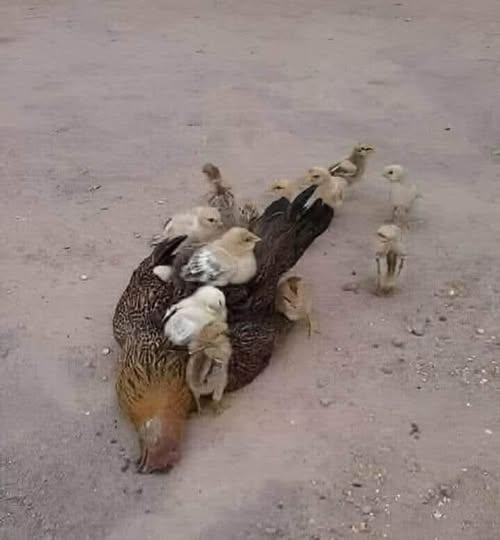
A photograph can whisper, scream, or break hearts, sometimes all at once. One such soul-wrenching image was recently posted by RareMagic Photography. It shows a dead hen lying lifeless on the ground, with her living chicks clustered around her. Their beaks brush against her body. They move about her with a kind of confusion and innocence that defies the tragic reality before them. They don’t understand death; they only know that something has gone horribly wrong.
This singular image speaks to something profound and universal: the consequences of destruction. It is a visual metaphor for how the loss of a single life, be it through malice, indifference, or conflict, can leave many others disoriented, unprotected, and vulnerable. The hen is gone, yes. But the more harrowing story is in the eyes and movements of the living, those little chicks who now must navigate life without their source of warmth, guidance, and security.
We live in a world where people pull others down with prideful ease, forgetting, or choosing not to care, who depends on the ones they are tearing apart. Before you destroy someone, think. Think deeply. Think not just of your target, but of the people who rely on him or her for survival, stability, and strength.
Let us step away from the poultry yard and look at something far more chilling and human. During the recent war in Sudan, one of the most heartbreaking images emerged from the rubble of senseless violence. A woman lay dead, sprawled lifeless on the ground after being struck by a bomb. Her child, too young to grasp the finality of death, was seen still trying to breastfeed from her. That one image was a condemnation of every unchecked decision made in war rooms and political offices. The baby was starving, not just for milk, but for love, warmth, and care. All she knew was that her mother used to hold her, feed her, and make her feel safe. Now, that safety was gone. That source of life had been violently snatched away.
And why? Because someone somewhere felt justified in unleashing destruction without caring who got caught in the crossfire.
The chick and the child are innocent. They represent the millions who suffer indirectly when one person is destroyed by another. In most cases, the actual target might be strong enough to take the blow, but those depending on them are not. They are the hidden casualties, the silent mourners, the invisible victims.
In Nigeria today, we can easily localize this analogy. How many children have had to drop out of school because their father was unjustly fired? How many families have been torn apart because a mother was falsely accused and disgraced at her workplace? How many elders in the village die of heartbreak because their only child was caught up in someone else’s war of ego and envy?
Too often, destruction is dressed up in justification. “He had it coming.” “She needed to be put in her place.” “That is the price for standing in my way.” But these statements, while sounding bold and decisive, are morally empty. They reflect a failure to think beyond personal vendettas and selfish ambition.
It is far too common today, especially in corporate and political circles, for people to act without conscience. In offices, colleagues set up one another, not thinking about the children waiting for their dad to come home with school fees. In government, leaders slash salaries or deny entitlements with a pen stroke, forgetting the grandmother who depends on that monthly allowance for her medication. On social media, cancel culture is often driven by faceless mobs who feel no guilt after ruining someone’s life with a click, unaware of the family sitting in the dark, wondering how to survive the next week.
Destruction is easy. It is cowardly. It requires no wisdom, no grace. But what it leaves behind is often irreversible. We must remember that no man or woman lives in isolation. Every person is a pillar to someone else. That struggling trader you mock or try to pull down may be the only breadwinner in her home. That teacher you ridicule in public may be the lifeline for his aging parents. That community leader you frame or falsely accuse may be the one person giving hope to dozens of youths trying to stay away from crime.
This is not an appeal for pity. It is a call for moral responsibility.
Before you lie about someone, ask yourself: “Who is this lie going to affect beyond my target?” Before you sabotage someone’s promotion, ask: “Am I ready to carry the guilt of their children’s interrupted dreams?” Before you post that malicious tweet, ask: “What if this was my brother, my sister, my parent?”
The problem with many in society today is the inability to see beyond themselves. Power, envy, and self-preservation have hardened hearts. But make no mistake, destruction is not a measure of strength. It is the absence of compassion.
Even nature understands this balance. A tree does not fall alone, it crashes down on whatever grows beneath it. Likewise, when you bring a person down, the impact spreads to everyone around them.
At this juncture, let us return to the image of the hen and her chicks. What happens after the hen is gone? Who teaches the chicks where to find food? Who shelters them from the rain? Who warns them of predators?
And that baby in Sudan, what became of her? Was she rescued? Did someone feed her? Or did she wither away beside the cold, still body of her mother?
These questions matter because they reflect real tragedies happening every day in our homes, communities, and across nations. The loss of one protector, one provider, one parent, one pillar, can destabilize an entire world for those left behind.
So, before you destroy someone, stop and think. Strip away your bias, your jealousy, and your ambition, and just think. Think of the son who idolizes his father. Think of the baby who reaches for her mother’s breast. Think of the chicks who cannot understand why their mother would not wake up. Think of the dependents, the voiceless, and the innocent.
The reason for the foregoing view and pleas cannot be farfetched in this context because when you destroy a life, you do not end a story, you unravel many. And one day, when the tables turn, and they often do, you may find yourself surrounded by those who need you. When that time comes, may the world treat you with more compassion than you once offered.























You must be logged in to post a comment Login