
Africa
Dear Ganduje, Nigeria’s Democracy Isn’t Yours To Monopolize -By Jeff Okoroafor
The greatest democracies in the world thrive on robust party competition—the U.S., U.K., Germany, and India all have multiparty systems that keep governments accountable. Nigeria should aspire to that, not the failed model of authoritarianism.


In a recent statement that sent shockwaves across Nigeria’s political landscape, Abdullahi Ganduje, the National Chairman of the All Progressives Congress (APC), openly advocated for a one-party state, suggesting that such a system would bring “peace and stability” to Nigeria. Coming from the leader of the ruling party, this remark is not just alarming—it is a direct affront to the democratic principles Nigeria has struggled to uphold since 1999.
Ganduje’s proposition is not new; it is a recycled fantasy of authoritarian regimes that have, throughout history, disguised oppression as unity. But let us be unequivocal: a one-party state is not democracy. It is dictatorship in another form. And for a country like Nigeria—with its complex diversity, history of military rule, and fragile democratic institutions—such a suggestion is not only dangerous but a step backward into tyranny.
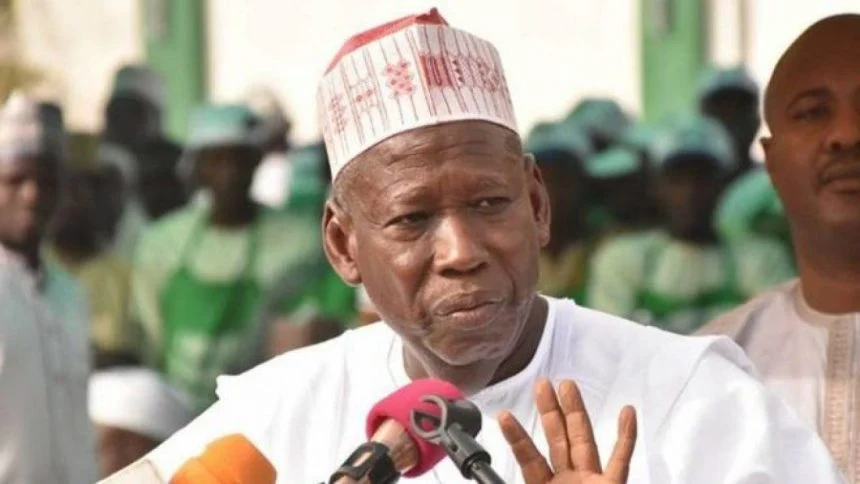
Ganduje’s argument hinges on the false premise that a one-party system guarantees peace. But history tells a different story. Under one-party regimes—whether in Mobutu’s Zaire, Mugabe’s Zimbabwe, or Nkrumah’s Ghana—what followed was not stability, but stagnation, repression, and economic ruin. Without opposition, governments grow complacent, corrupt, and unaccountable. Competition keeps leaders on their toes; its absence breeds impunity.
In Nigeria, we have already seen glimpses of what one-party dominance looks like. Between 1999 and 2015, the People’s Democratic Party (PDP) held power at the federal level for 16 uninterrupted years. Far from bringing peace, it entrenched corruption, weakened institutions, and fueled public disillusionment. The backlash led to the APC’s rise in 2015, proving that political alternatives are necessary for accountability.
The essence of democracy is choice—the ability of citizens to vote out underperforming leaders and replace them with better alternatives. A one-party state eliminates this fundamental right, reducing elections to mere ceremonies. If Ganduje’s vision were realized, Nigerians would be condemned to perpetual rule by the APC, regardless of its failures.
Moreover, Nigeria is a multi-ethnic, multi-religious society where different groups have competing interests. A pluralistic democracy allows these interests to be negotiated through debate, compromise, and elections. A one-party system, however, suppresses dissent, marginalizes minorities, and fuels resentment—ingredients for instability, not peace.

Power corrupts, and absolute power corrupts absolutely. A single-party state centralizes power in the hands of a few, eroding checks and balances. Without opposition in legislatures, independent judiciaries, or a free press, governments become tyrannical. We have seen this in China, where the Communist Party crushes dissent, and in Cuba, where decades of one-party rule have stifled progress.
Nigeria’s democracy is already weak—judicial independence is under threat, media freedom is shrinking, and opposition voices are often harassed. Advocating for a one-party system in this context is not just naive; it is an endorsement of autocracy.
Let us not pretend that Ganduje’s statement is about Nigeria’s interest. It is about power preservation. The APC, facing internal divisions and declining popularity, is desperate to consolidate control. But democracy is not a tool for party supremacy; it is a mechanism for national progress. Leaders who fear opposition are leaders who fear accountability.
Rather than fantasizing about a one-party state, Nigeria’s leaders should focus on strengthening democratic institutions—ensuring free and fair elections, protecting press freedom, and empowering the judiciary. We need vibrant opposition, not its elimination.

The greatest democracies in the world thrive on robust party competition—the U.S., U.K., Germany, and India all have multiparty systems that keep governments accountable. Nigeria should aspire to that, not the failed model of authoritarianism.
Ganduje’s comments should serve as a wake-up call. The push for a one-party state is not a call for unity; it is a blueprint for dictatorship. Nigerians must resist this dangerous rhetoric and demand real democracy—one where power is contested, leaders are accountable, and citizens have a choice.
The future of Nigeria depends not on one-party rule, but on a thriving, competitive democracy. Anything less is a betrayal of the sacrifices made by those who fought for Nigeria’s freedom.
Enough is enough. Nigerians must say no to a one-party state.
Jeff Okoroafor is a social accountability advocate and a political commentator focused on governance, accountability, and social justice in West Africa.

























You must be logged in to post a comment Login