
Forgotten Dairies
Dying for the Story: Nigeria’s Journalists, One Death Too Many and the Families Left Behind -By Blaise Udunze
The Nigerian journalist has spent generations documenting the lives of others. Perhaps it is finally time Nigeria paid serious attention to the life of the Nigerian journalist. Because when the watchdog is hungry, traumatised, threatened, poorly paid and abandoned, democracy itself is weakened.

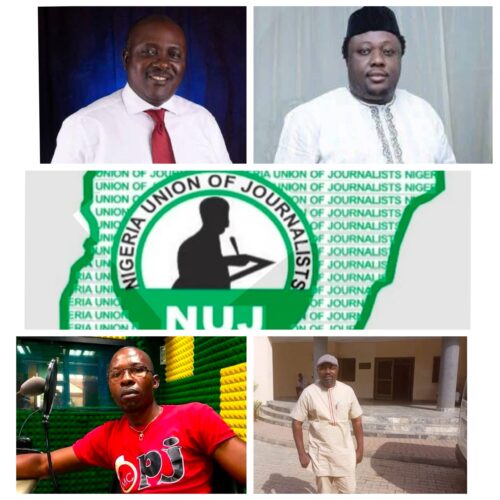
Another Nigerian journalist is dead. The newsroom mourns. Photographs flood WhatsApp platforms. Colleagues and their readers or listeners write emotional tributes. Media associations issue condolence messages. Politicians describe the deceased as a “great professional.” Friends gather at the funeral. The body is buried.
In several cases, the Nigerian journalist is often the first person to arrive when tragedy strikes and the last person society remembers when tragedy takes him.
Come to think of it, he stands under the scorching sun at political rallies, spends nights in hospitals waiting for updates. Painfully, he risks hostile communities, armed conflicts, protests, accidents, epidemics and political intimidation to tell the nation what happened. This same person goes as far to investigate corruption, expose incompetence, question power and give voice to those society has ignored.
Yet, when the journalist himself falls, the nation often moves on with frightening speed. This has become the tragic cycle of journalism in Nigeria: serve society, suffer silently, die suddenly and leave your family behind.
The heralding concern is that the recent deaths of respected media professionals have once again brought this painful question into sharp focus.
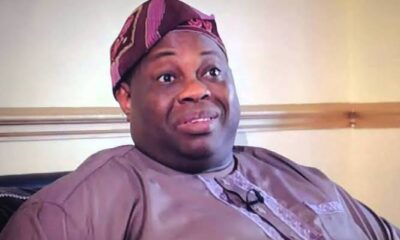
Dotun Oladipo, the veteran journalist and Publisher of The Eagle Online, died at the age of 56 after reportedly suffering a heart attack. His death sent shockwaves across Nigeria’s media industry. Oladipo was not merely another publisher. He was a seasoned journalist, editor, former President of the Guild of Corporate Online Publishers and one of the pioneers who helped give Nigerian online journalism institutional credibility.
Around the same period the death of Sola Olugbemiro, popularly known as Solkem, Publisher of Access Weekly Magazine was announced earlier, who reportedly died after battling complications associated with high blood pressure. His passing was another painful reminder of how frequently the Nigerian media community now gathers to mourn its own.
Then came the death of Pius Opute Orezimena, popularly known as Diplomatic OPJ, the celebrated broadcaster associated with Wazobia FM. OPJ. Closely related illness with the others, he reportedly died after battling the effects of a stroke, leaving behind children, grandchildren, colleagues and generations of listeners who knew his distinctive voice and contribution to broadcasting.
In another rude shock, yet another journalist was confirmed dead last night. The immediate past Chairman of the Nigeria Union of Journalists (NUJ), FCT Council, Patrick Osadebamwen, has died, according to reports. His death comes as the fourth reported death of a high-profile journalist within the past week, deepening the grief across Nigeria’s media community.
Four deaths. Four different careers. Four families. One profession increasingly forced to confront an uncomfortable truth: Who is looking after Nigerian journalists while they are still alive?
The life of a Nigerian journalist is a contradiction. Society respects the profession but often fails to reward the practitioner. For the part of government, the officials want favourable coverage but are uncomfortable with scrutiny.
The painful irony here is that politicians want journalists around during campaigns but frequently become hostile once power has been secured. Corporate organisations need publicity but often spend more on advertisements than on supporting the sustainability and welfare of the institutions producing the news.
And media organisations themselves, struggling under shrinking revenues, sometimes transfer the burden of survival to the very journalists whose labour sustains the newsroom. The result is a profession where many practitioners work extraordinarily hard while living extraordinarily precarious lives.
There are journalists who have gone months without salaries. Some have reportedly been owed salaries for years. Others earn wages that make healthcare, decent accommodation, transportation and the education of their children increasingly difficult to afford.
A journalist may spend the morning interviewing a billionaire and return home unable to pay school fees. He may write about Nigeria’s economic growth while struggling to buy food. What of the case of him, investigating failures in the healthcare system while lacking comprehensive health insurance himself. He may report the death of a prominent citizen today and worry silently about what would happen to his own family if he died tomorrow. That is the uncomfortable reality of the profession.
Only a relatively small percentage of Nigerian journalists can truly be described as financially secure. Some eventually find opportunities in politics, banking, public relations, corporate communications, media consulting or other sectors. Others successfully build independent media businesses.
But it is also of concern to ask this important question of key interest that, what happens to the overwhelming majority who spend decades in newsrooms and eventually leave without pensions, gratuities, health insurance or meaningful retirement plans?
Veteran journalist Eric Teniola has argued that journalists do not really retire in the conventional sense. They simply continue writing, reporting, consulting or contributing for as long as their health permits.
That observation is both inspiring and tragic. This is because for many Nigerian journalists, retirement is not a financial destination. It is simply the day the newsroom stops calling.
Nigeria’s journalism history contains names that should never be forgotten. Definitely, there was an individual like Dele Giwa, founding editor of Newswatch, killed by a parcel bomb in 1986. There was Baguda Kaltho of The NEWS, whose death became one of the dark symbols of the dangers journalists faced during military rule.
There was Tunde Oladepo of The Guardian. There was Godwin Agbroko of THISDAY. There was Omololu Falobi, the respected journalist associated with The Punch and media advocacy, killed during an armed robbery attack. There was Abayomi Ogundeji of THISDAY.
Another painful death was Bayo Ohu, Assistant News Editor of The Guardian, who was murdered at his home. There were Sunday Gyang Bwede and Nathan Dabak of the Light Bearer, killed amid sectarian violence. There was Edo Sule-Ugbagwu of The Nation, murdered in his home. There was Zakariya Isa of the Nigerian Television Authority, shot dead by suspected Boko Haram insurgents.
There was Eneche Akogwu of Channels Television, killed while reporting violence in Kano. There was Nansok Sallah of Highland FM, killed during violence. There was Precious Owolabi of Channels Television, shot while covering a protest in Abuja.
Also, there was Alex Ogbu, who died after sustaining gunshot injuries while covering a protest. And there was Pelumi Onifade of Gboah TV, whose death during the #EndSARS crisis became another painful symbol of the dangers confronting young Nigerian journalists, whose case is yet to be finally addressed by the authorities.
There are also painfully, journalists whose deaths came through accidents and illnesses. The 2007 road tragedy claimed media professionals including Musa Nuhu of NAN, Isaac Agbo of The Nation, Judith Adama of New Nigerian, Chiwo Avre of Leadership, Emmanuel Adinoyi of AIT, Reuben Emeje, and Sadam Lar of NTA, among others travelling on professional assignments.
There was Dimgba Igwe, the veteran journalist and Deputy Editor-in-Chief of The Sun, who died after being hit by a vehicle. There was broadcaster Dan Foster, whose death from COVID-19 complications in 2020 shook Nigerian broadcasting.
There was Nkiruka Udoh of AIT, Naomi Uzor of Vanguard, Azeez Sanni of The Nation, and former Vanguard editor Hugo Odiogor, among media professionals whose deaths brought renewed attention to the vulnerability of journalists.
Lately, the industry’s growing roll call of departed practitioners also includes Sylvester Esomogimi of Daily Independent, reportedly from a heart attack, he actually died in his sleep and was buried just two weeks ago; Emmanuel Okenyi; Gbenga Agbana of The Guardian; William Aniebunam; Emma Okenyi of The Observer; Simon Ugwu of Energy Frontier; John Mark; Salami of NAN Maritime; Abdul Imoyo, who reportedly died following cardiac arrest; Benson Esomogimi; and veteran journalist Dele Agekameh.
Every name represents more than a death announcement, because behind every name is a family. A wife or a husband. What about their children, parents, dependents, and unfinished dreams?
Perhaps the most painful part of the Nigerian journalist’s death is what happens after the funeral. One common thing is that the newsroom moves on. Another reporter takes the beat. Another editor occupies the desk. The newspaper is published the following morning. The radio programme continues. Television goes live again. Perhaps a full or half page of newspaper is done to announce the dead. But the family does not move on so easily.
One revealing concern is that investigations into the killings of journalists have documented families struggling for justice years after their loved ones were murdered. Widows have been left to raise children alone. Families have continued to seek answers from authorities without resolution.
This is where Nigeria’s failure becomes particularly shameful. A country that celebrates journalists as democracy’s watchdogs cannot continue to abandon the families of journalists after they die.
Lots are left out for the betterment of the profession but nothing has been done in this regard, as there should be institutional support. There should be insurance. There should be emergency welfare funds. There should be education support for children of journalists killed in the line of duty. There should be legal support for families seeking justice. There should be a national compensation framework when a journalist dies while carrying out professional responsibilities.
Instead, too many families are left with condolences. The fact is that condolences do not pay rent, do not educate children, do not provide healthcare and at the same time, condolences do not replace a breadwinner.
The nation must understand that the danger confronting Nigerian journalists is not imaginary. One thing has continued to date: journalists have faced physical assaults, threats, harassment, unlawful arrests, detention, equipment seizure and other violations while carrying out their duties.
Though records by journalism and press freedom organisations show that Nigeria has recorded dozens of journalist deaths linked to targeted violence and press freedom violations over the decades, the broader number of Nigerian media practitioners who have died from violence, accidents, illness and the harsh conditions associated with the profession is undoubtedly much higher.
But statistics can also hide human suffering. A journalist covering terrorism or communal violence may do so without adequate protective equipment, hazard allowance, insurance or psychological support. Journalists who cover conflict, disasters and tragedies repeatedly may live with trauma that nobody sees, which has always been the outcome.
How can society expect journalists to cover violence when they have no helmets? How can reporters enter dangerous environments without insurance? How can journalists witness death and destruction for years without psychological support? How can a media organisation demand courage from a reporter while paying a salary that cannot cover basic healthcare?
What the government has failed to understand is that it has a constitutional responsibility to respect press freedom. They ought to create an environment where journalists can work safely. Journalists cannot be expected to function as society’s watchdogs while constantly looking over their shoulders, as there must be some level of freedom.
The time has come for the government to stop treating critical journalism as hostility. There must be this understanding among officials that a journalist is not an enemy because he asks uncomfortable questions. A newspaper is not anti-government because it investigates public spending. A broadcaster is not a threat because she exposes failure.
Democracy without independent journalism is simply government speaking to itself. Attempts to intimidate, arrest, harass or silence journalists who refuse to become public relations officers for those in power must stop.
Equally troubling is any attempt by government to exercise excessive influence over professional standards and ethics structures for journalists. Journalism must regulate itself through credible, independent and professionally accountable mechanisms.
Government’s presence in professional regulatory structures must never become a toxic influence capable of determining which journalists may investigate government and which stories are acceptable for publication.
Yes, journalism must confront unethical practices within its ranks. Yes, the proliferation of unprofessional and roadside journalists undermines the credibility of the profession. Yes, practitioners who compromise professional ethics for personal, financial or political gain damage public trust.
But the answer is not government control of journalism. The answer is stronger professional institutions, better training, ethical enforcement, credible accreditation, sustainable media business models and independent self-regulation.
The deaths of Dotun Oladipo, Solkem, Diplomatic OPJ and Patrick Osadebamwen should not become another passing moment of mourning. Their deaths should provoke reflection.
How many more journalists must die before welfare becomes a priority? How many families must be abandoned before insurance becomes compulsory? How many reporters must be attacked before Nigeria establishes stronger protection mechanisms? How many journalists must leave the profession because salaries cannot sustain them?
The government cannot solve every problem in the media industry, but it can create an environment where journalism is safer. Media owners cannot continue demanding excellence while neglecting salaries, healthcare, insurance and retirement planning.
Corporate Nigeria cannot continue benefiting from media visibility without contributing to the sustainability of the institutions that make public communication possible. Professional bodies must also move beyond condolence messages.
There must be a serious conversation around a National Journalists Welfare and Protection Fund. There should be compulsory group life and health insurance for newsroom employees. There should be emergency support for journalists facing medical crises. There should be trauma and mental health support for reporters covering conflicts and disasters. There should be education funds for children of journalists who die in the line of duty. And there must be serious investigations and prosecutions whenever journalists are attacked or killed.
Journalists cannot continue to serve as society’s watchdogs while their own welfare, healthcare and protection remain an afterthought.
Government and corporate organisations must partner with media organisations and professional bodies to establish sustainable welfare interventions capable of protecting journalists and their families.
The Nigerian journalist has spent generations documenting the lives of others. Perhaps it is finally time Nigeria paid serious attention to the life of the Nigerian journalist. Because when the watchdog is hungry, traumatised, threatened, poorly paid and abandoned, democracy itself is weakened.
And when another journalist dies, Nigeria must ask itself whether we are merely losing a media professional or are we slowly burying one of democracy’s strongest institutions.
Blaise, a journalist and PR professional, writes from Lagos and can be reached via: blaise.udunze@gmail.com
















You must be logged in to post a comment Login