
Africa
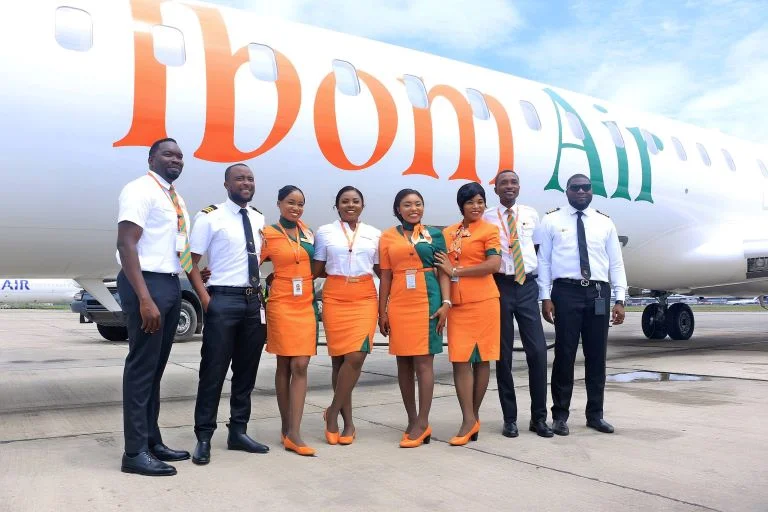
IBOM Air And The “Bolekaja” Style Of Customer Relations -By Isaac Asabor
If Ibom Air wants to be a benchmark for Nigerian aviation, it must jettison this “Bolekaja” style of customer relations before it becomes its defining trait. The runway to excellence is paved with respect, patience, and professionalism, not by arguing with customers at the departure gate.

In Nigeria’s transport culture, the term “Bolekaja” is loaded with meaning, and none of it flattering. Literally translated from Yoruba as “come down, let’s fight,” it evokes the unruly days of the 1970s and 80s, when rickety Bedford lorries and “molue” buses were notorious for roadside brawls between conductors and passengers. These vehicles were not only chaotic and uncomfortable, they were arenas of crude confrontation, public shouting matches, and a total absence of decorum.
Sadly, it appears this “Bolekaja” spirit, the brash, combative, zero-tact approach, has crept into the corporate corridors of Ibom Air.
The recent clash between the airline and Ms. Comfort Emmanson, a paying passenger, is a case study in how not to handle customer relations. Instead of the professionalism expected from a commercial airline, Ibom Air’s handling smacked of street-level hostility. The principle that “the customer is king” was not only forgotten, it was trampled underfoot.
Let us be clear: disputes happen in every service business. A customer may misunderstand a policy, miss a regulation, or even be in the wrong. But in a customer-centric organisation, the default response is to listen, clarify, and resolve, not to escalate the disagreement into a public spectacle. The difference between a five-star airline and a “Bolekaja” bus line is not just the aircraft; it’s the attitude towards passengers.
From the reports, Ibom Air’s posture towards Ms. Emmanson bore more resemblance to a bus conductor yelling down an aggrieved passenger than to a trained customer service officer managing a delicate situation. The tone was combative, the stance defensive, and the whole episode reeked of an “us-versus-them” mentality. This is unacceptable for a brand that claims to be Nigeria’s model airline.
Corporate loyalty to policies and procedures is admirable, just as political loyalty is in governance, but when it turns into blind aggression, it ceases to be an asset. The question is: who benefits from this “Bolekaja” style? Does it protect the airline’s image? Or does it project Ibom Air as a hostile, thin-skinned carrier that punishes dissent instead of resolving it?
Airlines worldwide know that reputation is fragile. It is not built solely on punctuality or sleek planes, but on how customers are treated in moments of tension. A single bad encounter, mishandled and amplified by social media, can undo years of branding. In the Comfort Emmanson case, Ibom Air had a golden opportunity to show grace under pressure, to de-escalate, apologise where necessary, and uphold dignity. Instead, it chose the verbal equivalent of “come down, let’s fight.”
This aggressive posture does more than just alienate one passenger. It sends a dangerous signal to the flying public: that the airline’s default mode in disputes is to win the argument, not win back the customer. In today’s competitive aviation market, that is a brand-destroying choice.
The job of a customer relations team is too important to be treated like a conductor’s role in a rickety lorry. Their mandate is to bridge the gap between the airline and its passengers, to clarify policies without condescension, to manage crises without hostility, and to turn even difficult situations into opportunities for loyalty-building. The minute they start shouting down customers, they have crossed into “Bolekaja” territory, and that is a place no premium airline should want to be.
Unfortunately, Ibom Air’s handling of this matter reflects a deeper cultural problem in many Nigerian service industries: the belief that being loud and combative is the same as being right. It is not. Civility is not weakness; it is the bedrock of sustainable customer trust. Airlines are not “molues” and passengers are not market-square hecklers. They are paying clients whose patronage keeps the business alive.
The question Ibom Air’s management must ask is simple: in the long run, do we want to be remembered as a carrier that handled disputes with dignity, or one that brawled with passengers in full public view? The “Bolekaja” approach might give the short-term satisfaction of “putting the customer in their place,” but it guarantees long-term reputational damage.
It is time for Nigerian airline operators, Ibom Air included, to train their front-line staff in the art of tactful engagement. This is not just about etiquette; it is about business survival. In the aviation industry, every passenger interaction is a brand statement. Make it courteous, and you build loyalty. Make it hostile, and you lose not just one customer, but every potential customer who hears the story.
If Ibom Air wants to be a benchmark for Nigerian aviation, it must jettison this “Bolekaja” style of customer relations before it becomes its defining trait. The runway to excellence is paved with respect, patience, and professionalism, not by arguing with customers at the departure gate.

























You must be logged in to post a comment Login