
Africa
NEDC And Eight Years of Transforming Northeast Nigeria -By Comrade Mahmud Muhammad
The Northeast’s story is far from over. In fact, the best chapters may still be ahead, as a region that once symbolised everything that could go wrong in Nigeria becomes a beacon of everything that can go right when leaders and communities work hand in hand to build a better tomorrow.

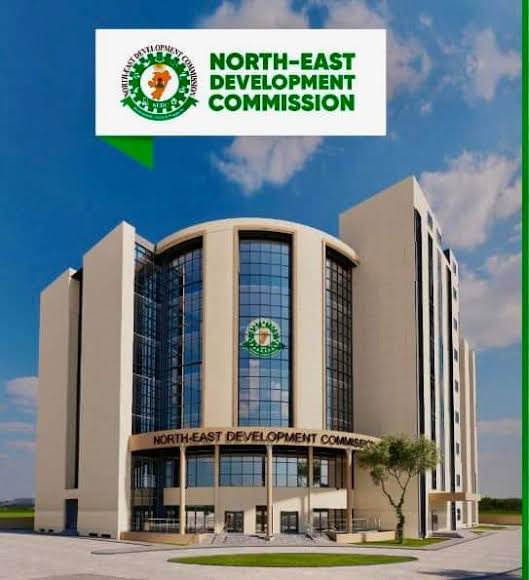
Eight years ago, if you had travelled through Nigeria’s Northeast, your heart would have broken. In states like Adamawa, Bauchi, Borno, Gombe, Taraba, and Yobe, some communities looked like ghost towns. Schools were empty, their windows shattered and doors hanging off their hinges. Hospitals that once were full of life were now abandoned. The most heartbreaking of all was that over 1.5 million children had no access to education; they were simply out of school.
This region, which had once been home to great ancient empires, had become a symbol of everything we feared most: families torn apart, communities scattered to the winds, and hope seeming like a distant memory. But one remarkable thing about the human spirit is that it refuses to stay broken.
Today, as we look back on eight years since the North East Development Commission (NEDC) was born in 2017, we are witnessing something extraordinary. What started as an emergency response to a crisis has become something much more powerful: a story of communities rising from the ashes, children returning to classrooms, and hope blooming again in places where it had almost died.
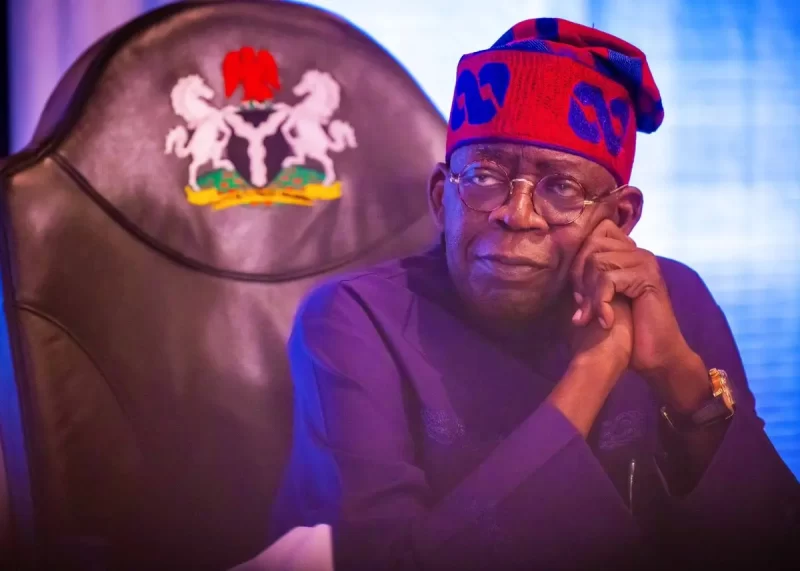
Under the guidance of President Bola Ahmed Tinubu and Vice President Kashim Shettima, with Managing Director Mohammed Goni Alkali steering the ship, the NEDC has become more than just another government agency. It’s become a lifeline for millions of people who refused to give up on their dreams.
The Commission’s approach to development has been anchored on the North-East Stabilisation and Development Master Plan (NESDMP) 2020-2030, a 10-year blueprint featuring 529 schemes, programmes, and projects across 11 critical pillars. This master plan is more than policy documentation; it embodies an all-inclusive understanding that sustainable development in post-conflict regions requires the integration of humanitarian assistance, long-term development initiatives, and robust peacebuilding mechanisms.
Under Alkali’s watch, the Commission has completed over 700 projects across all six states. That’s not just a number; that’s 700 reasons for families to believe in tomorrow again.
Perhaps nowhere is the NEDC’s transformative impact more visible than in the education sector. Confronted with the staggering reality of 1.5 million out-of-school children in the Northeast, the Commission launched an education reconstruction programme that has fundamentally reshaped learning opportunities across the region. The NEDC has constructed 18 mega schools in each senatorial district in the six states of the Northeast sub-region as part of ongoing efforts to tackle out-of-school syndrome in the zone. These mega schools are symbols of hope and catalysts for community transformation.
Take Ari Kime Primary School in Potiskum, for example. This place now serves over 20,000 children, making it the largest primary school in all of Nigeria. When the NEDC got involved, they didn’t just slap on a fresh coat of paint. They built 12 new classroom blocks, created proper facilities with stores and toilets, put up staff quarters so teachers would want to stay, and even added a clinic so children could get medical care without travelling far from home. They installed solar streetlights because they knew that when communities feel safe at night, everything else becomes possible.
But the Commission didn’t stop at primary education. At Yobe State University, they built a 250-seat lecture theatre and upgraded computer centres. They established the Institute of Entrepreneurship Skills Acquisition, Innovation, Research, and Digitalisation at Taraba State University to prepare young people for the job market.
Recognising that quality education depends on quality educators, the NEDC has implemented teacher training programmes, including specialised training for 600 Tsangaya and Islamiyya school teachers and broader capacity-building initiatives targeting 100,000 teachers across the six states. This investment in human capital ensures the sustainability of educational improvements long after infrastructure projects are completed.
Healthcare in the Northeast had been devastated, but the NEDC approached healing with the same determination they brought to education. They upgraded the Borno Central Medical Store so that medicines would be properly stored and reach those in need. They built new clinics and remodelled hospitals that had been left to crumble.
Some of their most impressive work includes specialised facilities that seemed impossible just a few years ago: dental and eye hospitals, a malnutrition treatment centre in Kushere, and a complex ophthalmology institute at Abubakar Tafawa Balewa Teaching Hospital in Bauchi. At Modibbo Adama Teaching Hospital in Yola, they built an accident and emergency complex that has already saved countless lives. The University of Maiduguri Teaching Hospital got a 40-room labour ward, ensuring that mothers have safe places to bring new life into the world.
The NEDC’s infrastructure development programme has been fundamental to regional economic recovery and integration. NEDC has constructed and rehabilitated numerous roads and bridges, enhancing connectivity and facilitating economic exchange across the region. Major projects span all six states, including the 32km Dabna-Garkida road construction and the 2.5km College of Education Hong Road in Adamawa State, the Alkaleri-Futuk Road and Kirfi-Gombe Abba Road projects connecting Bauchi and Gombe States, the Zabarmari-Ngowom Road and Jere Bowl Road Network in Borno State, and the Mutai-Ngalda Road connecting previously isolated communities in Yobe State.
The construction of over 3500 houses for low-income earners across the region addresses one of the most pressing needs of displaced populations. These housing projects, implemented across Bauchi, Yobe, Borno, Adamawa, Gombe and Taraba states, provide safe, secure accommodation for thousands of families while stimulating local construction industries and creating employment opportunities.
Water, that is the most basic of human needs, flows again through 219 solar-powered boreholes across the region. And when the sun goes down, 13,505 solar streetlights in the six states of the region to keep communities bright and secure, allowing life to continue after dark.
In a region where most people make their living from farming, the NEDC knew that agriculture had to be part of the healing. They have distributed water pumps, herbicides, and farming equipment to get fields productive again. They have cleared irrigation canals so farmers can grow crops year-round instead of just during the rainy season.
The multi-billion-naira cattle market in Soro, Bauchi State, and the Kukareta Cattle Market in Damaturu are not just commercial ventures; they are statements that normal life, with its associated buying and selling, raising livestock and feeding families, has returned to the Northeast.
In Damaturu, they trained 558 people in skills ranging from renewable energy installation to waste recycling; practical knowledge that helps the environment while putting money in people’s pockets.
Perhaps nothing captures the NEDC’s forward-thinking spirit better than its introduction of electric vehicles and buses to the region. These are not just environmentally friendly transportation options; they are symbols that the Northeast is not just catching up to the rest of Nigeria, but, in some ways, leading the way toward a cleaner, more sustainable future.
The Commission’s contribution to security and governance has been instrumental in creating an enabling environment for development. The commissioning of newly constructed and fully equipped Police Stations and Barracks in Konduga and Bama, and the provision of residential and administrative accommodations for security personnel in recovered areas, ensures a sustainable security presence, building confidence among returning populations and creating conditions for economic activities to resume.
The Commission’s leaders are humble enough to know they don’t have all the answers. That is why they have partnered with Japan and visited Cambodia and other countries to learn from these countries that have successfully rebuilt after conflict. They are studying everything from mine clearance to the community reconciliation programme.
Even as they build for the future, the NEDC has not forgotten about immediate needs. They have distributed hundreds of thousands of food items, clothing, and mosquito nets to families still struggling. They have provided assistive devices for people with disabilities, making sure that everyone, regardless of physical challenges, can participate in the region’s renewal.
This journey has not been easy. Security concerns still make some areas difficult to reach. Getting supplies to remote communities requires creativity and determination. Sometimes the needs seem so overwhelming that available resources feel like drops in an ocean.
But these challenges have only made the NEDC more innovative and more determined to find solutions. They have learned to work closely with state governments, federal agencies, and international partners, turning obstacles into opportunities for collaboration.
As the NEDC enters its second decade, the priorities are clear. They need to train local people to maintain and manage the projects they have built. They are expanding partnerships with private companies, creating sustainable business opportunities that don’t depend on government funding alone.
Technology continues to be a game-changer, from solar energy systems that work even in remote areas to digital learning platforms that can bring quality education to every corner of the region.
Eight years later, the North- East Development Commission has become proof of what is possible when vision meets determination. Under President Tinubu and Vice President Shettima’s continued leadership, with Mohammed Goni Alkali’s strategic guidance, the Northeast is not just recovering, it is becoming a model for how communities can emerge from crisis stronger than ever.
This is ultimately a story about the kind of people Nigerians are. It is about communities that refused to be defeated by terror, about leaders who saw opportunity where others saw only problems, and about the simple but powerful truth that when people come together with a shared purpose, they can accomplish miracles.
The Northeast’s story is far from over. In fact, the best chapters may still be ahead, as a region that once symbolised everything that could go wrong in Nigeria becomes a beacon of everything that can go right when leaders and communities work hand in hand to build a better tomorrow.
Comrade Mahmud Muhammad serves as Personal Assistant to the President on Domestic Affairs & Northeast in the Office of the Vice President.



















You must be logged in to post a comment Login