
Africa
Inadvisability Of Maligning Sowore, Listen To His Message -By Isaac Asabor
Omoyele Sowore is not asking Nigerians to worship him; he is asking them to open their eyes. The choice before us is clear: we can keep maligning the messenger and remain in bondage, or we can engage with the message and begin the arduous journey toward liberation. The future of Nigeria depends on the path we choose.

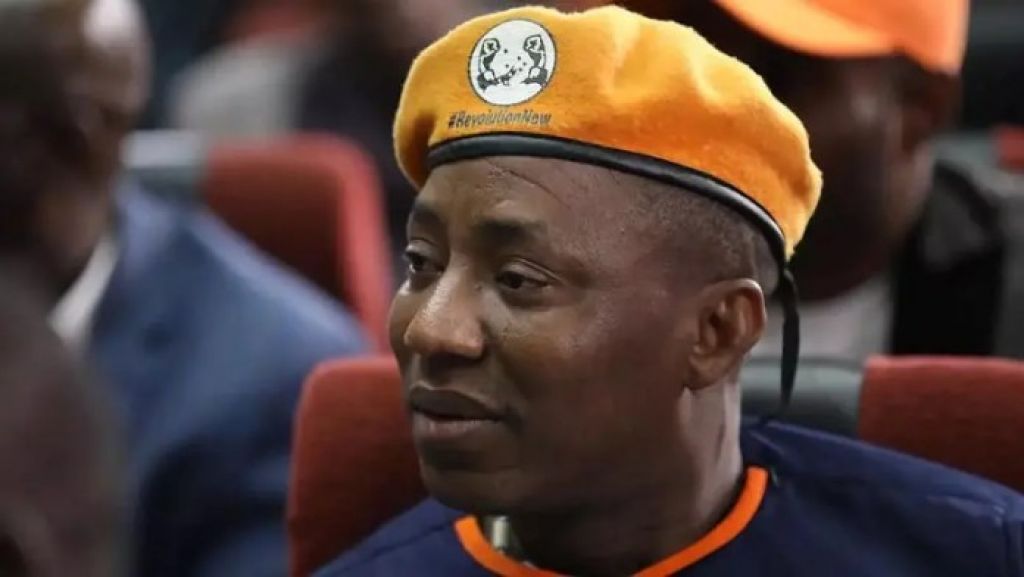
In the theater of Nigerian politics, clashes of personality often drown out the substance of important messages. The ongoing feud between activist Omoyele Sowore and former Rivers State Governor, now Minister of the Federal Capital Territory, Nyesom Wike, exemplifies this tragic trend. Rather than engage with the issues Sowore raises, issues rooted in accountability, transparency, and the need for a people-centered democracy, many detractors prefer to malign him personally, dismiss his activism, and cast him as a rabble-rouser. This reflexive dismissal is not only unfair to Sowore as an individual; it is dangerous to the nation’s democratic development. If Nigerians continue to shoot down messengers rather than critically appraise their messages, the nation risks perpetuating a culture of silence and complicity in the face of political wrongdoing.
It is not an exaggeration to opine at this juncture that Omoyele Sowore has been a thorn in the flesh of the political elite for decades. As a student leader at the University of Lagos in the early 1990s, he was already mobilizing against military dictatorship and the annulment of the June 12, 1993 election. His activism has always been consistent, whether through his online platform Sahara Reporters or through his campaigns for presidency. While his methods may sometimes be unorthodox and provocative to his calumniators, one cannot deny that Sowore’s central concern is the emancipation of Nigerians from corrupt governance and entrenched impunity. To malign such a figure because he dares to call out powerful men like Wike is to miss the point.
The Bible reminds us in Proverbs 27:6: “Faithful are the wounds of a friend, but the kisses of an enemy are deceitful.” Sowore’s criticisms, though uncomfortable, are in the spirit of faithful wounds. He does not pander to politicians, he does not bow to power, and he certainly does not traffic in empty praise. Instead, he offers harsh truths that, if taken seriously, could redirect Nigeria toward a path of justice and progress. To reject such messages because one dislikes the messenger is to prefer the deceitful kisses of those who flatter politicians while the nation burns.
Unfortunately, Nigerians have often shown an unhealthy obsession with personality politics. We scrutinize who delivers a message rather than whether the message itself carries weight. This is why each time Sowore speaks, the conversation quickly shifts from the issues at hand to his past, his methods, or his political aspirations. Critics dismiss him as “disgruntled,” “attention-seeking,” or “perpetually angry.” Yet this very anger stems from the structural injustices Nigerians face daily, hunger, unemployment, insecurity, corruption, and collapsing infrastructure. Anger, in this context, is not a vice but a virtue. Scripture acknowledges in Ecclesiastes 7:7: “Surely oppression maketh a wise man mad.” If Sowore sounds outraged, it is because he is wise enough to see the scale of oppression inflicted on the Nigerian people.
The feud with Wike is only the latest example of how Sowore’s warnings are deflected. Wike, flamboyant and combative, is himself a polarizing figure. His brand of politics thrives on bravado and theatrics. Sowore’s criticism of him touches on accountability, how public resources are managed, how political alliances are built, and how the masses are often left out of decision-making. Instead of engaging these points, Wike’s supporters, and even some neutral observers, attack Sowore’s personality. They ask: What has Sowore achieved? Why should he be taken seriously? Is he not just bitter about losing elections? Such questions are distractions.
The correct question should be: Is what Sowore is saying true? If he points out the misuse of public funds, is the claim verifiable? If he decries the state of insecurity and unemployment, are the statistics not on his side? According to the National Bureau of Statistics (NBS), unemployment in Nigeria as of 2023 hovered around 33 percent, while inflation eroded the value of the naira and deepened poverty. Transparency International has consistently ranked Nigeria poorly in corruption perception indexes. These are not Sowore’s inventions. They are facts, backed by evidence. To dismiss him is, in effect, to dismiss reality.
History is replete with examples of societies ignoring prophets of truth because they disliked their personalities. The biblical prophet Jeremiah was scorned, beaten, and imprisoned for warning Judah of impending judgment. Yet his message proved accurate. Jesus himself lamented in Matthew 23:37: “O Jerusalem, Jerusalem, thou that killest the prophets, and stonest them which are sent unto thee…” This pattern repeats in Nigeria today. Rather than stone Sowore physically, his detractors stone him verbally, labeling him unpatriotic, rebellious, or irrelevant. But just as ancient Jerusalem suffered for silencing its prophets, Nigeria risks suffering for silencing her truth-tellers.
Moreover, maligning Sowore reveals a deeper societal weakness: the tendency to idolize politicians while demonizing dissenters. Nigerians are often quick to excuse excesses of those in power if they belong to their ethnic group, religion, or political party. Meanwhile, anyone who challenges the status quo is branded a troublemaker. But democracy thrives on dissent. Without dissenting voices, governments become unaccountable and citizens lose their sovereignty. In fact, Thomas Jefferson, one of America’s founding fathers, once declared: “Dissent is the highest form of patriotism.” Sowore’s activism, then, should not be seen as antagonistic but as patriotic, an effort to hold leaders to account.
It is true that Sowore is not flawless. He has made missteps, both tactically and politically. His “Revolution Now” movement of 2019 was criticized for lack of structure and inclusivity. His presidential campaigns, while bold, have struggled to gain electoral traction. Yet imperfection does not invalidate truth. Martin Luther King Jr., Nelson Mandela, and other great activists were also criticized in their time. What matters is not whether the messenger is perfect, but whether the message illuminates injustice and demands corrective action.
Listening to Sowore does not mean endorsing him blindly. It means weighing his arguments carefully, fact-checking his claims, and engaging with the issues he raises rather than assassinating his character. Nigerians must cultivate the discipline of separating the message from the messenger. This is especially crucial in an era when social media amplifies personal attacks and drowns out meaningful dialogue.
In conclusion, the ongoing feud between Sowore and Wike should not distract Nigerians from the bigger picture. This is not about who shouts louder or who has more political clout. It is about whether the issues Sowore raises, accountability, transparency, and people-centered governance, will be addressed. Maligning him only serves the interests of the ruling class, who benefit from public apathy and distraction. The Bible exhorts in James 1:19: “Let every man be swift to hear, slow to speak, slow to wrath.” Nigerians must be swift to hear Sowore’s message, slow to dismiss him, and careful not to let partisan emotions cloud judgment.
Omoyele Sowore is not asking Nigerians to worship him; he is asking them to open their eyes. The choice before us is clear: we can keep maligning the messenger and remain in bondage, or we can engage with the message and begin the arduous journey toward liberation. The future of Nigeria depends on the path we choose.






















You must be logged in to post a comment Login