
Africa
Nigeria’s Soaring Cost of Living: A Nation Grappling with Economic Turbulence -By Umar Mohammed Shettima
Nigeria’s cost-of-living crisis is more than just an economic issue — it is a test of leadership, resilience, and national unity. As Nigerians continue to adapt to the new realities, the government’s ability to deliver tangible relief will determine not only its credibility but also the country’s overall stability. The coming months will be crucial in shaping the direction of Africa’s largest economy and the welfare of its over 200 million citizens.

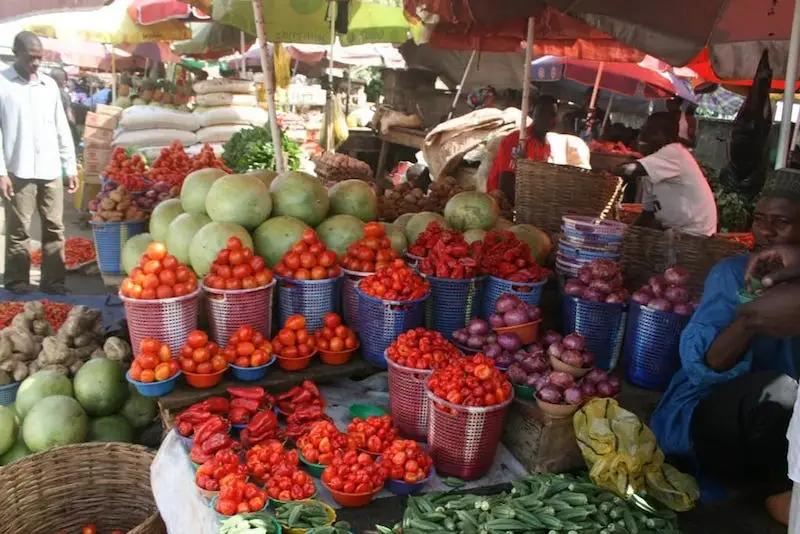
Nigeria, Africa’s most populous country, is currently facing one of its toughest economic periods in recent history. From skyrocketing food prices to soaring transportation costs, millions of citizens are struggling to keep up with the ever-rising cost of living. This crisis has become one of the most talked-about and trending issues in Nigeria today, dominating both social and political discussions nationwide.
At the core of Nigeria’s economic woes are several bold reforms introduced by President Bola Ahmed Tinubu’s administration. Chief among them is the removal of fuel subsidies, a policy that has existed for decades. While the government argues that subsidy removal was necessary to save the economy from collapse, its immediate effect has been painful, leading to a sharp increase in petrol prices and, consequently, the cost of goods and services.
Another significant factor is the liberalisation of the naira exchange rate. By allowing market forces to determine the value of the currency, the government hoped to attract foreign investment and stabilise the forex market. However, this policy has led to a rapid depreciation of the naira, making imported goods — including food and raw materials — more expensive than ever.
Food inflation has reached alarming levels, with prices of staples such as rice, beans, and yam more than doubling in many parts of the country. The National Bureau of Statistics (NBS) reports that food inflation has risen above 30 percent, making it increasingly difficult for average Nigerian families to afford three meals a day. The rising cost of food has also triggered social unrest and protests in major cities.
The high cost of living is not limited to food. Housing, transportation, healthcare, and education have all become significantly more expensive. With fuel prices increasing and public transportation fares tripling, many workers now spend more than half of their salaries just to get to work. For many, survival has become the new definition of success.
Small and medium-sized businesses, often regarded as the backbone of Nigeria’s economy, have not been spared. Many entrepreneurs are closing down due to the high cost of production and dwindling consumer purchasing power. The result is an increase in unemployment and underemployment, further deepening the cycle of poverty.
The informal sector, where most Nigerians earn their living, has been hit hardest. Artisans, market traders, and daily wage earners find it difficult to adjust to the new economic realities. Unlike salaried workers who can sometimes negotiate wage increases, those in the informal economy often have no such cushion against inflation.
Rural communities are also feeling the impact. Farmers face rising costs of fertilizers, fuel, and transportation, all while dealing with insecurity that disrupts agricultural production. The combination of reduced output and increased costs has further worsened food shortages across the country.
The social implications of the crisis are becoming more visible. Labour unions have held nationwide strikes demanding wage reviews, while citizens have taken to social media and the streets to express their frustrations. The sense of hardship is palpable, and many Nigerians feel abandoned by a system that seems to be failing them.
Nevertheless, the government maintains that the current hardship is only temporary. Officials argue that the reforms are designed to stabilise the economy in the long run, attract investors, and lay the foundation for sustainable growth. President Tinubu has repeatedly assured Nigerians that the pain of today will lead to prosperity tomorrow.
Economists, however, warn that without adequate social protection measures, the poorest citizens will continue to bear the brunt of the reforms. They urge the government to strengthen welfare programs, create more jobs, and invest in local production to reduce dependency on imports. Long-term development, they argue, must be people-centered rather than policy-driven alone.
Nigeria’s cost-of-living crisis is more than just an economic issue — it is a test of leadership, resilience, and national unity. As Nigerians continue to adapt to the new realities, the government’s ability to deliver tangible relief will determine not only its credibility but also the country’s overall stability. The coming months will be crucial in shaping the direction of Africa’s largest economy and the welfare of its over 200 million citizens.
Umar Mohammed Shettima Department of mass communication Kashim Ibrahim University, Maiduguri.


























You must be logged in to post a comment Login