
Africa
Nnamdi Kanu’s Life Sentence: The State May Cage A Man, But It Cannot Cage An Idea -By Isaac Asabor
Until Nigeria embraces justice, equity, genuine federalism, and national healing, the agitation will endure, shape-shifting, resurfacing, and reincarnating with every generation. History has spoken before. It is speaking again. The question is whether Nigeria is ready to listen.

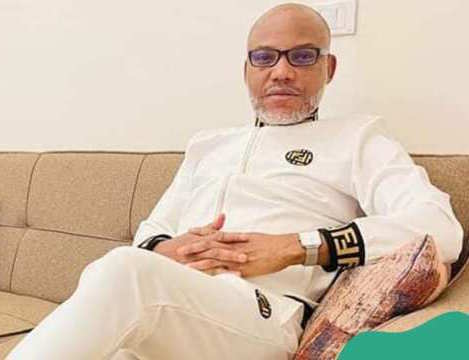
With the sentencing of Mazi Nnamdi Kanu to life imprisonment, the Nigerian government appears confident that it has finally put a lid on a problem it has wrestled with for years. But Nigeria’s political class continues to make the same historical mistake: confusing the arrest of an agitator with the death of the agitation. They never learn.
The demand for Biafra did not start with Kanu. It did not start with MASSOB. It did not start with Uwazurike. And it certainly did not start with social media activism. The Biafran question is as old as Nigeria’s foundational contradictions, and its flames were first ignited long before Kanu’s birth.
Anyone pretending that locking Kanu away amounts to ending the agitation either does not understand history, or is deliberately ignoring it. And history, bluntly speaking, is unforgiving to those who ignore it.
As former U.S. President John F. Kennedy famously said: “A man may die, nations may rise and fall, but an idea lives on.” The Nigerian state would do well to sit with that line for a moment. Because it applies here, word for word.
Without any iota of exaggeration, Biafra is an idea born from wounds that is yet to be fully healed. To understand why the Biafran question refuses to die, one must revisit the root causes. These were not imagined grievances or emotional overreactions. They were lived realities; they were violent, existential, and bloody realities.
For instance, Nigeria was welded together in 1914 by colonial fiat, not by consensus. The Northern and Southern Protectorates, home to wildly different ethnicities, religions, cultures, and political systems, were merged into a single entity with no shared identity. That marriage of incompatibilities planted the seeds of future conflict.
In a similar vein, at independence, the country barely had time to stand before power struggles which eventually consumed it. For instance, the coup of January 1966, led mostly by Igbo officers, triggered suspicion and resentment. The counter-coup in July 1966 then unleashed hell on earth for Easterners.
Against the backdrop of the foregoing fact, it is germane to opine that the Pogrom, a trauma that has remained unforgotten.
In fact, the anti-Igbo massacres that followed were not small skirmishes; they were systematic slaughters. Tens of thousands of Igbos were butchered in the North while the federal government looked away. Those who survived fled home traumatized, betrayed, and permanently scarred. My brothers and sisters, as you read this, permit me to shock you by saying that no nation forgets something like that.
At this juncture, it is expedient to recall that the Aburi Accord offered a chance for genuine federalism, a chance to avert war. But Nigeria reneged. That betrayal pushed Ojukwu to declare Biafra, a decision born not from ambition but survival.
Also analyzing from the same perspective, by the time crude oil’s value became apparent, the fight for control of the Eastern Region’s resources turned national unity into a convenient political slogan. Behind the rhetoric, economic interests drove the urgency to crush secession by force.
Surprisingly, from Ojukwu to Uwazurike to Kanu: The idea never left. It can also be recalled in this context that after the war, Nigeria declared “No Victor, No Vanquished.” But the policies that followed were anything but reconciliatory. Reconstruction rarely touched the East. Marginalization festered. In that environment, the agitation mutated, resurfaced, and rebranded with each generation.
It can also be recalled that Ralph Uwazurike picked up the mantle through MASSOB. He advanced the ideology non-violently, insisting on self-determination through peaceful means. For years, he was seen as the face of pro-Biafra struggle.
Then came Kanu, whose fiery rhetoric, mass youth appeal, and mastery of media made him a lightning rod for the frustrations of a region that feels unheard. But Kanu is a consequence, not a cause.
This is why sentencing him to life imprisonment is, at best, a temporary political victory and, at worst, a dangerous self-deception. Nigeria is trying to solve a historical, structural problem with a prison cell.
Unfortunately, ideas do not obey prison gates. In fact, why the agitation will outlive Kanu, three reasons stand out, and they cut across the fact that the grievances remain unaddressed, the Southeast feels economically shortchanged and that every crackdown creates new martyrs.
Explanatorily put, the feelings of exclusion, political sidelining, and economic inequality persist today. Speak to young people in the Southeast and you will hear anger rooted not in Kanu’s rhetoric, but in lived hardship and systemic neglect.
Without any iota of exaggeration, it is not out of place to opine that infrastructure deficit, political underrepresentation and limited federal presence have remained the propaganda points in the Southeast, and without a doubt, they are lived realities in that part of the country. Given the foregoing view, it is germane to opine that when citizens see no future in the system, agitation becomes the language of frustration.
This is a recurring mistake of the Nigerian state. Arresting agitators does not deter followers. It radicalizes them. What happened after the death of Mohammed Yusuf should have been a lesson. It wasn’t.
By sentencing Kanu to life imprisonment, the state has not solved the Biafran question, it has fertilized it. In fact, it has over the years remained the hard truth Nigeria must confront. This is as Nation-building is not achieved by silencing dissent. It is achieved by addressing the causes of dissent. Therefore, the Biafran agitation is not fundamentally a security problem. It is a political, historical, and socio-economic problem. Until Nigeria fixes the underlying injustices, the agitation will remain, whether or not Kanu is behind bars, alive, or even in the picture at all.
Today’s young agitators are not driven by nostalgia for 1967. They are driven by present realities. They are driven by unemployment, by insecurity, by poverty, by political alienation, by a sense that the Nigerian project is a rigged game. In fact, you cannot imprison a population’s pain.And you certainly cannot imprison their memory.
Without any iota of exaggeration, the Nigerian government has every right to prosecute individuals who break the law. But it must also admit a bigger truth: the Biafran agitation will remain alive because the conditions that birthed it remain alive.
Just ponder over the fact that Ojukwu is gone, Uwazurike is marginalized and Kanu is jailed. Yet the idea is still breathing. That alone should tell the Nigerian state that something is fundamental: This is not a fight against a man. It is a fight against an idea. And as Kennedy warned, ideas do not die.
Until Nigeria embraces justice, equity, genuine federalism, and national healing, the agitation will endure, shape-shifting, resurfacing, and reincarnating with every generation. History has spoken before. It is speaking again. The question is whether Nigeria is ready to listen.


















You must be logged in to post a comment Login