
Africa
PEOPLE POWER REVOLUTION: Between Omoyele Sowore/Nigeria and Julius Malema/SouthAfrica -By Richard ODUSANYA
Ultimately, the story of Malema and Sowore should not end with a mere comparison of styles. It should awaken Nigerians to the reality that people power only becomes real when citizens claim it, own it, and channel it into enduring structures. Sowore’s courage and sacrifices will mean little if Nigerians continue to watch passively from the sidelines. His struggle will only be vindicated when the people see it as theirs—and rise to defend it as such.

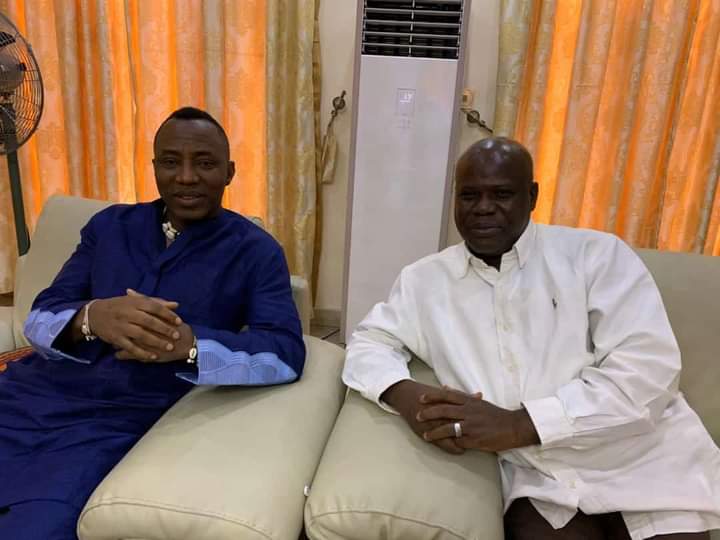
The idea of “people power” has become one of the defining currents of African politics in the 21st century. Across the continent, younger generations—disenchanted with corruption, inequality, and the failures of post-independence elites—are searching for leaders who can articulate their frustrations and translate them into action. Two figures stand out in this regard: Julius Malema in South Africa and Omoyele Sowore in Nigeria. Though they operate in very different political terrains, both embody the insurgent energy of people power, and both have unsettled governments that would rather have them silenced.
Malema’s Radical Institutionalism
Julius Malema’s trajectory illustrates what might be called “radical institutionalism.” Once the enfant terrible of the African National Congress Youth League, Malema broke with the ANC and founded the Economic Freedom Fighters (EFF). His genius has been to take the language of protest—land redistribution, resource nationalism, economic justice—and translate it into a disciplined political party that has carved a space in South Africa’s parliamentary system. Through fiery speeches, theatrical disruptions, and relentless critique of the status quo, Malema has forced national conversations that the ANC would rather avoid. His red-beret army represents a fusion of grassroots protest with formal political participation. I have been an ardent, diehard fan of Julius Malema, while watching from distance.
Sowore’s Dissident Outsiderism
Omoyele Sowore represents a different model—what might be called “dissident outsiderism.” A former student leader (President) and a courageous non-conformists. He built Sahara Reporters into a digital weapon against Nigeria’s corrupt elite. His “Revolution Now” protests and repeated presidential candidacies symbolize a refusal to normalize bad governance. Yet, unlike Malema, Sowore has not succeeded in building a lasting political structure. Nigeria’s highly monetized, winner-takes-all electoral system has kept him on the margins, and his activism has remained more disruptive than institutional. Still, he has been relentless in keeping issues of corruption, authoritarian drift, and misrule in the public consciousness.
( _Coincidentally too, I happened to be in the US when Sowore gave some wotowoto to some visiting Nigerian officials, in a hall!!)
Convergence and Divergence
Both men converge in their rhetorical militancy, youthful energy, and ability to embody public frustration. Both thrive on symbolism—the red beret in South Africa, the clenched fist and fiery street mobilization in Nigeria. Yet they diverge sharply in their outcomes. Malema has institutionalized protest, creating a party that shapes parliamentary debates and local governance. Sowore, by contrast, has remained an irritant to the Nigerian political class, but without the organizational machinery to translate protest into power. The difference speaks not only to individual strategies but also to structural contexts: South Africa’s proportional representation system enables smaller parties to survive, while Nigeria’s majoritarian system smothers them.
The Lesson for People Power
The comparative lesson is clear: people power needs both the uncompromising voice of the outsider and the organizational discipline of the insider. Sowore embodies conscience—an unyielding reminder that Nigeria deserves better. Malema embodies structure—transforming rage into political capital within the system. The future of African people power revolutions may well depend on a synthesis of these two strategies: fearless dissidence that refuses to be co-opted, and institutional pathways that prevent protest from evaporating into mere symbolism.
In the final analysis, Sowore and Malema are not just individuals; they are archetypes of Africa’s restless political generation. One disturbs the system from outside, the other shakes it from within. Together, they both illuminate the possibilities and limits of PEOPLE POWER on a continent where the demand for justice refuses to die.
A Word to Sowore—and to Nigerians
If Sowore is to succeed where many Nigerian radicals have failed, his task is two-fold. First, he must make ordinary Nigerians see that his struggle is not for himself but for them—by rooting his campaigns in their daily pains: fuel prices, food costs, unemployment, and insecurity. The language of liberation must touch the market woman, the teacher, the artisan, and the unemployed graduate. This was the genius of Malam Aminu Kano, who built his politics on the talakawa (the common people) and whose followers saw him not as a distant politician but as their authentic voice.
Second, Sowore must learn to mobilize beyond protest. Street action and social media agitation must be married to grassroots structures: community associations, student unions, labour movements, professional groups, and local leaders. Only then will Nigerians recognize that supporting him is not about joining his personal crusade but about advancing their own collective liberation.
Beyond the Two Men
Ultimately, the story of Malema and Sowore should not end with a mere comparison of styles. It should awaken Nigerians to the reality that people power only becomes real when citizens claim it, own it, and channel it into enduring structures. Sowore’s courage and sacrifices will mean little if Nigerians continue to watch passively from the sidelines. His struggle will only be vindicated when the people see it as theirs—and rise to defend it as such.
JUST AN OPINION
Richard ODUSANYA
Public Affairs Analyst And Advocate Of Good Governance
















You must be logged in to post a comment Login