
Africa
“So, You Want to Be a Journalist? Be Prepared for Critics”, by Isaac Asabor

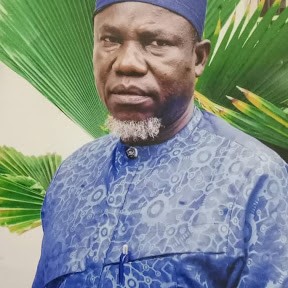
Without being immodest in this context, the headline of this piece was the question and caution I sounded to my daughter, who recently graduated from the Nigerian Institute of Journalism (NIJ), and my son, who has gained admission to study Mass Communication at a federal university, just few days ago. I reminded them that if they want to pursue journalism in Nigeria like their father that they must be ready to face the critics. In this country, where the media is often misunderstood and underappreciated, everyone seems to have an opinion on what journalists should do, even if they have no formal training or understanding of the field. This reality can be tough, especially for young aspiring journalists who enter the profession with passion and idealism. But the road ahead, though challenging, is not without its rewards.
Aptly put, there is no denying the fact that there is a growing misunderstanding of Journalism in Nigeria. First, it is important to understand that journalism, at its core, is not just about writing or posting information on social media. It is a complex field that demands critical thinking, thorough research, fact-checking, and ethical considerations. Journalists do not simply relay information, they dig deeper, uncover hidden truths, verify sources, and report in a balanced, unbiased manner. Yet, this truth seems to be lost on many, and the gap between trained journalists and the general public’s understanding of the profession has widened.
One of the key challenges faced by Nigerian journalists today is the proliferation of self-styled “journalists” on social media. A person may post an opinion on Twitter or share a viral video, and suddenly, they are regarded as an authority on news. This has caused a dilution of what it means to be a journalist. Everyone with an internet connection now seems to believe that they have the qualifications to report on events or express opinions about them. But this is a far cry from the journalistic values of accuracy, fairness, and responsibility.
In fact, the rise of social media platforms like Twitter, Facebook, and Instagram has undoubtedly altered how news is consumed, but it has also led to a misinterpretation of what journalism entails. These platforms allow anyone to share information with a vast audience, but there is little to no accountability for the content that is shared. As a result, misinformation spreads like wildfire, and the lines between a professional journalist and an ordinary person become increasingly blurred.
While social media gives ordinary citizens the power to influence public opinion, it also creates confusion for the public when it comes to differentiating between quality journalism and opinion or rumor. A viral tweet or a post with a catchy headline can easily be mistaken for credible news, especially when it garners attention from celebrities or high-profile figures. Unfortunately, this often leads to situations where unverified and sensationalized content is presented as truth, overshadowing the efforts of trained journalists who spend hours researching, verifying facts, and ensuring the accuracy of their reporting.
In Nigeria, this problem is exacerbated by the sheer volume of fake news that circulates online. While social media can amplify important stories, it also fosters an environment where sensationalism and clickbait rule. Journalists, by contrast, are held to higher standards and must adhere to a code of ethics that prioritizes the truth above all else. This distinction, however, is often lost on the average Nigerian, who may give more weight to an unverified post from a popular figure than to a well-researched report from a professional journalist.
As if dealing with social media influencers was not enough, journalists in Nigeria also have to contend with criticism from almost every corner of society. Political figures, public officials, and citizens alike often criticize journalists for perceived bias, poor reporting, or failure to capture all perspectives on a given issue. The reality is that journalists cannot please everyone, and the more they try to do so, the more they risk compromising their integrity.
In Nigeria, politics is an especially contentious area for journalists. Politicians often accuse media outlets of favoring one party or ideology over another. This criticism is not always unfounded as there are certainly instances where media houses have skewed coverage to align with the interests of their owners. However, the constant finger-pointing at journalists by politicians and the public only adds to the pressure on journalists to remain neutral and independent.
In fact, citizens also frequently criticize journalists for not providing enough context, failing to include all relevant voices, or reporting on issues that they feel should be prioritized. In a country as diverse and polarized as Nigeria, it is almost impossible to report on any topic without upsetting someone. Whether it is a report on corruption, security issues, or economic hardship, journalists are often accused of either not doing enough to highlight the “right” issues or of sensationalizing the “wrong” ones.
Without a doubt, Journalists in Nigeria are not only subjected to external criticism but also face significant internal pressures within media organizations. Many Nigerian media houses are owned or influenced by powerful individuals or political groups, which can create a challenging environment for journalists trying to maintain independence and report impartially. In some cases, media outlets may pressure journalists to slant their reporting in favor of the interests of the owners, making it harder for journalists to do their jobs ethically.
The pressure to conform to certain narratives is also a major challenge. While most professional journalists strive to maintain objectivity, the reality is that media houses are often at odds with the political and economic realities of the country. Journalists may find themselves caught between doing what is right and protecting their job security. This is a constant balancing act that many journalists must navigate, often at the risk of personal and professional integrity.
In Nigeria, where media independence is still a work in progress, these internal pressures can lead to self-censorship, which further undermines the credibility of the press. When journalists feel they cannot fully report on sensitive issues because of external pressures, it diminishes their ability to serve the public and hold power to account.
Despite the negative aspects of journalism in Nigeria, one thing remains abundantly clear: professional training still matters. Journalists who have undergone formal education and training understand the importance of ethical reporting, investigative journalism, and the power of well-researched, factual stories. They also understand that journalism is not about pleasing the masses or following the latest trends, it is about telling the truth, no matter how uncomfortable or unpopular it may be.
While there may be critics who believe they know better, the reality is that there is a significant difference between a person who blogs about politics and a trained journalist who has spent years studying how to gather information, interview sources, and write objectively. Aspiring journalists should not be discouraged by the noisy critics who often confuse their opinions with facts. Instead, they should focus on the core values of the profession: truth, accountability, and service to the public.
For those considering a career in journalism in Nigeria, the road is not easy, but it is incredibly rewarding. It requires dedication, resilience, and a strong commitment to the truth. Be ready for the critics, whether they come from the political elite, the public, or even within your own newsroom. But remember that the work of a journalist is essential to the functioning of democracy, and the ability to hold those in power accountable is a privilege that should never be taken lightly.
So, if you are set on becoming a journalist, be prepared to take the hits. But also remember that the reward lies in knowing you are making a difference, telling stories that matter, and upholding the principles of truth and integrity. Journalism may not always be appreciated, but it is a profession that shapes the world in profound and lasting ways. And that, in the end, is what makes it worthwhile.



























You must be logged in to post a comment Login