
Breaking News
State Police: 28 Assemblies Approve Bill as Tinubu Awaits Constitutional Amendment
State police moves closer to reality as 28 states approve the bill. Former IGP Mike Okiro also proposes safeguards against governors’ abuse.

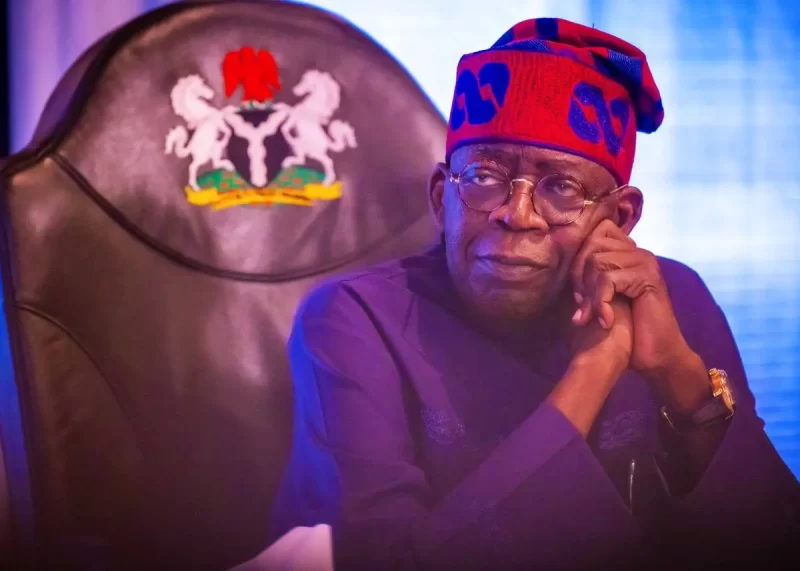
Nigeria’s proposed state police system has taken a significant step towards implementation, with 28 State Houses of Assembly confirming their approval of the constitutional amendment bill, paving the way for its transmission to President Bola Tinubu for assent.
The National Assembly is expected to forward the bill to the President between now and next week after the required constitutional threshold was surpassed.
Although reports indicated that more than 30 of the 36 state legislatures had approved the proposal, the Clerk to the National Assembly, Kamoru Ogunlana, confirmed that 28 state assemblies had submitted reports that were received and verified by his office.
The constitutional amendment seeks to establish State Police Services and introduce other related provisions under the Constitution of the Federal Republic of Nigeria, 1999 (Sixth Alteration) Bill.
Ogunlana said the bill was transmitted to the 36 State Houses of Assembly on September 16, 2026, for consideration and approval.
The assemblies were initially given 30 days, with October 15 set as the deadline for communicating their decisions to the National Assembly.
However, the clerk explained that his office would continue to accept submissions from state legislatures until the bill was forwarded to the President.
He stated: “Following receipt and verification of the reports, the office confirms that 28 State Houses of Assembly have approved the Bill.
“This represents more than the constitutionally-prescribed threshold of not less than two-thirds of the 36 State Houses of Assembly, equivalent to 24 states, as required under Section 9 of the Constitution of the Federal Republic of Nigeria, 1999.”
He said the National Assembly had verified the reports and accompanying votes and proceedings to authenticate the decisions taken by the various state legislatures.
Ogunlana further explained that the Constitution did not specifically require a Third Reading for constitutional alteration bills under Section 9, unlike ordinary bills.
Presidency seeks private sector support for state police
As preparations for the proposed policing structure continue, the Presidency has called on the Organised Private Sector (OPS) to produce a financing and implementation plan for the initiative.
Last week, the Presidency established a committee chaired by Chief of Staff to the President, Femi Gbajabiamila, and asked private sector operators to contribute to developing the framework.
It argued that insecurity had continued to impose significant economic costs on businesses beyond expenditure on private security, including abandoned investments, stalled expansion plans and disruptions to commercial activities.
Speaking at a plenary session titled “security, stability and economic resilience” during the 32nd Nigerian Economic Summit in Abuja, Gbajabiamila said insecurity was driving away investors, affecting supply chains, delaying factory expansions and weakening employment opportunities.
He urged business leaders to work with state governors and lawmakers while contributing their knowledge of institutional management, expenditure control and risk assessment.
He also asked them to identify security challenges preventing businesses from investing and expanding.
Full list of 28 states that approved state police
The states whose assemblies have approved the proposed state police establishment are Adamawa, Delta, Edo, Kwara, Ogun, Osun, Oyo, Plateau, Rivers, Taraba, Zamfara, Imo, Ekiti, Kebbi, Akwa Ibom, Bayelsa, Enugu, Anambra, Benue, Cross River, Abia, Yobe, Kaduna, Lagos, Kano, Sokoto and Ebonyi.
Former IGP Okiro outlines measures to prevent abuse
Meanwhile, former Inspector-General of Police and former Chairman of the Police Service Commission, Sir Mike Okiro, has called for strong legal safeguards to prevent state governors from using state police for political and personal interests.
Okiro said the proposed decentralisation of policing would require state governments to take responsibility for funding their respective police forces.
He argued that states had demonstrated their ability to support policing over the years through the provision of patrol vehicles, equipment and other operational resources.
Speaking from his experience as a former Commissioner of Police in Lagos and Benue states and later as Inspector-General of Police, Okiro said:
“As a Commissioner of Police in Lagos and Benue states, and later as the IGP, I can attest to the operational and funding support given to the Police by state governments. A number of them purchase patrol vehicles for most of the state, area commands and divisions in their respective states. Some, like Lagos, have set up State Security Trust Funds for this purpose. So, I have no doubt in my mind that they will do this effectively.”
He pointed to Lagos State’s Operation Sweep, established 30 years ago, as evidence that state governments could successfully support security operations.
According to him, Lagos has developed the Lagos State Security Trust Fund, a modern surveillance system and a world-class Forensic Analysis Centre.
He said the state had supported Operation Sweep, which later became the Rapid Response Squad (RRS), with modern vehicles and communication equipment for more than three decades.
Okiro added that the state had also invested in drones and, he believed, a helicopter for policing purposes.
He also highlighted Enugu State’s security infrastructure, particularly the Enugu State Digital Surveillance Control Centre, which he said was equipped with advanced surveillance technology and facilities for DNA analysis.
The former IGP maintained that security remained central to economic and social development, stressing that investors would avoid states where their investments and businesses were at risk.
He described security as “the pivot around which all aspects of development, social, educational and economic, revolve. No investor will invest resources in an unsafe state, and that makes security very crucial.”
Citing Chapter Two of the Nigerian Constitution, Okiro noted that the security and welfare of citizens were established as the primary responsibility of government.
He acknowledged that some state governments faced difficulties paying the salaries of teachers and nurses but insisted that funding the police must remain a priority.
He suggested that the Federal Government could intervene with financial assistance if states encountered difficulties meeting salary payments and other obligations.
Okiro advocates harmonised training for state police
On the training and recruitment of personnel, Okiro recommended that state police colleges adopt a harmonised curriculum based on the existing training structure of the Nigeria Police Force.
He said the current curriculum used by police colleges, the Police Academy and specialised training institutions could be retained and adapted to the proposed dual policing arrangement.
According to him, every state would need to establish its own police college while maintaining the existing training standards.
He also argued that decentralisation would help address Nigeria’s shortage of police personnel by creating opportunities for qualified unemployed Nigerians, including school certificate holders and National Diploma and degree graduates in Criminology, Sociology, Psychology and Law.
Okiro said qualified lecturers and retired police officers could be recruited to teach and manage the proposed institutions.
He added that the State Police Council would be responsible for developing policing policies, overseeing recruitment and training, and ensuring accountability to the public.
Constitutional safeguards must protect IGP, commissioners – Okiro
Addressing concerns about possible political interference, particularly during elections, Okiro said the law must protect the offices of the Inspector-General of Police and Commissioners of Police from abuse by political officeholders.
He said: “Provisions should be made in the law to ensure that the offices of the Inspector-General of Police and Commissioners of Police are insulated from abuse.”
My recommendations on tenure, by Okiro
The former police chief recalled that he had previously recommended a fixed tenure for the Inspector-General of Police, a provision subsequently included in the Police Act Amendment 2024.
He explained that the amendment allows the IGP to complete a four-year tenure instead of retiring upon reaching 60 years of age or completing 35 years in service, as previously required under the civil service rules.
Okiro recommended that the same protection should apply to Commissioners of Police, with their removal requiring approval by a two-thirds majority of the relevant legislative chamber.
He said the IGP’s removal should require approval by a two-thirds majority of the Senate, while that of a Commissioner of Police should require a similar majority in the relevant State House of Assembly.
Under the proposed arrangement, the State Police Council would exercise direct oversight, while the Commissioner of Police, appointed by the governor, would serve as the council’s secretary for a single four-year term.
Okiro acknowledged that concerns about governors abusing state police were legitimate, particularly given the experiences of the First Republic, when regional premiers allegedly used the police against political opponents.
He warned that governors could become excessively powerful without adequate institutional checks.
He said: “There should be checks and balances to make it impossible for a governor to have 100 per cent control. This is a federation, and no governor should be able to take actions detrimental to other states. If such actions occur, there must be clear consequences written into the law.”
He explained that the proposed legislation expressly prohibits governors from using state police for partisan, ethnic, religious, sectional or personal purposes.
The bill also provides that the President and governors can only issue lawful, general policy directives in writing, while prohibiting instructions targeting specific individuals, political parties or groups, or requiring violations of fundamental rights.
He said restrictions on the deployment and removal of police chiefs, as well as the establishment of a Complaints Response Unit in every state, would provide additional protection against abuse.
Okiro further noted that the National Assembly would establish minimum national standards covering recruitment, training, vetting, promotions, discipline, use of force, firearms, complaints procedures, accountability, data management and professional conduct.
He maintained that states would be allowed to introduce higher standards but would not be permitted to operate below the national minimum requirements.
Africans Angle News


















You must be logged in to post a comment Login