
Africa
Why the North Stands to Gain from Agricultural Levies: A Recipe for Prosperity, by Fati Abdullahi Alkali

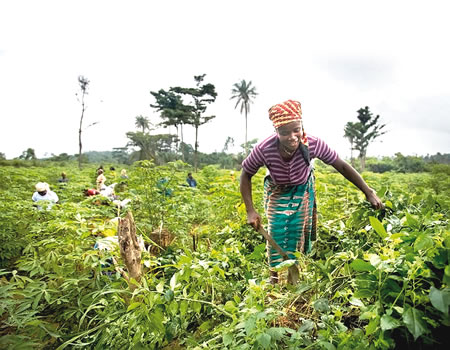
As the nation grapples with economic instability, it is refreshing to hear innovative ideas that can stimulate growth and development. The recent suggestion by the former Secretary to the Government of the Federation, Babachir Lawal, that the introduction of levies on agricultural products will enrich the North, is a welcome development.
This proposal, if implemented, will not only boost the economy of the North but also have a positive ripple effect on the entire country. The North, being the hub of agricultural production in Nigeria, is strategically positioned to benefit from such a policy.
The introduction of levies on agricultural products will provide a significant source of revenue for the North. This revenue can be channeled into developing the region’s infrastructure, such as roads, irrigation systems, and storage facilities. This, in turn, will enhance agricultural production and productivity in the region.
Moreover, the levies will encourage farmers in the North to produce more, as they will be motivated by the prospect of earning more income. This increased production will lead to a surplus of agricultural products, which can be exported to other regions, generating even more revenue for the North.
Furthermore, the introduction of levies on agricultural products will create employment opportunities for the teeming youth in the North. As the agricultural sector expands, more jobs will be created in areas such as farming, processing, and marketing.
It is also worth noting that the levies will help to reduce the region’s dependence on oil revenue. The North, like the rest of Nigeria, has been heavily reliant on oil revenue, which has been a major contributor to the country’s economic instability. By diversifying its revenue streams, the North will be better positioned to withstand economic shocks.
In addition, the introduction of levies on agricultural products will encourage the development of agro-based industries in the North. As the region becomes a major hub for agricultural production, industries such as food processing, animal feed production, and textile manufacturing will spring up, creating more jobs and stimulating economic growth.
It is imperative to note that the introduction of levies on agricultural products must be done in a way that does not harm the poor and vulnerable. The government must ensure that the levies are fair and equitable, and that they do not lead to an increase in the prices of agricultural products.
To achieve this, the government can introduce a system of exemptions and waivers for small-scale farmers and vulnerable groups. This will ensure that the levies do not have a negative impact on those who are already struggling to make ends meet.
In conclusion, the introduction of levies on agricultural products is a laudable initiative that has the potential to transform the economy of the North. It is imperative that the government takes a careful and nuanced approach to implementing this policy, to ensure that it benefits all stakeholders.
As the government moves to implement this policy, it is essential that it engages in widespread consultation with stakeholders, including farmers, traders, and consumers. This will help to build trust and ensure that the policy is implemented in a way that is fair and equitable.
The introduction of levies on agricultural products is a bold step towards diversifying the economy of the North. It has the potential to stimulate economic growth, create jobs, and reduce poverty. As the government moves to implement this policy, it is essential that it does so in a way that is transparent, accountable, and fair.
The people of the North, and indeed all Nigerians, look forward to seeing the positive impact of this policy. We urge the government to move quickly to implement the levies, while also ensuring that the interests of all stakeholders are protected.
In the words of Babachir Lawal, the introduction of levies on agricultural products is a “game-changer” for the North. We couldn’t agree more. This policy has the potential to transform the economy of the North, and we urge the government to seize this opportunity with both hands.
As we move forward, it is essential that we continue to monitor the implementation of this policy, to ensure that it is having the desired impact. We must also be willing to make adjustments as necessary, to ensure that the policy is working for the benefit of all.
In the end, the introduction of levies on agricultural products is a bold and innovative step towards diversifying the economy of the North. We applaud the government for taking this initiative, and we look forward to seeing the positive impact it will have.
Fati Abdullahi Alkali
Mass communication department, Borno State University, Maiduguri.

























You must be logged in to post a comment Login