
Africa
Inadvisability Of Piling Up Debts For ‘Leaders Of Tomorrow’ To Inherit -By Isaac Asabor
It is time for Nigeria to rediscover the fiscal discipline that once won it freedom from debt slavery. If we do not act now, younger Nigerians will inherit nothing but IOUs, inflation, and stunted opportunities. That would be a collective legacy of shame.

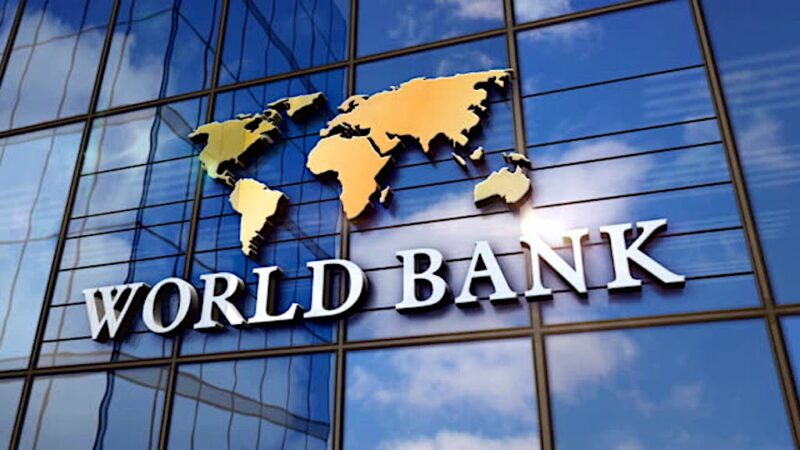
Nigeria is once again at the mercy of international lenders. On Tuesday, September 30, 2025, the World Bank is expected to approve another $750 million in loans for the country. The package includes $500 million for the Building Resilient Digital Infrastructure for Growth in Nigeria (BRIDGE) project and $250 million for the Health Security Programme in West and Central Africa, Nigeria’s Phase II.
To the casual observer, these loans may appear as forward-looking investments. The BRIDGE project, for instance, promises to expand broadband access, particularly in underserved rural areas, while the health programme aims to fortify the country’s ability to respond to pandemics and health crises. On paper, both initiatives look attractive and necessary. But the question that cannot be wished away is: at what cost are we financing these aspirations?
The truth is simple and bitter. Nigeria is piling up loans at an alarming rate, effectively mortgaging the future of its youth and generations yet unborn. What we celebrate as foreign financing today may, in the not-too-distant future, reveal itself as a debt trap that will choke economic growth, constrain national sovereignty, and undermine social progress.
It is instructive to recall that Nigeria was once free from the suffocating grip of external debt. Under the leadership of Dr. Ngozi Okonjo-Iweala as Finance Minister, the country secured a landmark debt forgiveness deal in 2005 that wiped out billions in obligations to the Paris Club of creditors. It was a proud moment, hailed across Africa as a testament to what sound negotiations and fiscal discipline could achieve.
For the first time in decades, Nigeria breathed fresh financial air. There was optimism that without the crushing burden of debt, the country could direct its resources to infrastructure, education, healthcare, and job creation. It was a window of opportunity for true national renewal.
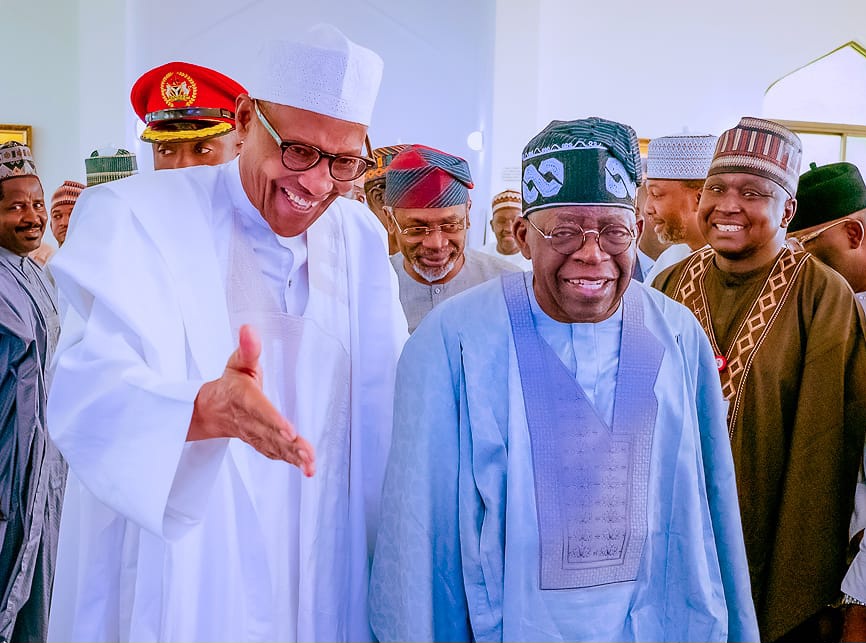
Yet, fast forward barely two decades later, and Nigeria has squandered that opportunity. Successive administrations, from Muhammadu Buhari to Bola Ahmed Tinubu, have returned the country to the same debt spiral it once struggled to escape. According to the Debt Management Office, Nigeria’s debt ballooned to ₦121.67 trillion by mid-2024, with projections now warning it could hit ₦180 trillion in 2025.
This reckless return to debt dependency raises disturbing questions: How did a nation that once walked free from debt willingly bind itself again? How did we forget the lessons of recent history so quickly?
Even more infuriating is the paradox at the core of Nigeria’s borrowing spree. Unlike the early 2000s when low oil prices and economic shocks strained government coffers, today Nigeria boasts improved revenue inflows. The removal of fuel subsidies, which previously gulped trillions annually, has freed significant funds. Tax and customs collections have also recorded improvements under more aggressive regimes.
But instead of reducing reliance on loans, the government has doubled down on borrowing. Development economist Dr. Aliyu Ilias posed the haunting question: “Why are we borrowing more when we are supposedly earning more?” It is a question that exposes the hollowness of official justifications.
The answer lies in Nigeria’s unchecked appetite for consumption rather than investment, its bloated cost of governance, and its failure to instill discipline in public spending. Rather than channel increased revenues into stabilizing the economy, the government has treated loans as a convenient crutch, one that postpones fiscal reckoning while deepening long-term liabilities.
The real cost of Nigeria’s borrowing binge is not just the size of the loans but the burden of servicing them. Debt service obligations already consume a frightening proportion of national revenue, leaving little for capital projects or social investments. This is no longer an abstract debate; it is a fiscal emergency.
Every naira allocated to interest payments is a naira denied to schools, hospitals, roads, or job-creating enterprises. The government’s addiction to loans effectively prioritizes foreign creditors over Nigerian citizens. In the long run, this trajectory undermines the very development these loans claim to promote.
Defenders of the borrowing spree argue that these loans are concessional, with favorable interest rates, and tied to projects like broadband expansion or healthcare reform. In theory, such borrowing can stimulate growth. But Nigeria’s track record tells a different story.
For decades, Nigeria has borrowed under similar justifications, yet the average citizen sees little to no improvement. Power remains erratic, roads are death traps, public hospitals are underfunded, and unemployment rates remain stubbornly high. Projects are eitherpoorly implemented, abandoned midway, or swallowed by the black hole of corruption.
If history is any guide, there is no guarantee that the $750 million now being sought will deliver on its lofty promises. Instead, the country risks repeating the same cycle: borrowing in the name of progress but leaving nothing but debt in reality.
Perhaps the most tragic dimension of Nigeria’s borrowing addiction is its intergenerational injustice. The leaders who sign off these loans today will retire with their pensions and privileges secured. But the youth, the so-called “leaders of tomorrow”, will be left to pay the bill.
Already, young Nigerians face limited opportunities: high unemployment, an overstretched education system, poor healthcare, and inflation that erode purchasing power daily. To saddle them further with a mountain of debt is not just unfair; it is unconscionable.
Instead of inheriting a foundation for prosperity, they are being handed shackles of debt. Instead of being given the tools to compete in a globalized economy, they are being forced to carry the burden of a reckless past. This is not leadership, it is betrayal.
Nigeria is not doomed to perpetual indebtedness. But reversing the trend requires bold and honest reforms.
There is an urgent need for government, at all tiers, to cut the cost of governance. The Nigerian government must drastically reduce its recurrent expenditure. The lavish allowances of lawmakers, the duplication of roles, and the bloated number of political appointees must be trimmed. Governance cannot continue to be a luxury funded by loans.
In a similar vein, financial leakages must be plugged. This is as corruption and mismanagement drain billions annually. To achieve the foregoing, accountability mechanisms must be strengthened, while punishing offenders must be prioritized to ensure resources are not wasted.
In a similar vein, there is an urgent need for the prioritization of productive investments. This as borrowing, if inevitable, should be tied strictly to revenue-generating projects with clear oversight and timelines. Again, funds must not disappear into white-elephant schemes.
Also, there is need for the government to explore debt relief or restructuring. As was done under Dr. Okonjo-Iweala’s leadership, Nigeria should explore negotiating with creditors for debt relief or restructuring. If a credible reform plan is presented, creditors may be open to easing the terms.
Above all, it should by now be an urgent task for the government under Tinubu-led administration to embark on boosting domestic revenue. In fact, beyond oil, Nigeria must expand its tax base, industrial capacity, and agricultural output. This is as a diversified economy will reduce reliance on loans.
Without a doubt, Nigeria’s frequent borrowing has become not just inadvisable but dangerous. Each new loan pushes the country deeper into dependency, crowds out essential public investment, and transfers the burden to a generation that had no say in contracting these debts.
It is time for Nigeria to rediscover the fiscal discipline that once won it freedom from debt slavery. If we do not act now, younger Nigerians will inherit nothing but IOUs, inflation, and stunted opportunities. That would be a collective legacy of shame.
A nation that once broke free from debt must not willingly chain itself again. The inadvisability of piling up loans is no longer a matter of economic debate; it is a moral obligation to the future.

















You must be logged in to post a comment Login