
Forgotten Dairies
Inadvisability Of Wearing Democracy As A Costume On June 12 And Discarding It On June 13 -By Isaac Asabor
Democracy does not die only when soldiers seize power. Sometimes it dies quietly in the hands of elected leaders who praise it publicly while suffocating it in practice. June 12 continues that uncomfortable truth to place before Nigeria. It is also a truth the nation can no longer afford to ignore.

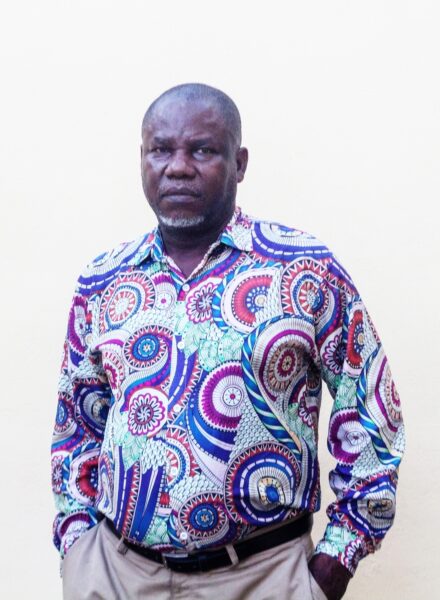
Every year, as June 12 approaches, Nigeria enters a familiar season of democratic theatre. Politicians who spend much of their years in politics undermining democratic principles suddenly reinvent themselves as apostles of freedom, defenders of the people’s mandate, and custodians of the legacy of Chief Moshood Kashimawo Olawale (MKO) Abiola. Flowery speeches are delivered. Tributes are paid. Social media platforms are flooded with carefully choreographed messages celebrating the significance of June 12 and the sacrifices made in the struggle for democracy.
Yet, beyond the ceremonial rhetoric lies a troubling contradiction that has become impossible to ignore. Many of those who speak most passionately about democracy on June 12 are often the very individuals whose actions throughout the year weaken, distort, and sometimes openly subvert democratic values. It is therefore becoming increasingly necessary to question the wisdom, sincerity, and indeed the advisability of wearing democracy as a costume on June 12 only to discard it on June 13.
June 12 is not merely a date on Nigeria’s political calendar. It is a symbol of the triumph of the popular will over authoritarian repression. It represents electoral integrity, political inclusion, accountability, justice, transparency, and respect for the sovereignty of the people. It embodies the principle that power belongs to the citizens and that leaders derive legitimacy only from the consent of the governed.
However, if these ideals truly matter, then Nigerians must ask a simple but uncomfortable question: How many of the country’s political leaders genuinely practise the values they celebrate every June 12? The answer is hardly encouraging.
For far too many politicians, democracy is not a philosophy of service but a convenient instrument for acquiring power and preserving privilege. Elections are treated as investments rather than contests of ideas. Public office is viewed as a trophy to be won rather than a trust to be honoured. Democratic institutions are respected only when they serve personal or partisan interests.
This contradiction is perhaps most evident within political parties themselves. Across the country, internal party democracy remains largely absent. Party primaries are routinely manipulated. Delegate lists mysteriously change overnight. Aspirants are edged out through questionable procedures. Outcomes are often determined long before votes are cast, with powerful political godfathers deciding who emerges and who does not.
The irony is impossible to miss. Many politicians who passionately condemn the annulment of the June 12, 1993 presidential election are themselves guilty of annulling democracy within their own parties. They invoke the spirit of June 12 in public while violating its essence in practice. Such contradictions expose the hollowness of many annual commemorations.
Equally troubling is the persistent assault on local government democracy. Despite constitutional guarantees and judicial pronouncements affirming local government autonomy, caretaker committees populated by political loyalists have often replaced elected councils in several states. In such arrangements, grassroots democracy becomes a casualty. Citizens are denied meaningful representation, accountability is weakened, and governance becomes increasingly detached from the people.
Yet some of the loudest voices at June 12 commemorations are leaders presiding over these democratic distortions. They speak eloquently about freedom while denying citizens the opportunity to choose those who govern them at the local level. Such hypocrisy undermines the very values they claim to celebrate.
The commercialization of politics presents another serious betrayal of democratic ideals. Today, the cost of participating in Nigeria’s political process has become prohibitive for many capable and patriotic citizens. Nomination forms cost millions of naira. Delegates expect inducements. Campaigns require enormous financial resources.
Consequently, politics is increasingly reserved for the wealthy, the connected, and in some cases, individuals whose sources of wealth invite legitimate scrutiny. Democracy, which ought to create equal opportunities for participation, is gradually being transformed into a marketplace where influence often belongs to the highest bidder. The result is a political system that excludes many of the very citizens it was designed to empower.
Even more alarming is the growing tendency to deploy state institutions as instruments of political warfare. Opposition figures are sometimes subjected to selective investigations. Security agencies are occasionally drawn into partisan disputes. Critics are harassed. Dissenting voices are intimidated. Political actors who challenge entrenched interests often find themselves isolated or punished.
These actions may occur under civilian administrations, but they bear uncomfortable similarities to the authoritarian tendencies that June 12 was meant to resist. Democracy cannot flourish where fear replaces freedom, nor can it thrive where disagreement is treated as rebellion.
Perhaps the greatest irony of all lies in the contrast between MKO Abiola’s sacrifices and the conduct of many who now invoke his name. Abiola’s place in history was secured not simply because he won an election but because he refused to surrender a mandate freely given to him by Nigerians. He became a symbol of democratic resistance because he stood for a principle larger than personal comfort, political convenience, or self-preservation.
Many contemporary politicians appear guided by a different philosophy. Principles are often sacrificed on the altar of expediency. Convictions bend according to political calculations. Some who now celebrate Abiola once benefited from undemocratic arrangements. Others remained silent when democratic norms were under assault. Yet every June 12, they emerge as self-appointed defenders of democratic values. History, however, is not easily deceived.
Democracy is not measured by the eloquence of commemorative speeches. It is measured by conduct. It is reflected in how leaders respect the rule of law, conduct party primaries, protect institutions, tolerate dissent, respect judicial decisions, and submit themselves to the will of the people.
A politician who manipulates party primaries cannot credibly claim the moral authority of June 12. A governor who undermines local government autonomy cannot convincingly speak about democratic progress. A public official who suppresses dissent cannot sincerely invoke the sacrifices of MKO Abiola.
The truth remains simple and unavoidable: democracy is not a ceremonial garment to be worn for one day and discarded the next. It is not an annual performance staged for public consumption. It is a continuous commitment that must be reflected in actions, decisions, and institutions.
As Nigeria marks another Democracy Day, the challenge before the political class is not to organize more celebrations that are elaborate or produce more tributes that are emotional. The challenge is honest self-examination. Have they strengthened democratic institutions or weakened them? Have they expanded political participation or restricted it? Have they defended the people’s mandate or manipulated it? Have they stood for democracy when doing so carried political costs?
The answers to these questions will determine whether June 12 remains a living democratic ideal or degenerates into an annual exercise in collective self-deception.
The future of Nigeria’s democracy depends not on speeches delivered in honour of June 12 but on the willingness of leaders to embody the values that date represents. Until that happens, the country will continue to celebrate the memory of MKO Abiola while betraying the essence of the struggle for which he sacrificed so much. And therein lies the greatest danger.
Democracy does not die only when soldiers seize power. Sometimes it dies quietly in the hands of elected leaders who praise it publicly while suffocating it in practice. June 12 continues that uncomfortable truth to place before Nigeria. It is also a truth the nation can no longer afford to ignore.




















You must be logged in to post a comment Login