
Health and Lifestyle
Nigeria’s Tertiary Healthcare; The Waterbed, the Blackout and the Long Road -By Prince Charles Dickson Ph.D
Power and water should be treated as clinical infrastructure, protected through dedicated tariffs and redundant grid, solar, battery and generator systems. Equipment purchases must carry lifecycle budgets and biomedical-engineering support. Health workers need timely salaries, safe workplaces and incentives for underserved areas. The NHIA and state insurance schemes must protect vulnerable families, while public dashboards disclose budgets, releases, waiting times, equipment uptime and avoidable deaths.

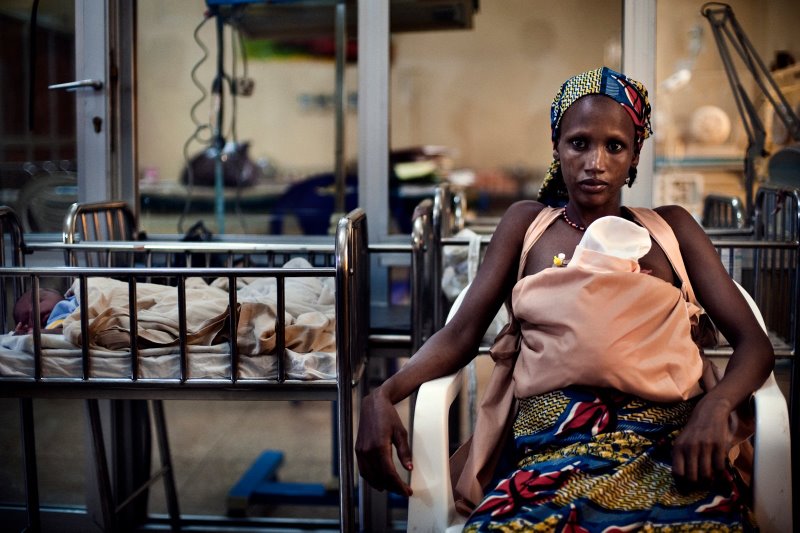
In February 2026, Ogonna Egwu took her gravely ill mother to the Accident and Emergency Ward of the University of Nigeria Teaching Hospital, Ituku-Ozalla. Doctors reportedly asked her to buy a waterbed the hospital could not provide. Unable to leave her mother alone for the 25-kilometre trip into Enugu, she gave money to a staff member. The bed arrived the next day. Her mother died a day later.
Then came a final indignity: the bed was allegedly withheld as “hospital policy” and sold to another patient. Egwu later recovered only part of her money. The Guardian’s account reads like fiction, but it is the kind of reality that has become dangerously ordinary.
This is not merely a story about a missing waterbed. It is an X-ray of a country where a patient’s relative becomes procurement officer, porter, blood scout and pharmacist; while grief waits at the cashier’s desk. When hospital no get wetin patient need, family becomes emergency ministry. The scandal is larger than one hospital and wider than one region.
A tertiary hospital should crown a functioning referral chain: the place for cancer therapy, neurosurgery, complex obstetrics, intensive care, specialist training and research. In Nigeria, that pyramid stands on its head. A 2026 country profile reports that 60 to 90 per cent of patients bypass primary care for secondary or tertiary facilities.
If foundation bend, penthouse no fit stand straight.
From Enugu to Ibadan and Kano, the map changes, but the pathology remains: specialists spend precious hours managing illnesses that should have been prevented, detected or treated earlier.
In the South-East, The Guardian describes primary health centres below standard, general hospitals without basic diagnostics and tertiary facilities overwhelmed by the resulting traffic. Across facilities in Enugu, Nnewi, Owerri, Abakaliki and Umuahia, patients report buying medicines outside, conducting tests privately, waiting for theatre space and supplying water at the bedside. Federal Medical Centre Umuahia reportedly faced power-related costs approaching ₦70 million monthly.
Big gate no be big medicine.
Hospital infrastructure is not concrete alone. It is reliable electricity, clean water, oxygen, blood, laboratories, ambulances, functional equipment, secure information systems and human dignity.
There have been genuine improvements. UNTH has gained major solar-power capacity and a modern linear accelerator, while other facilities have received new buildings and equipment. But one functioning cancer machine serving a heavily populated region is both progress and a warning.
Machine wey no work na monument with plug.
Procurement must include maintenance, consumables, spare parts, trained operators and public reporting of equipment uptime. Commissioning photographs do not treat patients.
Travel west and the illusion of advantage appears. The South-West has major medical schools, more specialists and a dense private healthcare market. Yet University College Hospital, Ibadan, once a symbol of Nigerian medical excellence—suffered a grid disconnection in October 2024 and more than 100 days of blackout. Its power distress remained a public issue in 2026.
In an intensive care unit, electricity is not an overhead, it is medicine. Across Lagos, excellent private care may exist kilometres from overcrowded public wards, but proximity is not access.
Hospital fit dey for your street; if the bill pass your pocket, e far like another country.
The generator has become an unofficial consultant, but diesel cannot be a national health policy.
The North carries the same disease with additional complications: vast distances, thinly distributed specialists, poverty, insecurity and disrupted transportation. A 2026 analysis of national survey data found inadequate antenatal-care use highest in the North-West at 35.5 per cent, followed by the North-East at 31.6 per cent and North-Central at 27.3 per cent, compared with about 10 per cent in the South-East and South-West.
By the time many patients reach Kano, Zaria, Maiduguri or Jos, a manageable condition has become an emergency. Aminu Kano Teaching Hospital has also experienced costly electricity disruptions.
Referral letter without ambulance, safe road and money na invitation wey person no fit attend.
New northern investments—including a 50-bed mental-health and drug-rehabilitation centre at the University of Maiduguri Teaching Hospital—deserve recognition. Yet an excellent tertiary island cannot compensate for a weak mainland of primary and secondary care. A woman with obstructed labour gains nothing from a sophisticated theatre she cannot reach. A trauma patient cannot use a CT scanner after losing the golden hour on a broken road.
All three regions meet at the Nigerian pocket. Out-of-pocket payments accounted for about 71 per cent of health expenditure in 2023, while roughly 91 per cent of Nigerians were uninsured in 2024. Here, sickness first attacks the body, then attacks the family economy. People buy medicines, tests, blood, gloves and consumables; they borrow, sell assets, postpone care or simply go home.
This is not consumer choice. It is coercion by illness.
Sickness no dey ask tribe, but treatment dey recognise postcode and pocket.
Buildings do not diagnose, operate or comfort. Nigeria had about 38 doctors for every 100,000 people in 2023, with distribution skewed towards cities. Brain drain is not simply a morality tale about unpatriotic professionals; it is a verdict on the system. Health workers leave because remuneration, safety, equipment, career progression and working conditions fail them.
You no fit ask healer to stay where workplace dey wound am.
Those who remain become exhausted, patients wait longer, and young professionals learn to improvise around institutional failure. The cost is not only poorer treatment. Medical education, research and Nigeria’s capacity to confront future epidemics are also weakened.
Funding is not merely what appears in an appropriation law; it is release, execution and accountability. In February 2026, the health minister told lawmakers that only ₦36 million of the ministry’s ₦218 billion 2025 capital appropriation had been released.
Budget wey government no release na promise written with invisible ink.
The division of responsibility, federal tertiary care, state secondary care and local primary care—too often becomes an escape route for blame. But sickness does not carry a government organogram. The patient does not care which tier failed to provide oxygen.
Government reports that nearly 3,000 primary health centres have been revitalised under the IMPACT programme and that emergency obstetric sites and tertiary projects are coming online. That is welcome. The true test, however, is not how many buildings were inaugurated, but how many open every day, have skilled personnel, medicines, water and electricity, and can make a safe referral.
No be signboard dey save life; na di service behind am.
Nigeria needs a referral compact across all three levels of government. Primary centres must deliver prevention, maternal care, essential medicines and early diagnosis. General hospitals need blood banks, oxygen, imaging and round-the-clock emergency surgery. Tertiary hospitals must recover their specialist, teaching and research mandate.
Power and water should be treated as clinical infrastructure, protected through dedicated tariffs and redundant grid, solar, battery and generator systems. Equipment purchases must carry lifecycle budgets and biomedical-engineering support. Health workers need timely salaries, safe workplaces and incentives for underserved areas. The NHIA and state insurance schemes must protect vulnerable families, while public dashboards disclose budgets, releases, waiting times, equipment uptime and avoidable deaths.
Citizens are not the cause of this collapse, but they are not powerless. Communities can use ward health committees, enrol in available insurance, donate blood and demand evidence instead of applauding buildings. Professional bodies must defend workers and patients. Civil society and the media must follow public money beyond allocation to actual results. Leaders should be judged by what happens in a hospital ward at 2 a.m., not by ribbon-cutting at noon.
Return to Ogonna Egwu’s waterbed. Her mother did not need another policy launch. She needed a chain of care that worked—before the emergency, inside the hospital and after the prescription.
Country wey hospital dey wait for patient family to supply the hospital, na the country?
Nigeria must decide whether its tertiary hospitals will remain monuments to ambition or become instruments of survival. A nation cannot rise higher than the care it gives to the person who cannot pay, travel abroad or call anybody.



















You must be logged in to post a comment Login