
Africa
The Shadow Pursuit: Power, Rumor, and the Unfinished Confrontation Between Wike and Lt. Yerima -By Prof. John Egbeazien Oshodi
Nigeria needs more than silence now. The President must address these tensions openly, reassure institutional actors, and acknowledge the psychological weight of rumor. It is time for all heads to cool. Power must speak calmly. Institutions must act predictably. And a deliberate effort to rebuild military–civilian trust must begin immediately. That is the only way to prevent this moment from becoming another embedded scar in a nation already carrying too many.

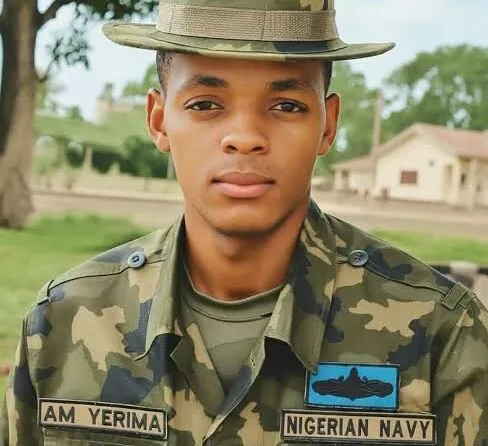
A New Phase After the Cameras Went Off
The Wike–Yerima confrontation did not truly end when social media moved on. It merely shifted out of public light. In the first phase, both men were actors in a national theatre, fully aware that every gesture would be judged by millions. Yerima’s refusal to obey an unlawful command was not just discipline — it was institutional intelligence. He understood that in uniform, before cameras, you do not bend to political anger. Wike too understood the implications of remaining before the lens — and so he retreated. That public retreat was not humiliation, it was containment. But once the lens disappeared, so did the restraints. Now the confrontation operates in a space without formal rules — driven not by evidence, but by perception, fear, and memory. What was once about land is now about power, loyalty, and psychological consequence. This is the phase where no one speaks openly, yet everyone adjusts their behavior.
The Vanguard Report
The most serious trigger for national concern came not from government, nor from the military, but from the press. Vanguard News, citing military-linked sources, reported that Lieutenant A. M. Yerima was trailed at night by two unmarked Hilux vans — no number plates, men dressed in black, moving with purpose. In Nigeria, that description is not folklore. It is a known operational signature. The fact that Yerima detected the pursuit early enough to deploy evasive maneuvers suggests two things: first, that he believed the threat was real; second, that he was psychologically prepared for retaliation. This is not the mindset of an officer imagining shadows. It is the mindset of someone who understands how power behaves when embarrassed. Whether the pursuers intended abduction, intimidation, or surveillance, the message was unmistakable: the uniform protects you in front of the crowd, but you drive alone at night. And in Nigeria, a man’s safety is often determined by whether his story is believed before his car is surrounded.
The Police Denial Arrives Immediately
Within twenty-four hours, the FCT Police Command issued a denial — a complete dismissal, delivered with institutional confidence: “No report was filed. No such incident occurred.” The timing itself invites scrutiny. Investigations — real ones — require time. They require witness contact, CCTV review, internal security cooperation. Yet the denial arrived with such speed that it suggested not inquiry, but containment. That does not prove guilt — but it communicates a deeper lesson: the first impulse of institutions is still to protect narratives, not people. Anyone familiar with Nigeria’s security culture knows that uniformed personnel often avoid filing reports when they believe the threat originates from political interest. Documentation can worsen their danger. Thus, the absence of a complaint cannot be treated as the absence of fear. If anything, it may be evidence of it. The police statement did not close the case — it expanded the suspicion. It moved the public from asking “Did it happen?” to “Why are they so quick to say it didn’t?”
When Rumor Outruns Institutions
At this point, it no longer matters whether the pursuit happened exactly as described. The rumor has outrun the institutions responsible for truth. Social psychology tells us that once a story gains sufficient emotional credibility, society reacts to it as if it were fact. Politicians begin to calculate their distance. Officers begin checking their mirrors twice. The public begins to assume that retaliation is normal — expected — inevitable. Wike and Yerima may never exchange words again, but the atmosphere around them now contains a silent equation: the confrontation is not settled. One may wait. One may watch. Both must now assume uncertainty. This invisible tension is itself a form of power. It is how political conflict migrates from physical space into psychological space. Wars do not always continue with bullets — sometimes they continue with silence, suspicion, and sleeplessness.
Power Leaves the Stage and Enters the Shadows
Power exposed is temporary. Power hidden is enduring. Once the crowd dispersed and the bulldozers retreated, the institutional theatre closed. Now power operates in the environment it prefers — the unrecorded hour, the unmarked vehicle, the deniable action. A bulldozer is slow, visible, accountable. A silent convoy at 9:30 p.m. requires no paperwork, and leaves no press conference. If the Vanguard story is accurate, someone sent a message in the language of danger. If it is false, then millions of Nigerians believing it proves something even more disturbing: the people assume their government is capable of such a thing. That assumption is not accidental — it was earned over years of extra-legal reprisal, suspicious deaths, and unresolved threats. In such a system, even a rumor functions like evidence.
The President’s First Intervention
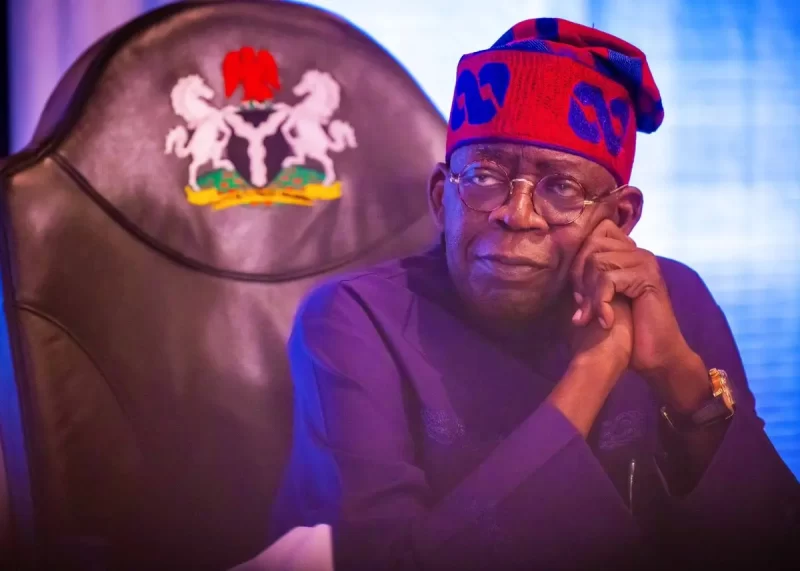
President Tinubu reportedly intervened swiftly to pull back the demolition machinery. That move defused a volatile moment and prevented the military from being humiliated on camera. He acted like a commander-in-chief aware that one unnecessary push could ignite wider institutional tension. That action was correct and responsible. But the second phase of the crisis is more complex. Bulldozers are made of steel. Retaliation made of rumor is harder to control. The question now is not whether the President can give orders — we know he can. The question is whether the system under him respects those orders when the lights are off. Can he stop unofficial retaliation? Can he address psychological warfare, not legal violation? The unresolved silence around Yerima will answer that long before any press statement does.
A Question Larger Than the Story
Here is the uncomfortable truth: it almost does not matter what actually happened. What matters is what the nation believes is possible. If Yerima was followed, it means an officer’s life can be endangered after obeying the law. If Yerima was not followed, it means Nigerians now fully believe that such a thing could happen — because their institutions have behaved like this before. In both cases, democracy is weakened. A system cannot remain intact if its enforcers quietly fear that doing their duty invites shadow punishment. Nor can it remain trusted if citizens believe rumor more than official clarification. A democracy survives not because it prevents wrongdoing — but because when wrongdoing is alleged, institutions react credibly. That credibility is eroding fast.
The Unfinished Confrontation
The confrontation now exists simultaneously in four psychological arenas:
• In the mind of the officer, who must now interpret every headlight as a potential threat.
• In the caution of the politician, who must wonder how far the military is willing to tolerate humiliation.
• In the suspicion of the public, who increasingly trust rumor over governance.
• In the silence of institutions, whose refusal to reassure only deepens anxiety.
Whether the pursuit was real or exaggerated, the emotional cost is now active. Every uniformed officer watching has received the quiet message: your bravery may impress Nigerians, but it may not protect you. That belief alone is enough to change how future confrontations unfold.
The Real Test Ahead
Nigeria has entered the psychological stage of this crisis. Words spoken on camera matter less than the silent decisions of those off camera. The real test is not whether the government can deny a rumor — it is whether the system protects lawful conduct when politics feels embarrassed. If nothing happened, transparency will resolve it. If something did happen, denial becomes complicity. Until that moment of clarity arrives, this confrontation will continue to live — not on asphalt, not in court filings, but inside the nation’s emotional memory and worn-out trust.
A Therapeutic Warning for a Troubled Nation
And this is unfolding at a moment when Nigeria is under increasing scrutiny from the United States over corruption, governance standards, and institutional instability. A quiet internal conflict between political authority and uniformed service does not remain quiet for long. It leaks into diplomacy. It becomes evidence. It weakens bargaining power. The country cannot afford another fracture of trust — not internally, not globally.
There is now an urgent need for structured, face-to-face dialogue between the military hierarchy and civilian leadership — not to assign blame, but to prevent escalation. Trust must be rebuilt through direct conversation, not press statements. If officers begin to feel psychologically abandoned, and civilians begin to feel institutionally deceived, the emotional distance between both sides will widen — and the next confrontation may not be contained by cameras or press releases.
Nigeria needs more than silence now. The President must address these tensions openly, reassure institutional actors, and acknowledge the psychological weight of rumor. It is time for all heads to cool. Power must speak calmly. Institutions must act predictably. And a deliberate effort to rebuild military–civilian trust must begin immediately. That is the only way to prevent this moment from becoming another embedded scar in a nation already carrying too many.
About the Author
Prof. John Egbeazien Oshodi is an American psychologist and educator with expertise in forensic, legal, clinical, cross-cultural psychology, public ethical policy, police, and prison science.
A native of Uromi, Edo State, Nigeria, and the son of a 37-year veteran of the Nigeria Police Force, he has devoted his professional life to bridging psychology with justice, education, and governance. In 2011, he pioneered the introduction of advanced forensic psychology in Nigeria through the National Universities Commission and Nasarawa State University, where he served as Associate Professor of Psychology.
He currently serves as contributing faculty in the Doctorate in Clinical and School Psychology at Nova Southeastern University; teaches in the Doctorate Clinical Psychology, BS Psychology, and BS Tempo Criminal Justice programs at Walden University; and lectures virtually in Management and Leadership Studies at Weldios University and ISCOM University. He is also the President and Chief Psychologist at the Oshodi Foundation, Center for Psychological and Forensic Services, United States.
Prof. Oshodi is a Black Republican in the United States, but his allegiance is to justice alone. On every issue he addresses, he speaks for no one and represents no side—his voice is guided purely by the pursuit of justice, good governance, democracy, and Africa’s advancement. He is the founder of Psychoafricalysis (Psychoafricalytic Psychology)—a culturally grounded framework that integrates African sociocultural realities, historical consciousness, and future-oriented identity. A prolific thinker and writer, he has produced over 500 articles, several books, and numerous peer-reviewed works on Africentric psychology, higher education reform, forensic and correctional psychology, African democracy, and decolonized models of therapy.


















You must be logged in to post a comment Login