
Forgotten Dairies
Why Broadcasters Should Call For Solidarity -By Isaac Asabor
Broadcasters should therefore call for solidarity, not because journalists are above criticism, but because the independence of the press is too important to be left vulnerable to intimidation, personal attacks or attempts to dictate who gets to ask the questions.

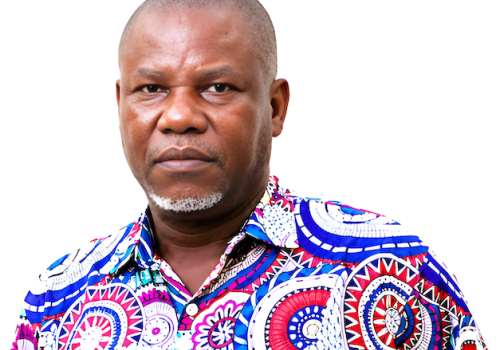
The recent incident involving a media professional and a representative of the Federal Capital Territory administration has raised important questions about the safety, dignity and independence of broadcasters in Nigeria.
At the heart of the matter is not simply an exchange between an individual broadcaster and a public official. It is a broader question of how the media should respond when attempts are made to dictate the circumstances under which broadcasters perform their professional duties.
Broadcasters have a responsibility to stand in solidarity with one another when the independence of the press comes under pressure, particularly when attempts to dictate who can question public officials threaten to become accepted practice.
The Independent Broadcasting Association of Nigeria (IBAN), a national body representing private television and radio broadcasters across Nigeria, exists to advance excellence, fairness and innovation in the media industry. Its role underscores the importance of protecting an independent broadcasting sector capable of serving the public without undue interference.
Independent broadcasters are central to Nigeria’s media pluralism. They provide diverse perspectives that reflect the country’s rich mix of cultures, languages and communities. They also create platforms through which grassroots voices can be heard and communities can engage with issues that directly affect their lives. That role makes editorial independence particularly important.
Unlike state-controlled media, independent broadcasters have a responsibility to maintain editorial freedom and local relevance. Their strength lies in their ability to provide space for different perspectives, including views that may sometimes challenge those in positions of authority.
It is against the foregoing background that the incident deserves broader consideration. One of the most troubling aspects of the matter is the apparent attempt to determine which journalist should be allowed to ask questions while an official was being represented. Public officials are accountable to the public, and journalists serve as one of the channels through which citizens demand that accountability.
A public official cannot reasonably expect to determine which journalist or broadcaster rather is qualified to ask questions simply because the questions may be uncomfortable.
Broadcasters may differ in style, experience and approach, but the right to ask legitimate questions should not depend on whether those questions are convenient to the person being interviewed.
Allowing public officials to select only journalists they consider friendly or acceptable would create a dangerous precedent. It could gradually turn press engagements into controlled public-relations exercises rather than opportunities for scrutiny.
That is why broadcasters should regard any attempt to undermine the independence of a colleague as a matter that concerns the wider profession.
Another concern arising from the incident is the apparent shift from addressing substantive questions to criticizing the journalist asking them.
Questions surrounding public land, government resources or the conduct of public officials are matters of legitimate public interest. They deserve clear answers, not personal attacks against the journalist who raises them.
A journalist’s personality, background or perceived disposition should not become a convenient distraction from the issue being investigated.
This does not mean journalists should be immune from criticism. They can, and should, be held accountable where they breach professional standards. But criticism should be based on facts and established journalistic principles, rather than being used as a weapon to intimidate journalists into silence.
When personal attacks become the preferred response to legitimate scrutiny, the larger casualty is public accountability.
Broadcasting is a profession that must defend its boundaries. This is particularly important because the incident comes against a background of recurring friction between government authorities and sections of the broadcast media.
Such disagreements are not unusual. Journalists and public officials will inevitably clash from time to time, particularly when reporters pursue difficult questions. What matters is how both sides respond to those disagreements.
For broadcasters, professionalism must remain paramount. Questions should be fair, relevant and supported by facts. But professionalism should not be confused with submission.
A journalist can be respectful without surrendering independence. A broadcaster can maintain decorum without abandoning difficult questions. And a media organization can cooperate with government institutions without becoming an extension of them.
This is where the importance of independent broadcasting becomes even more evident. Independent broadcasters serve as an essential pillar of Nigeria’s media pluralism because they provide platforms for voices that may otherwise struggle to gain visibility. Their local reach enables them to bring community concerns, public grievances and issues of accountability into national conversations.
If broadcasters are intimidated into avoiding difficult questions, the damage goes beyond individual journalists or individual media organizations. It weakens the diversity of voices available to Nigerians and ultimately limits citizens’ access to information.
Therefore, solidarity among broadcasters should not be interpreted as a demand that journalists be protected from legitimate scrutiny.
Rather, solidarity should mean defending the principle that journalists must be allowed to perform legitimate professional duties without intimidation, humiliation or arbitrary restrictions.
If one journalist is targeted today because of an uncomfortable question, another could face the same treatment tomorrow. Silence in the first instance can therefore become an invitation for the practice to continue.
The Nigerian media has a duty to protect its professional space. That duty is particularly important at a time when public confidence in institutions, accountability and democratic governance remains fragile.
Broadcasters should therefore resist attempts to personalize legitimate journalistic scrutiny. They should insist that disagreements with journalists be addressed through facts, evidence and established professional channels.
The press does not exist to please public officials. Its responsibility is to inform citizens, scrutinize those who exercise public authority and bring issues of public interest into the open.
Independent broadcasting is indispensable to that responsibility. By reflecting the diversity of Nigerian society and providing platforms for grassroots and community voices, independent broadcasters help ensure that public discourse is not controlled by a single authority or viewpoint.
That responsibility becomes meaningless if journalists are allowed to ask questions only when those in power approve of the questions, or approve of the journalists asking them.
The strength of Nigerian broadcasting lies not merely in the number of television and radio stations operating across the country, but in the freedom of those platforms to interrogate power, amplify citizens’ concerns and contribute to an informed society.
Broadcasters should therefore call for solidarity, not because journalists are above criticism, but because the independence of the press is too important to be left vulnerable to intimidation, personal attacks or attempts to dictate who gets to ask the questions.
Solidarity, in this context, is not about protecting individuals from accountability. It is about protecting the professional principle that makes accountability possible in the first place.























You must be logged in to post a comment Login