Forgotten Dairies
A Human Rights System That Cannot Deliver Toilets Does Not Protect Dignity, It Manufactures Inequality -By Fransiscus Nanga Roka
To put it bluntly, the ugly truth is that a human rights system any less than this, capable of providing something as simple as a toilet is not even an incomplete one. It is complicit. Because when deprivation is predictable and preventable, then ceases to be accidental.

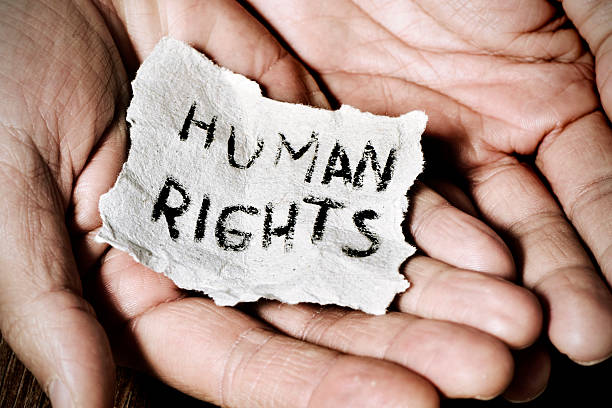
It is deeply wrong in a world that can draft beautiful declarations of human rights but not provide toilets for millions. The contradiction is not incidental. It is structural.
Sanitation has been a human right for decades. You have probably read tick box commitments by governments, guidance from international bodies and promises in development agendas. And yet the reality is a blunt one: billions are still without safe, affordable and dignified sanitation. But that’s not because there isn’t enough technology, expertise or funding in the world. This is why the system professes to be against inequality while allowing it.
We refer to the sanitation crisis using a phrase like “development gap,” or even specifically as “the missing link in development”. That framing is convenient and misleading. It implies a technical problem whose resolution depends on improved infrastructure or more clever financial allocation. But the deeper truth lies in politics. Sanitation comes when power is there and it disappears where marginalisation flourishes. Not only blind spots: Informal settlements, rural communities and refugee camps They are always cosy excluded spaces.
The phrase “progressive realization” has been turned into a fig leaf for inaction. It is invoked by governments to justify delay, and accepted by international actors as evidence of good faith. But for the toiletless, progress is not slow: it does not exist. If a right can be delayed endlessly, it is no longer a right. A promise with no consequences.
But what is most disturbing about this failure is its close nature. The lack of sanitation isn’t just an abstract deprivation This is an attack on dignity each day. All this pushes people, especially women and girls into dangerous circumstances exposes them to violence forces them to live under dirty conditions and suffers from preventable diseases. It takes away privacy and autonomy, but it also lacks basic concern for human dignity. And still, this is the reality in a system that purports to value human dignity.
It is not that human rights law does not say anything. It is that it is the most weak where it should be strongest. Recognise but rarely enforce sanitation rights. While violations are recorded, they often go unpunished. Reporting is not restorative, but rather a product of surveillance systems. It conjures a paradox: the more we quantify crisis, the more normalized it becomes.
Worse yet, the global system is gaining familiarity with such contradictions. International institutions cheer tiny improvements and deflect the tougher question: why do such deprivations still exist full stop? The answer is uncomfortable. They stick around as accountability is still by choice.
When you follow the money, however, it all becomes a little less murky. Sanitation has at all times been the most underfunded sector in comparability with different sectors. It is one of the first to go when budgets are tight. Not because sanitation is not important, it just lacks any political visibility for the people that it most affects. Rights are not only legal constructs, rights reflect power.
The progressive step towards privatisation makes the situation direr still. If sanitation is treated as a service performed in the market economy, access depends on ability to pay. Profit logic is completely opposed to universal rights. A sanitation system that is set up as a commodity doesn’t broaden access, it constrains.
Climate change creates urgency but not novelty. Vulnerability of sanitation systems to floods and droughts has already been laid bare in many areas. But climate change is not the underlying problem. It is a stress test that shows years of neglect. Leverage comes from knowing that when systems fall apart under duress, it is not because the pressure came as a surprise. That’s because the systems were never constructed to be resilient across board for all.
What does this mean for the human rights system itself?
In other words, it implies that the system settled for coping with inequality but not ending it. Recognised Wrongs, Negotiable Rights There are obligations, but they can easily be avoided. This is a framework that looks good in theory, but very weak upon practice.
This is not a failed ideal. It is of execution—and, more dangerously still, it’s one of accountability.
The international community must go beyond the meek commitments to sanitation as a human right. Recognition must, however, come with obligations that can be enforced. But states should be held accountable not just for enacting policies but for producing results. Funding should be linked to clear evidence of improvements rather than adherence to processes. And it is an infringement, not a sad fact of life that sanitation will be denied.
These are not radical demands. This is the least it has to do if rhetoric and reality are going to align.
To put it bluntly, the ugly truth is that a human rights system any less than this, capable of providing something as simple as a toilet is not even an incomplete one. It is complicit. Because when deprivation is predictable and preventable, then ceases to be accidental.
It becomes a choice.
Fransiscus Nanga Roka
Faculty of Law University 17 August 1945 Surabaya Indonesia