Forgotten Dairies
As the Third World War Crisis Unfolds, it is a Mixed Blessing for Nigeria’s Economy, Without Looting -By Daniel Nduka Okonkwo
The crisis in the Strait of Hormuz is unfolding thousands of miles away, yet its economic tremors are already being felt in Nigerian households. Whether this moment becomes a fiscal lifeline or a full-blown cost-of-living emergency will depend on decisive and people-centered policy action in the days and weeks ahead.


As of March 4, 2026, the escalating maritime crisis in the Strait of Hormuz has sent shockwaves through global energy markets, disrupted international shipping, and triggered fresh economic anxieties across oil-dependent and import-reliant nations alike. For Nigeria, Africa’s largest oil producer, the unfolding situation presents a paradox: a potential fiscal windfall on one hand and a looming cost-of-living crisis on the other.
Following military escalations involving the United States, Israel, and Iran, Iran’s Islamic Revolutionary Guard Corps declared the strait “closed” and threatened to target vessels attempting transit. While the waterway has not been formally or legally blocked under international law, it is effectively closed due to heightened security risks and operational paralysis.
Approximately 250 to 300 vessels, including at least 140 container ships and 40 very large crude carriers, are currently anchored or drifting in the Gulf of Oman and the Persian Gulf, awaiting security clarity. On March 1, only four tankers successfully navigated the strait, compared to a daily average of 24.
Several vessels have reportedly been struck by projectiles or drones, while GPS jamming and electronic interference have created what maritime analysts describe as a digital blackout, significantly increasing navigational risk. Major maritime insurers have suspended war-risk coverage for the Persian Gulf effective March 5, and the cost of hiring a supertanker has reportedly doubled to over $420,000 per day.
Global shipping giants, including Maersk, MSC, and Hapag-Lloyd, have suspended transits through the strait, with some rerouting vessels around the Cape of Good Hope, significantly increasing delivery times and freight costs.
Roughly 20 percent of global oil supply and about one-fifth of the world’s liquefied natural gas pass through the Strait of Hormuz daily. With tanker traffic nearly halted, Brent crude has surged past $83 per barrel, more than 14 percent higher this week alone. Natural gas prices in Europe have jumped over 70 percent following production disruptions in Qatar.
The implications are far-reaching. Higher freight charges and insurance premiums are being transmitted across supply chains, affecting fuel prices, food imports, fertilizer supplies, and consumer goods worldwide. Given that nearly one-third of the global fertilizer trade also transits this corridor, analysts warn of emerging food security risks, particularly in grain-dependent economies.
On the positive side, Brent crude trading above $80 per barrel significantly exceeds Nigeria’s 2026 budget benchmark of $64.8. This creates the prospect of increased foreign exchange inflows and improved fiscal buffers. As of February 2026, Nigeria’s external reserves reportedly stood at $50.45 billion. Sustained elevated oil prices could further strengthen reserves and enhance the capacity of the Central Bank to stabilize the naira.
Importantly, Nigerian crude exports do not pass through the Strait of Hormuz. As Middle Eastern supplies face disruptions, global refiners may pivot toward West African grades, potentially increasing Nigeria’s market share during the crisis.
If prudently managed, the current price surge could provide a temporary revenue cushion, reduce borrowing pressures, and support critical infrastructure investments.
The domestic cost-of-living squeeze is, however, immediate and severe.
Despite being a crude exporter, Nigeria remains heavily dependent on imported refined petroleum products. The complete deregulation of the downstream sector means that international price spikes are swiftly reflected at the pump. Reports indicate that petrol, Premium Motor Spirit, prices have surged close to ₦1,000 per litre in early March 2026.
Diesel, Automotive Gas Oil, prices are also climbing, pushing up operating costs for transporters, manufacturers, and small businesses. These cost increases cascade through the economy, raising the prices of food, consumer goods, and essential services while eroding purchasing power.
Shipping disruptions further compound the problem. Elevated freight and insurance costs are increasing the landing cost of petrol and imported goods such as electronics, machinery, and staple foods like wheat and rice. Even domestically produced goods face higher logistics expenses due to fuel price hikes.
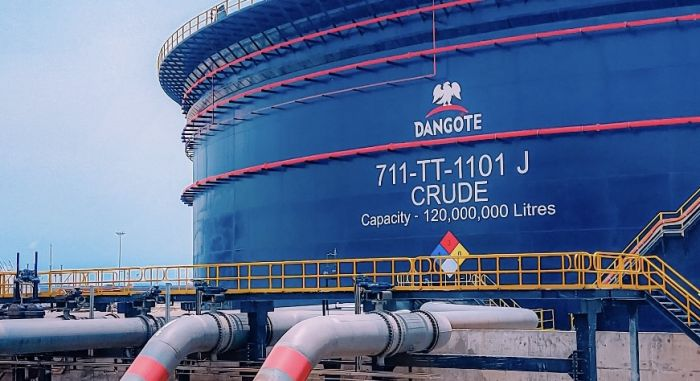
Nigeria’s expanding refining capacity, including the much-anticipated Dangote Refinery, was expected to moderate exposure to international volatility. However, higher global crude prices, particularly under market-linked domestic pricing frameworks, could limit the ability of local refineries to provide significantly cheaper fuel during the crisis.
If local facilities rely partly on imported crude or benchmark-linked pricing, production costs will inevitably rise, narrowing the margin for domestic price relief.
While higher oil revenues theoretically strengthen Nigeria’s fiscal position, the immediate shock of elevated import costs may create short-term exchange rate volatility. Increased demand for foreign exchange to finance refined product imports and other essential goods could place renewed pressure on the naira.
At the same time, rising transport costs are likely to drive food inflation upward, potentially reversing recent gains in inflation management. For millions of Nigerians already grappling with economic reforms and subsidy removal, the near ₦1,000 petrol price marks a critical psychological and economic threshold.
The central question remains whether this closure can become a mixed blessing for Nigeria.
The answer depends less on global geopolitics and more on domestic policy response.
Swift fiscal intervention is essential. Policymakers could deploy excess oil revenue toward targeted social protection measures, transport support mechanisms, food security interventions, or tax relief for critical sectors. Strategic reserve management, accelerated support for local refining, and transparent communication will also be crucial.
Above all, the government must ensure that the temporary windfall from elevated crude prices is not absorbed solely by macroeconomic buffers but translated into tangible relief for citizens facing immediate hardship.
The crisis in the Strait of Hormuz is unfolding thousands of miles away, yet its economic tremors are already being felt in Nigerian households. Whether this moment becomes a fiscal lifeline or a full-blown cost-of-living emergency will depend on decisive and people-centered policy action in the days and weeks ahead.
Daniel Nduka Okonkwo is a Nigerian investigative journalist, publisher of Profiles International Human Rights Advocate, and policy analyst whose work focuses on governance, institutional accountability, and political power. He is also a human rights activist, human rights advocate, and human rights journalist. His reporting and analysis have appeared in Sahara Reporters, African Defence Forum, Daily Intel Newspapers, Opinion Nigeria, African Angle, and other international media platforms. He writes from Nigeria and can be reached at dan.okonkwo.73@gmail.com.