National Issues
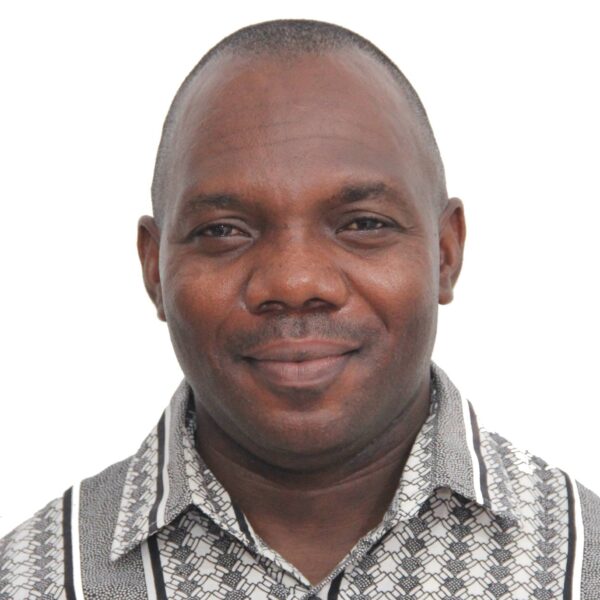
A Beautiful Land Waiting for Its Time -By Abdulsamad Danji Abdulqadir
Taraba is ours. And precisely because it is ours, we must speak with clarity, not to shame it, but to strengthen it. Development is not a privilege, it is a right tied to dignity and opportunity. The land is blessed. The people are patient. The future is possible.What remains is the courage to transform promise into progress.

There is a quiet pain that many people from Taraba State carry in their hearts. It is not the pain of poverty alone, nor the pain of natural disaster. It is the pain of watching potential remain potential for too long. It is the frustration of knowing that the land is blessed, the people are hardworking, the resources are abundant yet visible development moves at a pace that feels painfully slow.
Taraba is not an empty space on Nigeria’s map. It is a land of fertile soil where farmers rise before dawn with hope in their hands. It is a land of mountains, rivers, culture, and resilience. It should be thriving through agriculture, tourism, and commerce. But daily life often tells a different story.
When one arrives in Jalingo, the capital city, there is an expectation that naturally comes with the status of a state capital. A capital should reflect structure, planning, and coordinated growth. It should inspire confidence in investors and pride in residents. Yet many citizens quietly admit that Jalingo sometimes feels like an ordinary local government area in another state. This is not spoken out of hatred but out of disappointment. A capital city should symbolize direction, but too often basic infrastructure struggles to meet that expectation.
Most of the infrastructure in Taraba State is outdated. Roads built since the inception of the state remain in use, some dating back to the era of Jolly Nyami, while others were constructed during Dambaba Suntai’s administration. Bridges and public buildings continue to age without proper renovation or replacement. These are not mere relics; they are visible reminders of stalled progress and unfulfilled promises.
The road from Wukari to Jalingo remains one of the most painful examples. A journey that should take approximately two hours stretches into five or even six exhausting hours because of long-neglected damage and collapsed sections. Traders transporting goods calculate their losses as perishables spoil along the way. Students traveling back to school endure unnecessary fatigue. Commercial drivers navigate dangerous potholes that have become permanent features of the highway. A road is not just asphalt, it is a pathway to opportunity. When it deteriorates, so does economic momentum.
The collapse of the Namnai Bridge deepens public concern. A bridge is not merely a structure of steel and concrete, it is a lifeline connecting communities, markets, and families. When such a vital link remains unrepaired for an extended period, it creates more than physical disruption. It creates emotional distance between expectation and reality.
Education, one of the most critical drivers of development, has also suffered greatly. Taraba State Polytechnic in Suntai has programs that cannot be accredited, leaving students wasting two precious years on certificates that carry little or no value. Taraba State University, the pride of higher learning in the state, is almost always on strike, prompting students to jokingly call it “Taraba Strike University.” The Jalingo campus of Taraba State Polytechnic bears a sign that reads “Taraba State University, School of Preliminary Studies,” a relic of neglect and lack of renovation that has kept the name unchanged for years. These are not small oversights, they are systemic issues affecting the futures of young people and the credibility of the state’s education system.
Some may argue that every state faces challenges, and that is true. But comparison often reveals uncomfortable clarity. A visit to Gombe State shows how even smaller streets can appear thoughtfully constructed and illuminated with solar-powered lights. Modern clinical facilities serve citizens with improved capacity. Sporting activities visibly engage young people. Water flows more consistently in many areas. Electricity appears more stable. These are not exaggerated claims; they are observable differences.
Beyond that, one only needs to travel to Yobe State and Borno State to witness something even more striking. These are states that endured devastating insecurity and destruction. Entire communities were displaced. Infrastructure was ruined. Yet, in many parts today, visible reconstruction efforts stand as proof that determined leadership and coordinated planning can reverse damage. Roads have been rebuilt. Public buildings restored. Urban renewal projects initiated. The line of contrast becomes clear and unambiguous to anyone who is an eyewitness.
This comparison is not born out of envy. It is rooted in possibility. It shows that progress within the same region is achievable. It proves that development is not a miracle but a decision backed by commitment.
In Taraba, the consequences of slow growth are deeply human. A graduate sits at home questioning whether relocation is the only path to success. A farmer calculates losses caused by bad transportation networks. A small business owner closes early because electricity is unreliable. Parents worry about access to modern healthcare during emergencies. Students wait years for meaningful education, only to be met with uncertainty. These are not statistics; they are lived experiences.
Speaking about these realities should never be mistaken for disloyalty. Taraba is our beloved state. We have endured challenges together and conquered many difficulties. Acknowledging developmental gaps does not negate our pride, nor does it defame our identity. In fact, it strengthens it. True loyalty is not blind defense; it is courageous honesty.
Those who have not witnessed developments in neighboring states firsthand may rely on assumptions. But infrastructure does not hide. Roads either reduce travel time or they prolong suffering. Bridges either connect people or isolate them. Water either runs reliably or it does not. Electricity either powers ambition or dims it. Schools either educate effectively or they fail. Facts speak without emotion.
Taraba remains blessed with agricultural strength, tourism potential, and vibrant human capital. The land is fertile. The people are resilient. What appears missing is sustained momentum, strategic execution, and a culture of maintenance that protects what is built.
Silence has never repaired a collapsed bridge. Silence has never transformed a five-hour journey back into two. Silence has never turned potential into prosperity. Silence has never ensured a student graduates with a meaningful degree.
Loving Taraba means believing it can be greater than it currently is. It means refusing to romanticize underdevelopment while still protecting the dignity of the state. It means demanding improved roads, stronger infrastructure, modern healthcare facilities, stable electricity, reliable water supply, and urban planning that reflects pride. It means fixing schools, accrediting programs, and giving young people the education they deserve.
Truth does not destroy reputation, stagnation does.
Taraba is ours. And precisely because it is ours, we must speak with clarity, not to shame it, but to strengthen it. Development is not a privilege, it is a right tied to dignity and opportunity. The land is blessed. The people are patient. The future is possible.What remains is the courage to transform promise into progress.