
World News
Carney Unveils ‘Masters of Our Destiny’ Budget as Canada Moves to Cut US Dependence
Canada introduces its ‘Masters of Our Destiny’ budget as Mark Carney seeks to reduce US reliance, boost domestic trade and support key industries.

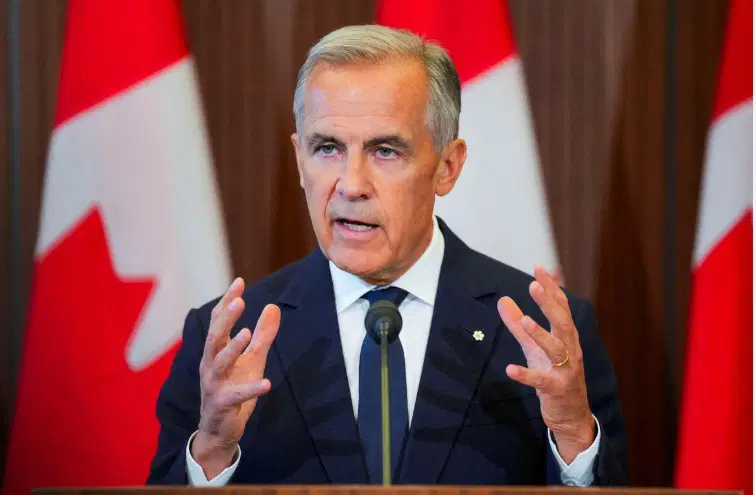
Canada is preparing to strengthen its economic independence from the United States as Prime Minister Mark Carney’s government presents a new budget on Thursday, focusing on trade diversification, domestic investment and economic resilience.
The budget, titled “Masters of our Destiny,” represents Carney’s second since taking office last year and comes amid continuing trade tensions with Washington under President Donald Trump.
Despite Trump’s Republican Party suffering a major defeat in the midterm elections, reducing uncertainty over the future of US trade policies, Ottawa has maintained that reducing dependence on its southern neighbour remains a central economic priority.
Carney has repeatedly argued that relations between Canada and the United States have fundamentally changed and that the previous era of tariff-free trade is unlikely to return.
His government is therefore seeking to establish stronger commercial relationships with other countries while expanding economic activities within Canada.
Finance Minister Francois-Philippe Champagne, who will present the budget to parliament, described the proposed changes as a major shift in the country’s economic direction.
“At its core, our plan is about changing Canada’s growth model,” Champagne said this week.
He explained that the government’s objectives include strengthening domestic commerce and “diversifying our trade.”
“No matter what happens south of the border, no matter what happens in the world, we will be more resilient, we will be stronger, we will be more independent,” he said on Wednesday.
Champagne made the comments after choosing a new pair of shoes ahead of his budget presentation, following a distinctive Canadian tradition associated with budget announcements.
Trump’s tariffs have significantly affected Canada’s economy, but the Republican Party’s defeat in the midterm elections has introduced fresh uncertainty over the future of the president’s protectionist trade agenda.
The Democrats, who have opposed tariffs targeting Canada, are expected to assume control of both the US House of Representatives and Senate next year.
Senior Democratic Congressman Jamie Raskin told CBC on Wednesday that his party is “going to put an end to these tariffs” and would seek to repair relations “with our best friends like Canada.”
Nevertheless, Canada’s minister responsible for US trade, Dominic LeBlanc, said negotiations over tariffs would remain a matter for the Trump administration rather than Congress.
He stressed that Ottawa would continue prioritising “diversifying our trading relationships” through its economic policies.
Trump and Carney have both recently expressed confidence that a trade agreement could be reached. However, similar optimism was recorded in August before negotiations broke down.
Energy, Critical Minerals Projects to Get Attention
A major feature of the budget is expected to be funding for strategic national projects that Carney believes will strengthen Canada’s economic sovereignty.
The proposed investments are expected to cover infrastructure supporting energy production and the development of critical mineral mining.
The government is also expected to introduce assistance for workers and industries affected by US tariffs, particularly the automotive and steel sectors.
Opposition lawmakers are likely to question the government’s spending plans and the size of its budget deficit.
However, projections indicate that the deficit could be lower than the CAN$78.3 billion ($56.3 billion) estimated in Carney’s first budget last year.
Genevieve Tellier, a political scientist at the University of Ottawa, said the success of the budget would partly depend on “the impact of tariffs,” particularly whether Trump’s trade measures result in further job losses.
Canada is also facing inflationary pressures linked to rising energy costs amid the war in Iran.
Last month, the Bank of Canada increased interest rates for the first time in three years as it sought to contain inflation.
Meanwhile, the passage of budget legislation in Canada serves as a confidence vote for the government, making parliamentary support particularly important.
Carney’s administration previously depended on backing and abstentions from opposition lawmakers to survive last year’s budget vote.
However, the Liberal Party has since secured a parliamentary majority, giving the prime minister greater legislative support as his government pursues its economic diversification agenda.
Africans Angle News























You must be logged in to post a comment Login