Forgotten Dairies
Tinubu, the Young Turks and Fresh Thinking -By Abiodun KOMOLAFE
Lest we forget, Adedeji’s life is more than a story about tax ledgers and the institutional restructuring of the NRS. It is a quiet study in human transit. Moving from a modest, rural boyhood straight to the peak of fiscal power highlights that old, unresolved friction between destiny and raw willpower. In a political arena where noise is currency, his path suggests that his finest achievement isn’t rewriting the tax codes, but the quiet self-mastery it took to bridge those two completely different Nigerias.

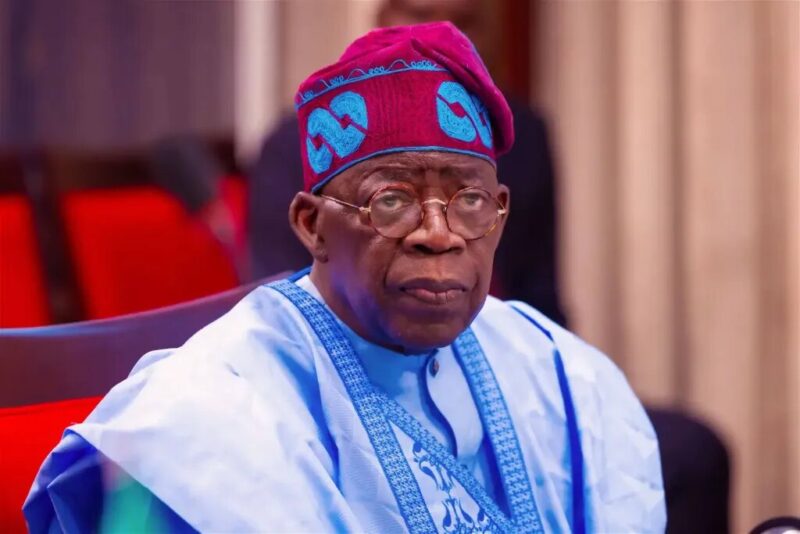
When dispassionate commentaries are made by independent analysts in the fullness of time about the Tinubu presidency, a striking reality will emerge: he infused the political economy with fresh thinking. Let us be clear: it is not just about a birth date. As former Governor and Minister Babatunde Raji Fashola has often indicated, leadership is less about biological age and far more about the currency and age of one’s ideas.
President Bola Ahmed Tinubu has infused the polity with a new age predicated on fresh thinking, sweeping away the cobweb of stale ideas which had hitherto acted as a brake upon national progress. The president deserves credit for taking the risk to do so, because Nigeria had long been trapped in often-antediluvian stultification.
Nigeria had not always been like this! The first wave, triggered by the work of the West African Students Union (WASU), returned to Nigeria in the 1940s imbued with fresh thinking. The scene was dominated by vibrant young people – chief among them the outstanding Chief Bode Thomas, who, by the time of his untimely death in 1953 at the age of 34, had accomplished more than the overwhelming majority packed into a hundred years.
Chief Obafemi Awolowo was only 42 when he became the Leader of Government Business in 1952, just as the fiery Adegoke Adelabu (Penkelémèsì) was lost to the nation entirely too young when he died at the age of 42.
When Abubakar Tafawa Balewa became Chief Minister in August 1957, he was only 44. Three years later, at 47, he was the man who stood at the podium and led Nigeria into independence. He died at the age of 53.
The lineage is long.
Fresh thinking matters. An amazing example still resonating to this day is the architect of the seminal blueprint for the Economic Development of the Eastern Region of Nigeria. Conventional opinion would suggest this magnificent economic master class was engineered by an academic theoretician or a seasoned professor of Political Economy. Astonishingly, it was not. It was the output of a practising medical doctor turned statesman – none other than Michael Okpara – who, upon stepping into leadership as premier in his late thirties, shook off stale conventional wisdom to lead an industrial and agricultural miracle from the front.
Okpara went on to become, seven years later, the Premier of the Eastern Region of Nigeria. On his watch, the Eastern Region became the fastest-growing economy of any territory in the British Commonwealth of Nations. This is what fresh thinking, new perspectives, aided by the audacity of youth, produce.
Tinubu has shown remarkable daring in going back to a more edifying past by bringing in fresh hands, notably Olubunmi Tunji-Ojo (44) at the Ministry of the Interior, and a whole host of less well-known “Young Turks” further down the line, such as Ayodele Olawande (36) at Youth Development and Shuaibu Abubakar Audu (45) at Steel Development.
Mention must also be made, and not just for the sake of gender balance, of the impressive Jumoke Oduwole (52), who, at this critical juncture, is redefining the Ministry of Industry, Trade and Investment. The way this cohort is steering policy positions Nigeria much like post-Second World War Japan, where an effervescent Ministry of International Trade and Industry (MITI) was the instrument used to unleash that nation as an economic superpower. Kudos once again to Tinubu’s talent scrutiny.
We also have figures like Imaan Sulaiman-Ibrahim (46) at Women Affairs, Taiwo Oyedele (50) as Minister of Finance and Coordinating Minister of the Economy, and Olu Verheijen (48) as Special Adviser on Energy.
Another good example is Zacch Adedeji, who is equally redefining the texture and structure of the Nigeria Revenue Service (NRS). When his mission is fully realized, Nigeria will become a better-structured society in which the drive for revenue is linked to increased productivity. This will mark a much-needed departure from the destructive trap of the rentier state that has long rendered the country an uncompetitive, under-achieving entity.
Like Oduwole, Adedeji is pursuing a better past by making taxation, as it were, a ‘sexy’ project. The uninitiated must be tutored that taxation has always been, throughout a history stretching back a millennium and more, a continuous issue.
A notable example to recall is that the Lord Jesus Christ was born in a manger amidst a sweeping tax registration decreed by the Roman Emperor, Caesar Augustus. A humble manger became the only accessible option because the logistical disruption of a compulsory registration, paired with a massive demographic influx, completely overwhelmed local infrastructure. This is not a religious issue; it is a documented fact of economic history.
One need only recall how the government of the Western Region was punished with electoral setbacks in the 1950s for insisting on what the opposition derisively dismissed as high taxation. The ruling party in Western Nigeria lost seats in the 1954 federal elections, slipped in subsequent local government polls, and took another hit in 1959. Yet, it stuck to its guns so rigidly that by 1961, aggressive tax enforcement erupted into full-blown riots across several provinces.
Even in today’s world, more than 60 years on, this breathtaking level of political advancement endures. The people had come to realize the link between taxation and positive development for the overwhelming majority. Sadly, the military intervention of January 15, 1966, dealt a terrible blow to these gains. In a desperate search for cheap popularity and quick acceptance, the military portrayed the political establishment as weaponising taxation, not for public progress, but for self-enrichment. This self-serving distortion of reality was all the country’s prospects for self-sustaining development needed to suffer a setback of at least half a century.
Adedeji is now very sensibly taking Nigeria through the tortuous road of convincing the people that paying taxes is not a punishment but a contribution to overall self-development. This is a feasible way of breaking out of the logjam of underdevelopment and increasing misery. Over time, there will be a change of perception and attitude, and this is already beginning to manifest itself. Without saying so, and even though he is not a politician but a technocrat, the Oyo State-born administrator appears to have heeded the admonition that “Politics is about changing the territory of the debate.” He has certainly been in the frontline of reshaping a vital discourse upon which Nigeria’s future sustainable development will be anchored.
The NRS boss is not just involved in a discourse and directing a change of perception, he is actively implementing it. Commendably, it is being implemented without provoking tax riots, an experience witnessed in other countries throughout history. This shows great, even exceptional communication skills and makes one wonder whether Adedeji is not a closet politician. Whatever the man is, he is quite a savvy operator. He and Tinubu have dared to bring in a breath of fresh air. It is early days, but they are winning
Lest we forget, Adedeji’s life is more than a story about tax ledgers and the institutional restructuring of the NRS. It is a quiet study in human transit. Moving from a modest, rural boyhood straight to the peak of fiscal power highlights that old, unresolved friction between destiny and raw willpower. In a political arena where noise is currency, his path suggests that his finest achievement isn’t rewriting the tax codes, but the quiet self-mastery it took to bridge those two completely different Nigerias. Kudos to him, and even more kudos to Tinubu, who audaciously fished him out and brought him into the limelight.
May the Lamb of God, who takes away the sin of the world, grant us peace in Nigeria!
Email: ijebujesa@yahoo.co.uk.
Mobile: 08033614419 SMS only.