Africa
How Can Nigeria’s Economy Be Running On Generators While Our Leaders Keep Promising Light At The End of the Tunnel?, by Isaac Asabor

The Nigerian economic landscape today resembles a home running on rickety old generators, sputtering with each burst of fuel while waiting for a power supply that never comes. Our leaders, meanwhile, serenade us with lofty assurances that light will soon flood the tunnel of darkness we find ourselves in. But how can we take these promises seriously when the entire economy, from households to major industries, runs on the erratic hum of diesel-powered generators?
Electricity is often likened to the lifeblood of modern economies. For businesses to thrive, for factories to operate efficiently, for education to be enhanced by technology, and for citizens to enjoy a better quality of life, a reliable power supply is essential. Yet, in Nigeria, electricity remains a luxury. The paradox here is as glaring as it is frustrating, leaders continually promise a brighter future even as we dwell in darkness, literally and figuratively. It is time to ask the uncomfortable question: how can our economy see the light when it is struggling to crawl out of a pit of darkness fueled by generators?
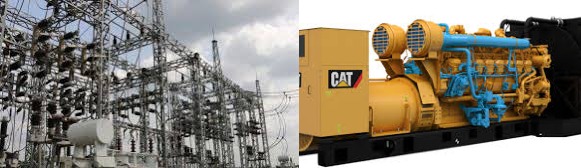
Step into any bustling street in Lagos, Kano, or Port Harcourt, and you’ll hear it, the omnipresent growl of generators. Businesses, from small-scale enterprises to mega-corporations, have resigned themselves to relying on generators to keep their operations running. In Nigeria, power outages are so frequent that it is easier to predict the next blackout than it is to predict the weather. For decades, businesses have been forced to divert significant portions of their budgets to fuel and maintain generators, a reality that stifles productivity and raises operating costs.
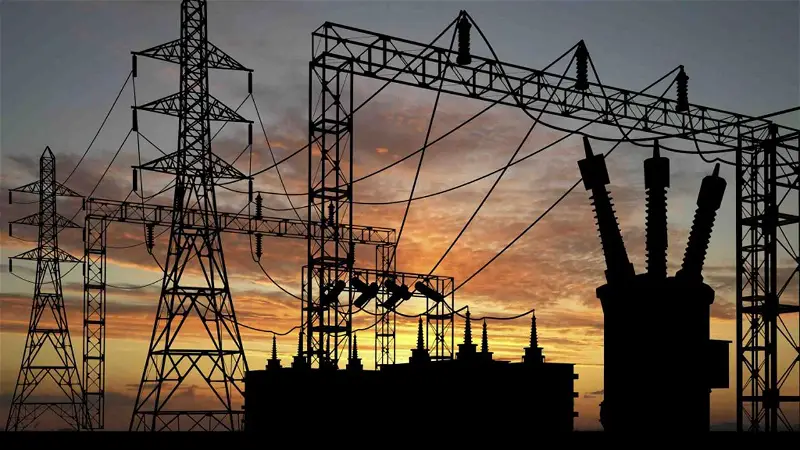
This dependence on generators is further exacerbated by the recent upsurge in the occurrence of national grid collapses. In just the past few days, Nigeria has witnessed multiple incidents of grid failure, plunging the nation into darkness and compounding the already dire economic situation. The irony of being Africa’s largest oil producer yet failing to maintain a stable power grid is a bitter pill to swallow. These grid collapses, often attributed to systemic inefficiencies and a lack of infrastructure maintenance, are creating a vicious cycle that is driving businesses deeper into the arms of diesel-powered generators.
Nigeria’s energy crisis has been a recurring issue that has plagued multiple administrations. Despite billions of dollars reportedly spent on power reforms over the years, the national grid continues to collapse at the slightest provocation. The national embarrassment of a country blessed with vast natural resources but failing to provide electricity for its citizens is one that we have become all too familiar with. Yet, with every new government, the same recycled promises are made, there will be light at the end of the tunnel. But how long is this tunnel, and who is keeping track of the years, decades, and broken promises?
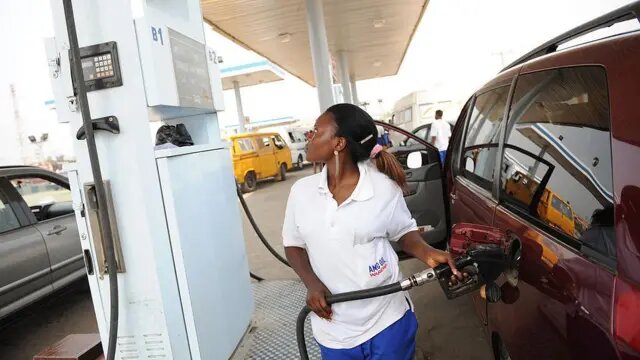
Running an economy on generators is not just unsustainable but also perilously costly. Nigeria, Africa’s largest oil producer, paradoxically imports millions of liters of fuel to power its generators. This dependence is a double-edged sword; as the naira continues its freefall against the dollar, the cost of importing fuel rises, making electricity generation more expensive for households and businesses alike.
For an average Nigerian family, the cost of buying and fueling a generator takes up a significant portion of their monthly income. For businesses, especially those in manufacturing, the expenses incurred from self-power generation erode profits, leaving little room for expansion or investment in innovation. This has a ripple effect on the economy, less investment means fewer jobs, lower wages, and ultimately, a higher poverty rate.
According to a recent survey, Nigerian businesses spend an estimated “$14 billion annually on generators to keep the lights on”. This staggering figure could have been better spent on infrastructure, healthcare, education, or even investment in renewable energy. But now, with frequent grid collapses compounding the problem, the reliance on costly, polluting generators has reached critical levels. How, then, can our leaders expect us to believe their promises of economic revival when the very foundation of our economy is teetering on the brink due to unreliable power supply?
From former Presidents Olusegun Obasanjo to Goodluck Jonathan and Muhammadu Buhari, and now under President Bola Ahmed Tinubu, the narrative has remained the same: “We are working to ensure stable electricity for Nigerians.” These leaders have repeatedly told us to be patient that our journey through the tunnel is nearing its end, and that soon, we will bask in the light of development. Yet, after over two decades of democracy, that light seems to have grown dimmer.
What is more frustrating is the tone of optimism that our leaders continue to exude. Recently, Vice President Kashim Shettima stated confidently that Nigerians need to be patient as reforms take root. But how can citizens be patient when they are literally being choked by the toxic fumes of generators? How can businesses be patient when they are shutting down because they can no longer afford diesel, which has now become prohibitively expensive? How can we, the people, continue to have faith when our leaders have yet to deliver on the most basic of amenities?
Electricity is not just about flipping a switch to illuminate a room; it is the backbone of economic growth. The energy crisis, compounded by frequent grid collapses, has stymied Nigeria’s ability to attract foreign investment. Investors are wary of pouring money into a country where power outages can bring production lines to a grinding halt. Small and medium-sized enterprises (SMEs), which are the lifeblood of any developing economy, are struggling to survive under the weight of generator costs. Without stable electricity, Nigeria’s dream of diversifying its economy beyond oil will remain just that, a dream.
This issue also has far-reaching social consequences. Hospitals, schools, and research institutions that rely on electricity for critical functions are forced to operate on generators, affecting the quality of services they can provide. Students cannot study efficiently, doctors cannot save lives as effectively, and industries cannot grow without a reliable energy supply. The ripple effect is one that affects every Nigerian, regardless of social class.
It is high time we took a hard look at our approach to solving Nigeria’s energy crisis. The solutions are not far-fetched. Countries like Ghana, Kenya, and even South Africa, despite their own challenges, have made significant strides in power generation and distribution. Nigeria needs to move beyond lip service to concrete, measurable actions.
This can be done by diversification of energy sources. We must invest more in renewable energy sources like solar, wind, and hydroelectric power. Nigeria is blessed with abundant sunlight and water resources, yet we continue to rely heavily on fossil fuels.
In a similar vein, as gathered from experts, decentralization of the power sector is expedient. This is as the current structure of the national grid is inefficient. Decentralizing power generation by encouraging states and private entities to invest in mini-grids and independent power plants could alleviate the burden on the national grid.
Also, there is need for transparency and accountability. In fact, the government must be transparent about the billions allocated to the power sector. Nigerians have the right to know where their tax money is going and why results have remained abysmally poor.
Also in a similar vein is the expediency of providing incentives for clean energy. The government should provide tax breaks and subsidies for companies and households investing in solar panels and other green technologies. This could reduce the over-reliance on generators and foster a cleaner environment.
As Nigerians, we are tired of the promises. We are tired of the political rhetoric that leads nowhere. For an economy to thrive, the basics must be in place, and electricity is one of those essentials. Until our leaders take tangible steps to resolve the power crisis, all their talk of economic growth will remain hollow.
So, to those in power who keep speaking of light at the end of the tunnel, perhaps it is time to stop talking and start delivering. The generator-fueled economy we are running is not sustainable. And with the recent upsurge in grid collapses, the promise of light at the end of the tunnel seems more like a distant illusion.
The time for change is now, and it begins with powering Nigeria, not with noisy, fuel-guzzling generators, but with sustainable, efficient energy solutions that can truly illuminate our path forward.