Africa
The New York Times Misses the Forest for the Trees in Nigeria -By Nnamdi Prince
The New York Times has done important work in Nigeria over the years, and I do not question the intentions of its reporters. But in this case, the paper has allowed its pursuit of methodological purity to obscure a more fundamental truth: Nigerians are being killed, their deaths are going largely unreported, and those who try to document this violence are now being attacked for their efforts.

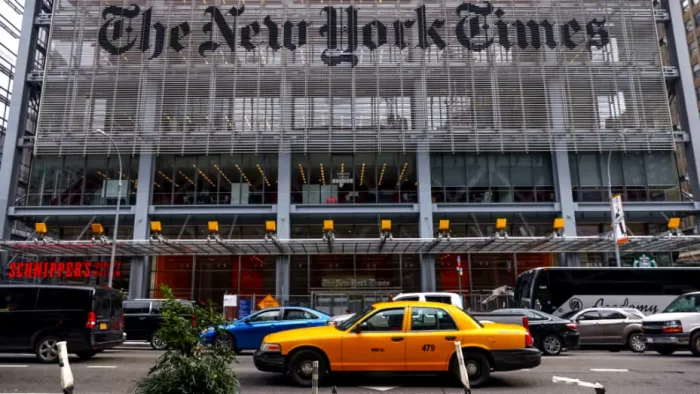
The recent New York Times article about Emeka Umeagbalasi reads less like journalism and more like a character assassination designed to obscure a far more urgent truth: people are dying in Nigeria, and the world has largely looked away.
By focusing on the messenger rather than the message, the Times has done exactly what it accuses Umeagbalasi of doing: allowed methodology to eclipse reality. Yes, data collection in conflict zones is imperfect. Yes, Umeagbalasi’s methods may be unorthodox. But to suggest that his work is the problem, rather than the violence he documents, is a dangerous misdirection.
I have known Emeka Umeagbalasi for over two decades, since his days as chairman of the Civil Liberties Organisation in Anambra State. During that time, I witnessed him speak truth to power when few others would. He documented the kidnapping of Governor Chris Ngige in 2006, exposed politically instigated violence across Anambra State, and chronicled the extrajudicial killings carried out by the Bakassi Boys vigilantes in the early 2000s. He reported on the massacre of pro-Biafra supporters between 2015 and 2022, and brought international attention to the dumping of over 50 bodies by SARS operatives in the Ezu River in 2013.
This is not the work of a charlatan. This is the work of someone who has spent his entire adult life documenting atrocities that others would prefer to ignore.
The Times makes much of Umeagbalasi’s modest business selling tools in Onitsha market, as if running a shop somehow disqualifies him from human rights work. In fact, the opposite is true. Unlike many Nigerian NGOs that depend on foreign grants and the political agendas that often accompany them, Umeagbalasi has maintained his independence by funding his advocacy through his own labor. This is not a weakness. It is a rare form of integrity.
The article also dismisses his academic credentials, but Umeagbalasi holds a Master of Science in Peace Studies and Conflict Resolution and a degree in Security Studies from the National Open University of Nigeria. He is an alumnus of the U.S. Government’s International Visitors Leadership Program, specifically the Class of June 2013 on NGO Management. These are not the qualifications of an amateur.
But let us address the elephant in the room: the article’s timing. It comes shortly after the Nigerian government signed a $9 million contract with a Republican lobbying firm in the United States. One cannot help but wonder whether this piece serves a purpose beyond journalism. Whether it is part of a broader effort to discredit those who document inconvenient truths about violence in Nigeria.
The Times correctly notes that data collection in Nigeria is fraught with challenges. The government publishes no comprehensive figures on killings, kidnappings, or attacks, nor does it record the religious identities of victims. Many incidents occur in remote areas and are reported only much later, if at all. In this vacuum, human rights defenders like Umeagbalasi do the best they can with the resources available to them.
Are his methods perfect? No. Does he sometimes rely on assumptions about victims’ religious identities based on geography? Yes, he admits as much. But the alternative is silence. The alternative is allowing these deaths to go undocumented and unacknowledged entirely.
The Times quotes critics who say that violence in Nigeria affects both Christians and Muslims. This is true, and Umeagbalasi has never claimed otherwise. His own reporting has documented violence against Muslims, including victims of Boko Haram. But acknowledging that Christians are among those targeted does not diminish the suffering of others. It simply adds another layer to our understanding of a complex crisis.
Bishop Matthew Hassan Kukah is quoted in the article arguing that focusing on casualty figures among Christians misses the broader problem of a weak Nigerian state. This too is true. But it is also true that you cannot solve a problem you refuse to name. Documenting who is being killed, and why, is a necessary first step toward accountability and reform.
The real question the Times should be asking is not whether Emeka Umeagbalasi’s data is perfect, but why, after decades of violence, the Nigerian government still has not established a reliable system for tracking and preventing these atrocities. Why is it left to individuals working out of their homes to do the work that should be done by a functioning state?
The article ends with a dismissive image: Umeagbalasi in his modest living room, surrounded by old papers and plaques, admitting that he Googled the number of churches in Nigeria. The Times clearly intends this as a gotcha moment, proof that he is not to be taken seriously.
But I see something different. I see a man who, with limited resources and no institutional backing, has dedicated his life to bearing witness. I see someone who refuses to let the perfect be the enemy of the good, who chooses documentation over silence, advocacy over apathy.
The New York Times has done important work in Nigeria over the years, and I do not question the intentions of its reporters. But in this case, the paper has allowed its pursuit of methodological purity to obscure a more fundamental truth: Nigerians are being killed, their deaths are going largely unreported, and those who try to document this violence are now being attacked for their efforts.
If the Times is so concerned about accurate data, perhaps it should direct its considerable resources toward independently investigating and documenting the violence in Nigeria’s Middle Belt and beyond. Until then, criticizing those who are doing this work, however imperfectly, serves only to provide cover for those who would prefer that the world look away.
The killings continue. The question is whether we will pay attention to the substance of what is happening, or allow ourselves to be distracted by attacks on those brave enough to report it.