Africa
A Global Crisis of Undervalued Academia: ASUU in Focus -By Dr. Olaleke Alao
Ultimately, the pay issue is a symptom of a broader problem: chronic underfunding of education. Nigeria’s annual budgetary expenditure to education always falls short of the UNESCO standard of 15-20% of the country budget. An enduring solution requires a resolve to fill this gap. Additional funds would not only allow for better remuneration but also upgrading of decaying university infrastructure, provision of updated research equipment, and reducing the student-to-lecturer ratio. A well-funded system is one in which academic brilliance is a desirable and feasible career path, stopping the brain drain and offering Nigeria’s youth an opportunity.

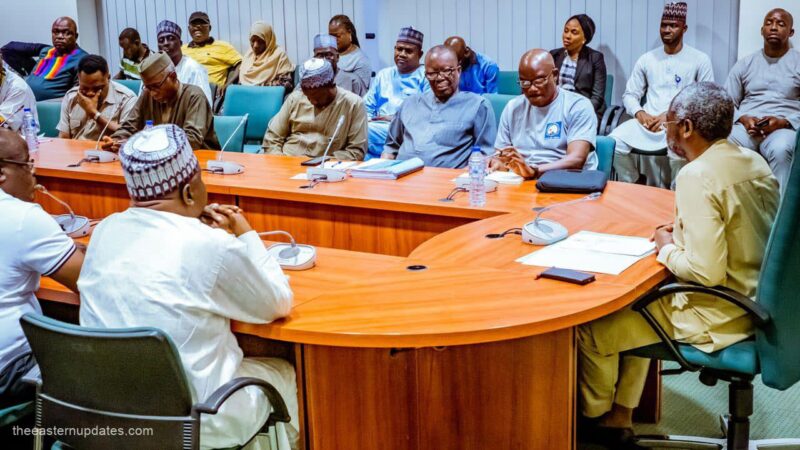
The decline in pay for academics is a global crisis, but it is particularly serious in developing nations like Nigeria. From Ghana to India, the government appears to prefer other sectors of industry over education, leading to academe and its members being neglected. The trend has serious consequences for national development. For example, in Ghana, state universities have been plagued by recurrent lecturers’ strikes for better remuneration and working conditions. The present situation is no different in India, where lecturers in top universities are paid peanuts compared to their counterparts in the private sector or government.
The first few decades after independence in Nigeria were a Golden Age for scholars. The University College, Ibadan (now the University of Ibadan) Principal made £3,750 in 1960, just short of the Prime Minister’s £4,500 and well in excess of a Major General’s £3,580. The pecking order was national: education first. A university professor’s income even surpassed that of a federal cabinet minister and permanent secretary. This began to be reversed with the military’s entry into politics in 1966. The subsequent military regimes gradually destroyed the respect and remuneration of scholars. The Udoji Commission of 1975 also harmonized the public service, but in a way that disvalued academic work. A professor in the university had her/his salary capped at a rate that, being equal to a state permanent secretary, was below that of a federal one. This was a turning point. The army, with its strange and not always revealed fringe benefits, began to surpass scholars in a way that mere figures in salary could not quantify. In the 1990s, under military dictatorship, the gap widened into a chasm as the professor earned less than one-third of his or her army counterpart’s total emoluments. It was a deliberate transition: as the military and political class seized power, they took power for themselves, leaving the intellectual class to perish.
The consequences are dire. If a country fails to give its teachers a good wage, it risks losing out on a major brain drain. The crème de la crème of its scholars emigrate to other countries that respect their calling and offer better prospects. This is a narrative that is being told across Africa as great minds get recruited by universities in Europe and North America. Over 40% of all university-educated African-born immigrants live in the United States, Europe, or other developed countries, research by the Migration Policy Institute shows. Such a brain drain degrades local universities, the level of education, and ultimately hinders a country’s ability to innovate and compete internationally.
ASUU’s struggle is a struggle for the soul of Nigerian education. The union has consistently brought attention to the historical wage disparity, an argument also presented by Mr. Olufemi Aduwo. The decline from the good old days when a professor’s salary was within the same range as that of a permanent secretary to the present where it is far behind that of a politician is a depressing pointer to Nigeria’s changing values. The country, once so proud of its intellectual elite, now seems to be more concerned with political patronage than with book wisdom. The statistics tabled by Mr. Aduwo are condemnatory. The fact that a senator who holds a certificate of secondary school is paid higher than a professor is not just an economic issue; it is a moral one. It conveys the message to young people that politics is a better paid and appreciated career than intellectualism, contrary to their embracing intellectual professions. ASUU’s demands for a salary grade that reflects their position and societal value are less about money; they are about the dignity of the teaching profession.
A case in point is the Federal University of Technology, Owerri (FUTO). The university, and numerous others like it, has been losing senior lecturers and professors to greener and more lucrative climes in droves. This leads to a shortage of quality lecturers, lower research output, and general weakening of academic standards. ASUU’s call is an attempt to turn the situation around. The union’s call for better funding for universities is a call for the value to be placed on intellectual work as the engine of national progress. The solution lies not in disbursing meager loans or in offering temporary palliatives. It is to basically revolutionize the way Nigeria values its human capital. The government must value the fact that spending on education is not a cost but an essential investment in the future. The pay of academics must be put in perspective with those in comparable professions, say, high-stakes civil servants and professionals in other lines of work. Academic remuneration must be supplemented by incentives that recognize the type of work they do, i.e., research grants, home grants, and access to world-class facilities. Universities must be well-funded in order to conduct cutting-edge research and help in solving national problems.
The government of Germany, for instance, understands the importance of intellectual capital. The government, headed by Chancellor Friedrich Merz, has invested heavily in research centers and universities to put the nation at the vanguard of technology and innovation. Despite the fact that Germany is a developed country, there is the rule: the future of a nation relies on the quality of academic institutions.
The answer to this old crisis requires more than measures for immediate stop-gaps. It requires a root and branch review of the manner in which the Nigerian state prioritizes and invests in education. The most immediate and effective measure is to place the salaries of professors on the same level as those of Permanent Secretaries. This is a reasonable and rational position. A professor, as chief of a university department or faculty, is essentially the “permanent secretary” of intellectual and academic affairs. A professor has the responsibility of coordinating research, advising staff, and guiding academic programmes, duties that are vastly complex and carry great onus. By structuring their pay and allowances on the same scale as Permanent Secretaries, the government would be restoring an old parity that had been followed during the first few decades and acknowledging the same level of their ranks.
The government must choose a program of harmonizing all civil servants’ wages on a long-term basis so that nobody becomes unjustly paid at the expense of any other. This could be achieved through a non-partisan and open Remuneration Commission with a mandate to review and alter salaries in every sector, including the military, legislature, and judiciary, every couple of years. The commission would de-politicize pay negotiations and ensure workers in the public sector are remunerated based on skill, duty, and societal value.
Ultimately, the pay issue is a symptom of a broader problem: chronic underfunding of education. Nigeria’s annual budgetary expenditure to education always falls short of the UNESCO standard of 15-20% of the country budget. An enduring solution requires a resolve to fill this gap. Additional funds would not only allow for better remuneration but also upgrading of decaying university infrastructure, provision of updated research equipment, and reducing the student-to-lecturer ratio. A well-funded system is one in which academic brilliance is a desirable and feasible career path, stopping the brain drain and offering Nigeria’s youth an opportunity.
Dr. Olaleke Alao
Secretary,
Centre for Convention on Democratic Integrity Inc (CCDI), Maryland, USA
Email: olaleke.alao@ccdiltd.org
Website: www.ccdiltd.org